



























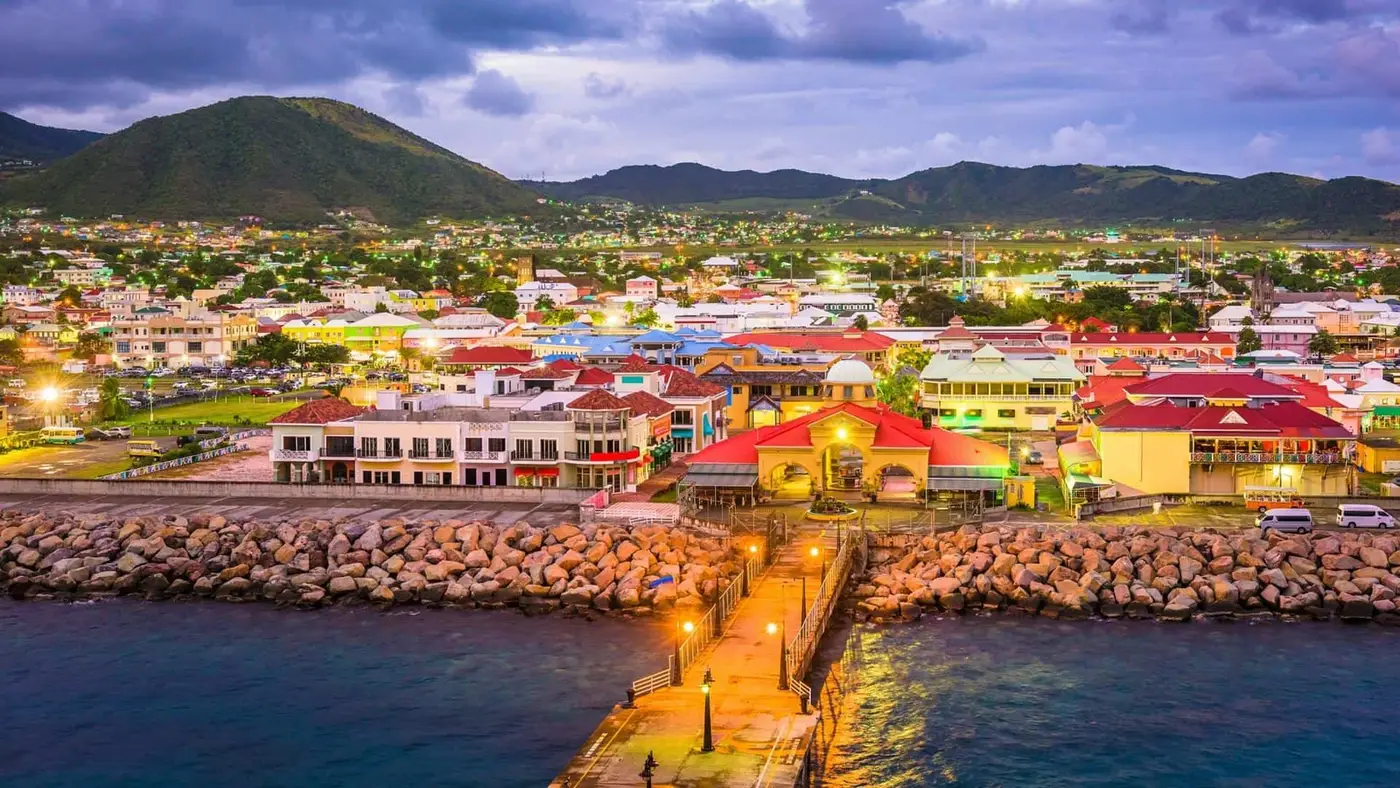
St Kitts and Nevis citizenship by investment is where the whole industry started. The programme opened in 1984, a year after independence, and it is still the reference point the other four Caribbean programmes are measured against: the strongest passport of the five, the fastest approval timeline we see in practice, and since 2024 a dedicated statutory regulator running it.
It is also the most expensive of the five at the entry level. The government contribution is USD 250,000, against USD 200,000 in Dominica and USD 230,000 in Antigua & Barbuda. Whether the premium is worth it depends on what you need the passport to do. This guide sets out the routes, the full costs, the timeline, who can be included, and what has changed in 2025 and 2026, including the parts that are announced but not yet in force.
The programme in brief
St Kitts and Nevis citizenship, at a glance.
Entry point
USD 250,000
- Sustainable Island State Contribution (SISC), non-refundable
- Same price for a single applicant or a family of up to four
Timeline
120 to 180 days
- Official target for approval in principle
- Observed average around five months, the fastest of the five
Passport
157 destinations
- Visa-free or visa-on-arrival, including Schengen and the UK
- No UK visa requirement for St Kitts & Nevis nationals
Residence
None in force
- No minimum stay before or after citizenship today
- A "genuine link" requirement is a stated 2026 priority, without a number
Background
The world's first citizenship by investment programme, rebuilt in 2024.
St Kitts and Nevis wrote citizenship by investment into its law in 1984. For most of the following four decades it was run as a unit inside government. That changed with the Citizenship Unit Act 2024, which turned the old Citizenship by Investment Unit into a statutory body, now simply called the Citizenship Unit, operating what it calls the Citizenship Programme.
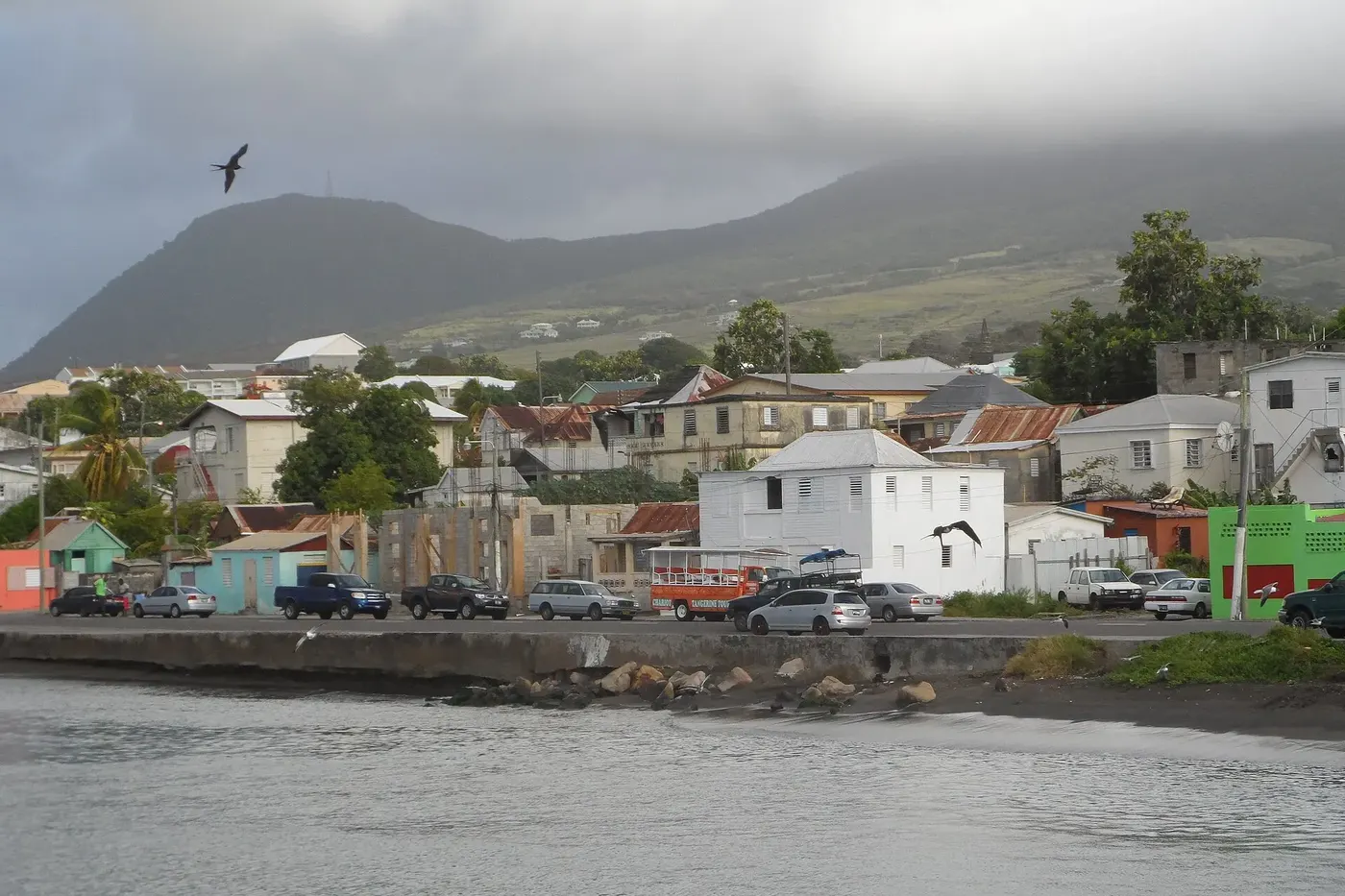
The practical effect for an applicant is a more formal process with clearer published rules. The Unit publishes its routes, fees and eligibility criteria on its own site (ciu.gov.kn), sets service targets for processing, and in late 2025 and 2026 added mandatory biometrics and a tighter interview regime. Its stated position, repeated by its Executive Chairman to agents in September 2026, is that it would rather process fewer, cleaner files than compete on speed or price.
The rest of this guide uses the Unit's own published figures wherever they exist. Where agents or the press report something the Unit has not published, we say so.
Investment options
Three ways to qualify for St Kitts and Nevis citizenship by investment.
There are three routes in practice: a non-refundable contribution to the state (SISC), a contribution directed to a named public project (the Public Benefit Option), or a purchase of approved real estate. The first two cost the same since 1 August 2026. The third costs more and returns some of the money on resale.
1. Sustainable Island State Contribution (SISC)
The SISC replaced the old Sustainable Growth Fund and is the default route for most families. It is a one-off, non-refundable contribution to the government, priced as follows (Citizenship Unit, SISC page, updated 7 August 2026):
| Applicant | SISC contribution |
|---|---|
| Main applicant alone, or with up to three dependants | USD 250,000 |
| Each additional dependant under 18 | + USD 25,000 |
| Each additional dependant aged 18 or over | + USD 50,000 |
The important point is the flat price for up to four people. A single applicant pays the same USD 250,000 as a couple with two children, which makes St Kitts comparatively better value the closer a family is to four.
2. Public Benefit Option (PBO)
The PBO routes the same money to a specific government-designated project rather than to the general fund. The live project the Unit has promoted is the reconstruction of Basseterre High School. Since 1 August 2026 the PBO contribution matches the SISC: USD 250,000 for a main applicant or a family of up to four, with the same add-ons for further dependants (Citizenship Unit, PBO page, updated 17 September 2026).
Conflicting sources
Whether the PBO still carries family fees.
The Unit's PBO page still lists post-approval fees for family members (USD 15,000 for a spouse, USD 10,000 per child under 18, USD 15,000 per dependant 18 or over). At least one large agent, Immigrant Invest, reported on 29 July 2026 that those family fees were removed from 1 August 2026, making the PBO USD 250,000 all-in. The official page does not confirm the removal. Until it does, we budget the fees and treat their removal as a possible saving, not a certainty.
With price no longer separating the two routes, the choice comes down to preference. Some clients like that a PBO contribution is tied to a named, visible project. Others prefer the SISC because it is the route with the longest track record under the current rules.
3. Approved real estate
Buying into a government-approved development is the third route, and the one with the most confusion online. The Unit's own figures are (Citizenship Unit, real estate pages):
| Property type | Minimum purchase | Resale |
|---|---|---|
| Condominium unit or share in an approved development | USD 325,000 | Not before seven years |
| Single-family private home | USD 600,000 | Not before seven years |
On top of the purchase price there are post-approval government fees: USD 25,000 for the main applicant, USD 15,000 for a spouse, USD 10,000 per dependant under 18 and USD 15,000 per dependant 18 or over.
Several agent sites still quote USD 400,000 (shares) and USD 800,000 (private homes), figures that also appeared in earlier versions of this guide. The Unit's published minimums are USD 325,000 and USD 600,000, and those are the numbers we work to.
Real estate makes sense when you actually want the asset: a share in a branded resort, a unit you will use, or a holding you expect to sell after seven years. It rarely makes sense as a way to save money on the contribution, because the purchase price, government fees, transaction costs and the seven-year hold together usually exceed the SISC. Our citizenship by investment real estate guide compares approved projects across the five islands; on St Kitts, see for example the Park Hyatt St Kitts hotel shares and the Four Seasons Nevis residences.
The full bill
What St Kitts citizenship actually costs, fees included.
The headline contribution is never the whole bill. These are the government charges published by the Unit, applied to every route:
- Due diligence: USD 10,000 for the main applicant and USD 7,500 for each dependant aged 16 or over.
- Biometric enrolment (mandatory for new applications since 14 April 2026): USD 2,500 for the main adult aged 16 or over, USD 2,000 for a second adult and USD 1,300 per child under 16, inclusive of the passport upgrade, with a 10% discount between 20 July and 31 December 2026 (Citizenship Unit, biometrics page). The page does not state clearly whether new applicants pay this on top of the other fees; we budget it as additional.
- Real estate route only: the post-approval government fees listed above.
Worked through for the two most common profiles, before biometrics, passport and professional fees:
| Profile | SISC or PBO | Real estate (USD 325,000 condo or share) |
|---|---|---|
| Single applicant | USD 260,000 (250,000 + 10,000 due diligence) | USD 360,000 (325,000 + 25,000 government fee + 10,000 due diligence) |
| Family of four: two adults, two children under 16 | USD 267,500 (250,000 + 10,000 + 7,500 due diligence) | USD 392,500 (325,000 + 25,000 + 15,000 + 20,000 government fees + 17,500 due diligence) |
Our arithmetic from the Unit's published schedules, October 2026. Add biometric enrolment, legal and agent fees, and for property the purchase taxes and closing costs. If the PBO family fees do still apply, a PBO family of four adds USD 35,000.
For the same family of four, the government cost in Antigua & Barbuda is around USD 264,700 and in Dominica around USD 266,500, so on a family budget St Kitts is within a few thousand dollars of its cheaper neighbours. The gap is widest for a single applicant, where Dominica comes in roughly USD 50,000 lower. Our comparison of the five Caribbean programmes sets out every island's cost by profile.
What you get
The benefits of a St Kitts and Nevis passport, and their limits.
We would rather describe the benefits accurately than generously. Several claims that circulate about St Kitts citizenship, including some that appeared in earlier versions of this page, are wrong.

- The strongest travel document of the five. The St Kitts and Nevis passport gives visa-free or visa-on-arrival access to 157 destinations on our own count, including the Schengen Area, the United Kingdom, Ireland, Singapore and Hong Kong. The full list, by region, is in our St Kitts and Nevis passport visa-free countries guide.
- No UK visa. The UK requires visas from nationals of Dominica and, since 5 March 2026, Saint Lucia. St Kitts & Nevis is not on the UK visa national list (gov.uk, updated 8 October 2026), though visitors still need the UK's electronic travel authorisation.
- Not targeted by the 2026 US entry restrictions. See the US section below; St Kitts was not named in the December 2025 proclamation that restricted Antigua and Dominica.
- Citizenship for life, passed to children. Citizenship by investment is full citizenship, not a residence permit.
- Dual citizenship permitted. St Kitts does not require you to give up your existing nationality. Whether your current country allows you to hold a second one is a separate question we check at the start.
- Right to live and work in St Kitts and Nevis. As a citizen you can live, work and own property on either island.
What a St Kitts passport does not do
Three common claims, corrected.
It does not give you residence across CARICOM. A St Kitts passport is not a residence permit for the other Caribbean Community member states, whatever older marketing material claimed.
It does not, by itself, cut your taxes. Your tax position is decided by where you are resident, and for US citizens by citizenship. A second passport changes nothing on its own; moving does, under the tax rules of wherever you move to.
It does not include siblings. Unlike Grenada and Antigua, St Kitts does not accept siblings as dependants.
Step by step
How to get St Kitts and Nevis citizenship, from first call to passport.
Applications can only be made through an agent licensed by the Citizenship Unit. The sequence is the same for every route:
- Consultation and pre-screening. We review the family, the source of funds and any issue that would fail due diligence before anyone spends money, and confirm St Kitts is the right programme rather than one of its neighbours.
- Route selection. SISC, PBO or real estate. For property, we check that the project is on the Unit's approved list and that its pricing meets the published minimums.
- Document collection. Passports, birth and marriage certificates, police certificates, medical certificates, bank references and a documented source of funds for the investment, certified, apostilled and translated where needed.
- Submission and due diligence. The agent files the application and pays the due diligence fees. The Unit runs background checks through its due diligence providers.
- Interview and biometrics. The main applicant is interviewed, virtually, in St Kitts and Nevis or at an approved location; dependants 16 and over are interviewed if the Unit considers it necessary. Biometric enrolment takes place at an approved centre.
- Approval in principle. The Unit's stated target is 120 to 180 days from acknowledgement.
- Investment. Only after approval in principle do you pay the contribution or complete the property purchase, followed by any post-approval fees.
- Certificate of registration and passport. The certificate of citizenship is issued and passports follow.
Processing times
How long St Kitts citizenship takes, officially and in practice.
The Unit says approval in principle "now takes between 120 and 180 days" (Citizenship Unit, 1 October 2026), and the PBO page gives the same window from acknowledgement. That matches what agents report: the agent-reported average in IMI Daily's processing-time tracker for late 2025 was about 5.1 months, the shortest of the five Caribbean programmes (IMI Daily, May 2026).
For comparison, the same tracker put Grenada at around seven months, Dominica at around nine, Antigua at around fourteen and Saint Lucia at around eighteen. Advertised timelines elsewhere in the region are often shorter than what files actually take. St Kitts is the programme where the official figure and the observed one are closest.
Two things lengthen a file in practice: incomplete source-of-funds evidence, and travel for biometric enrolment if there is no approved centre near you. Both are within your control if planned at the start.
Eligibility
St Kitts and Nevis citizenship requirements, and who can be included.
The main applicant
The main applicant must be at least 18, of good character and good health, and able to show the lawful origin of the funds. The Unit's eligibility rules exclude, among others, anyone who has been denied citizenship or a visa by a country with which St Kitts and Nevis has visa-free travel and not later obtained it, anyone under criminal investigation, and anyone declared bankrupt in the last ten years (Citizenship Unit, eligibility criteria).

Applications from Russian and Belarusian nationals have been suspended since 2022 (IMI Daily).
Dependants
The Unit allows the following family members on the same application:
- a spouse;
- children under 18;
- children aged 18 to 30 in full-time secondary or tertiary education and fully supported by the main applicant;
- children over 18 with a physical or mental disability, living with and supported by the main applicant;
- parents of the main applicant or spouse aged 55 or over, living with and supported by the main applicant.
Siblings are not eligible. If including a brother or sister matters, Grenada and Antigua & Barbuda both allow it.
What has changed
The 2026 rules: biometrics, interviews and the genuine-link question.
Mandatory biometrics: in force
Biometric enrolment has been mandatory for new applications submitted since 14 April 2026. Existing citizens have until 31 July 2027 to enrol; after that, only biometric-enabled passports are accepted for travel (Citizenship Unit). If you already hold a St Kitts passport obtained through the programme, this deadline applies to you.
Physical presence: announced as a priority, not yet a rule
Today there is no minimum stay in St Kitts and Nevis before or after citizenship. In his December 2025 update the Unit's chairman listed a "Genuine Link and Integration Requirement", covering "structured physical presence and residency" and national development engagement, as the first priority for 2026. No number, bill or commencement date has been published.
Some agents market St Kitts as already requiring 30 days over five years. That figure is the regional standard agreed by the five governments in 2025 and written into Grenada's and Antigua's 2026 amendment bills. It is not St Kitts law today. On 28 September 2026 the Executive Chairman, Calvin St Juste, told agents not to market on speculation about rules that have not been implemented, and said the regional framework takes effect only once the regional regulator is operational and all member states have agreed a commencement date (Citizenship Unit).
ECCIRA, the regional regulator
The five governments signed the agreement establishing the Eastern Caribbean Citizenship by Investment Regulatory Authority (ECCIRA) on 18 September 2025, and the OECS announced a common USD 200,000 floor, mandatory biometrics and a tighter genuine-link standard at the same time. ECCIRA exists in law but, as of October 2026, has not been confirmed as operational. Once it is, expect regional agent licensing, a shared database of refused and revoked applicants and common due-diligence standards.
The Unit has also said that the US Treasury's FinCEN rescinded its 2014 advisory on the St Kitts programme in February 2026. We report that as the Unit's own statement; we have not seen it confirmed in FinCEN's published sources.
Travel risk
The United States and the EU: what is confirmed, and what is not.
United States
Presidential Proclamation 10998, in force since 1 January 2026, partially suspends US immigrant and visitor visas for nationals of Antigua & Barbuda and Dominica, citing citizenship by investment without residence. St Kitts and Nevis is not named in it (White House), and it was not on the B-1/B-2 visa bond list published in March 2026.
St Kitts is, however, one of around 75 countries covered by the US pause on immigrant visa processing announced on 14 January 2026, which the St Kitts government itself confirmed. That pause concerns immigrant (green card) visas only. Visitor and other non-immigrant visas for St Kitts nationals are unaffected, but as with any nationality they remain at the consul's discretion. A Caribbean passport is not a route into the United States, and we do not sell it as one; for US business access, Grenada's E-2 treaty is the relevant tool.
European Union
The EU risk is structural rather than immediate. What is confirmed in EU law: Regulation (EU) 2025/2441, in force since 30 December 2025, makes operating an investor citizenship scheme without a genuine link a stand-alone ground for suspending visa-free travel, for 12 months at a time and potentially for certain categories of passport only. The Commission's December 2025 report, COM(2025) 792, names all five Caribbean programmes and recommends adequate vetting "pending the discontinuation of those schemes". It sets no deadline.
What is not confirmed in any published EU document: the 25 June 2026 letter from Commissioner Brunner and its reported request to phase the programmes out by 1 June 2028. That date was first published by the government of Antigua & Barbuda and has since been referred to by Saint Lucia's prime minister and the press, but the Commission has not published it. As of October 2026 there is no suspension decision affecting St Kitts and Nevis or any of its neighbours.
For clients, the practical reading is this: Schengen access through a Caribbean passport is valuable today and could be reduced later. If continued Schengen access is the main reason for buying, we discuss that risk explicitly before you commit.
Choosing between islands
St Kitts against the other four, briefly.
St Kitts is the choice when the passport itself is the priority: the widest visa-free access of the five, no UK visa, no listing in the 2026 US proclamation, and the fastest realistic timeline. It is not the cheapest, and it does not offer what some families specifically need.
- Antigua & Barbuda costs less for families and accepts siblings, but its nationals are covered by the US proclamation and its observed processing is far slower.
- Grenada is the only one of the five with a US E-2 investor visa treaty, and accepts siblings.
- Dominica is the lowest entry point for a single applicant, but requires a UK visa and is covered by the US proclamation.
- Saint Lucia offers a refundable government bond route, but now needs a UK visa and has the slowest observed timeline.
Beyond the Caribbean, our index of citizenship by investment programmes covers every active programme worldwide.
Questions we are asked
St Kitts citizenship by investment, frequently asked.
How much does St Kitts and Nevis citizenship by investment cost?
The minimum is a USD 250,000 Sustainable Island State Contribution for a main applicant alone or with up to three dependants. With due diligence fees, a single applicant pays about USD 260,000 to the government and a family of four with two young children about USD 267,500, before biometrics, passports and professional fees.
Is there a St Kitts golden visa?
Not in the usual sense. "Golden visa" normally means residence by investment. St Kitts and Nevis offers citizenship by investment: you receive full citizenship and a passport, not a residence permit.
What is the difference between the SISC and the Public Benefit Option?
Since 1 August 2026 both cost USD 250,000 for a family of up to four. The SISC goes to a general state fund; the PBO goes to a named government project, currently the Basseterre High School reconstruction. The official PBO page still lists family fees that one agent reports were removed; we confirm the position for each file.
What is the minimum real estate investment for St Kitts citizenship?
USD 325,000 for a condominium unit or share in an approved development, or USD 600,000 for a single-family private home, plus government fees. The property cannot be resold for seven years. Figures of USD 400,000 and USD 800,000 seen online are out of date.
How long does it take to get St Kitts citizenship?
The Citizenship Unit targets approval in principle within 120 to 180 days. The observed average reported by agents in late 2025 was about five months, the fastest of the five Caribbean programmes.
Do I have to live in St Kitts and Nevis?
No, not under the current rules. A genuine-link and physical-presence requirement is one of the Unit's stated priorities for 2026, but no number, law or start date has been published.
Is an interview required?
Yes. Each main applicant is interviewed, virtually, in St Kitts and Nevis or at an approved location. Dependants aged 16 and over are interviewed if the Unit considers it necessary.
Are biometrics required?
Yes, for all new applications submitted since 14 April 2026. Existing citizens must enrol by 31 July 2027, after which only biometric-enabled passports are accepted for travel.
Which family members can I include?
A spouse, children under 18, children aged 18 to 30 in full-time education and supported by you, disabled adult children who live with you, and parents of you or your spouse aged 55 or over who live with and depend on you. Siblings cannot be included.
How many countries can I visit visa-free with a St Kitts passport?
157 destinations on our count, including the Schengen Area, the UK and Ireland, Singapore and Hong Kong. See our St Kitts and Nevis passport visa-free countries list.
Can St Kitts citizens travel to the United States without a visa?
No. St Kitts nationals need a US visa. St Kitts was not named in the January 2026 US proclamation that restricted visas for Antigua and Dominica, but it is included in the separate pause on US immigrant visa processing.
Does St Kitts and Nevis allow dual citizenship?
Yes. You keep your existing nationality, provided your current country also permits dual citizenship.
St Kitts or Antigua: which is better?
St Kitts has the stronger passport, the faster observed timeline and no exposure to the 2026 US proclamation. Antigua & Barbuda is cheaper for larger families and accepts siblings, but its nationals face US visa restrictions and its processing is much slower in practice.
Will the EU remove visa-free access for St Kitts passports?
There is no decision to do so. EU law has allowed suspension on citizenship-by-investment grounds since December 2025, and the Commission has called for the schemes to be discontinued, but no suspension has been adopted. A June 2028 phase-out date has been reported by Caribbean governments, not published by the EU.
Can I apply for St Kitts citizenship directly with the government?
No. Applications must be submitted through an agent licensed by the Citizenship Unit, which is responsible for the file and the due diligence submissions.
Latest News & Program Updates
Programme updates
- 2024 — Citizenship Unit Act 2024 makes the Unit a statutory body; OECS USD 200,000 regional floor takes effect in July. (Citizenship Unit; OECS)
- 18 Sep 2025 — The five governments sign the agreement establishing ECCIRA. (IMI Daily)
- 1 Jan 2026 — US Proclamation 10998 takes effect for Antigua and Dominica; St Kitts is not included. (White House)
- 14 Apr 2026 — Biometric enrolment becomes mandatory for new applications; existing citizens have until 31 July 2027. (Citizenship Unit)
- 1 Aug 2026 — Public Benefit Option contribution aligned with the SISC at USD 250,000. (Citizenship Unit)
- 28 Sep 2026 — Executive Chairman says regional rules take effect only after ECCIRA is operational and a common commencement date is agreed. (Citizenship Unit)
- 13 Oct 2026 — Guide rewritten: real estate minimums corrected to the Unit's published USD 325,000 and USD 600,000, worked costs, biometrics, the genuine-link position and the US and EU status checked against primary sources. (Lincoln Global Partners)

Last reviewed 13 October 2026.
This guide is general information, not legal, tax or immigration advice. Programme terms are set by the relevant government and can change; confirm any figure with the authority, or with us, before acting on it.