








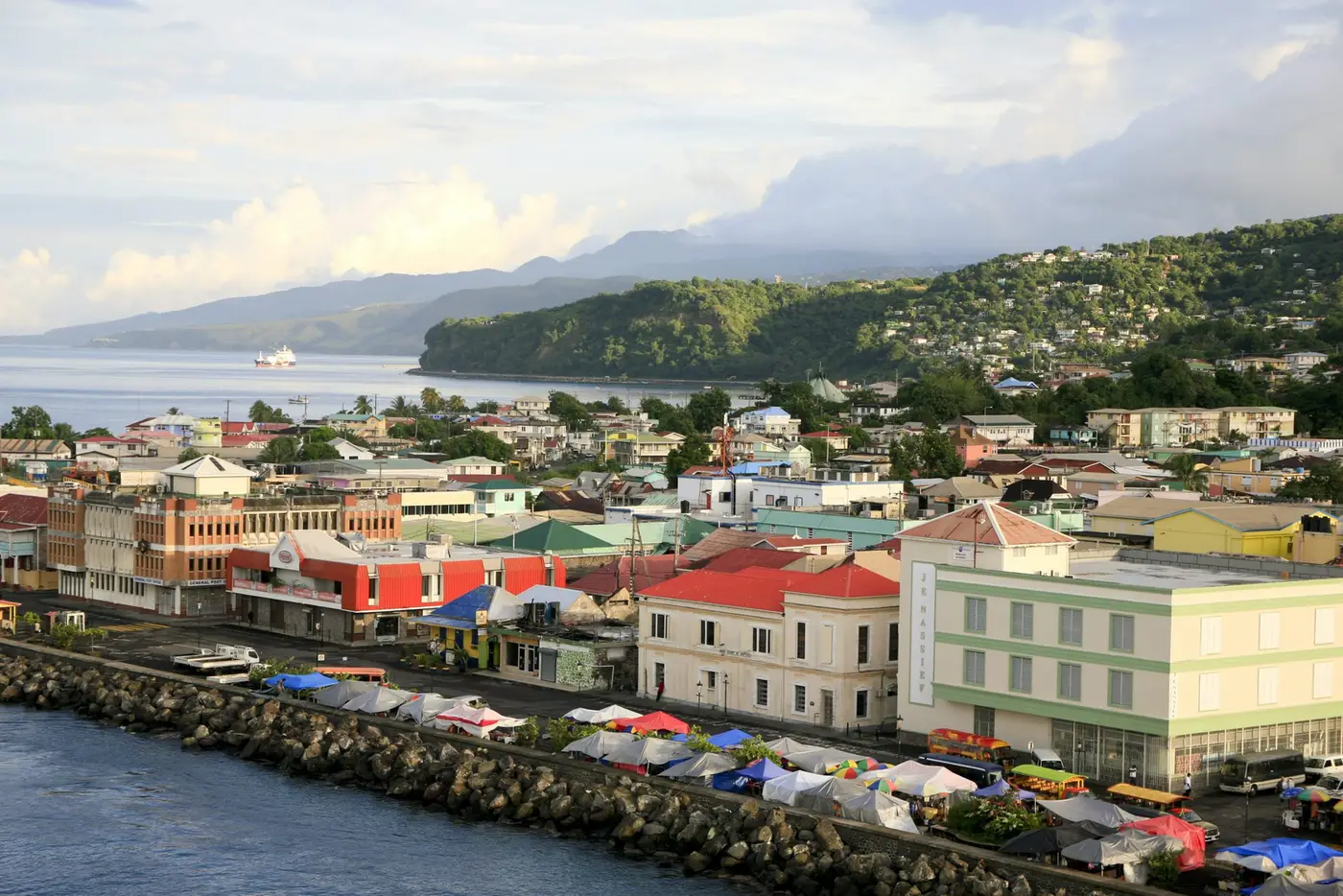
Dominica citizenship by investment is the lowest-priced of the five Caribbean programmes: USD 200,000 for a single applicant through the government's Economic Diversification Fund, or USD 200,000 in approved real estate plus a government fee. It has run since 1993, the whole process can still be handled without visiting the island, and the passport gives visa-free or visa-on-arrival access to 145 destinations.
It is also the programme that has moved most in 2026. The United States has suspended visitor and immigrant visas for Dominican nationals, the European Union has made investor citizenship a stand-alone ground for suspending visa-free travel, and Dominica's Prime Minister has announced that new citizens will have to come to the island. This guide sets out what each of those means for an applicant today, what it costs once fees are added, and where the programme is still a sound choice.
Not the Dominican Republic
Dominica (the Commonwealth of Dominica, in the Eastern Caribbean) and the Dominican Republic (the Spanish-speaking country sharing Hispaniola with Haiti) are different countries with different programmes. If you were looking for the six-month naturalisation route in Santo Domingo, see our Dominican Republic citizenship by investment guide.
At a glance
The Dominica programme, in six numbers.
Minimum contribution
Family of four
Real estate
Visa-free or on arrival
Official timeline
Interview
2026 changes
Dominica citizenship by investment in 2026, what has actually changed.
Separating what is in force from what has only been announced matters more for Dominica this year than for any of its neighbours.
In force
US visitor and immigrant visas are suspended for Dominican nationals.
Presidential Proclamation 10998, effective 1 January 2026, suspends entry of Dominican nationals as immigrants and on B-1, B-2, F, M and J visas. The proclamation gives the reason directly: Dominica has historically offered citizenship by investment without residency. It does not cancel visas already held, and it does not touch anyone travelling on another, non-listed passport. A review was due roughly 180 days after it took effect; we have found no published outcome, so treat the restriction as current.
The UK requires a visa.
Dominica is on the UK's visitor visa national list, so a Dominican passport does not give visa-free entry to the United Kingdom.
The EU has a legal tool aimed at schemes like this one.
Regulation (EU) 2025/2441, in force since 30 December 2025, makes operating an investor citizenship scheme without a genuine link a ground on its own for suspending visa-free travel, for 12 months at a time and potentially only for certain categories of passport. The Commission's December 2025 report, COM(2025) 792, names Dominica among the five and records a 6.5% rejection rate for its 2024 applications, which it describes as very low. No suspension decision exists for Dominica as of this guide's last review.
Announced, not yet in force
New citizens will have to visit Dominica.
On 10 June 2026 Prime Minister Skerrit announced that successful applicants will have to visit Dominica in person and spend time in the country, with the details to follow in the 2026/27 budget. IMI Daily reported that this includes coming to the island to receive and renew the passport, and that legislation was still being drafted. Dominica has not published a number of days. Agents quote the regional standard of 30 days in five years, but none cites a gazetted rule for Dominica, so treat any specific day count as premature.
The regional regulator exists on paper.
The five governments signed the agreement creating the Eastern Caribbean Citizenship by Investment Regulatory Authority (ECCIRA) on 18 September 2025. It is meant to vet agents and due-diligence providers, keep a regional database of refused applicants and apply common standards, including a genuine-link requirement. As of October 2026 we have found no confirmation that it has started operating.
The 2028 date is a government claim, not an EU document.
Antigua's government made public a letter it says the European Commission sent on 25 June 2026, asking the five to phase their programmes out by 1 June 2028. Saint Lucia's Prime Minister has since referred to the same request. The Commission has not published the letter, and no EU document we have read sets that date. It is a serious signal, but not law.
For an applicant the practical reading is this: Dominica still works well as a second citizenship and a travel document for Europe and much of the world. It no longer works as a route to easier US travel, and anyone buying it mainly for Schengen access should price in the EU risk shared by all five programmes.
Investment options
Two routes to a Dominican passport.
The Dominica citizenship by investment programme is run by the Citizenship by Investment Unit (CBIU) under the Citizenship by Investment Regulations 2024. There are two ways to qualify.
1. Economic Diversification Fund (EDF) contribution
A one-off, non-refundable contribution to the government fund. Current amounts, from the CBIU's EDF page:
| Applicants | EDF contribution |
|---|---|
| Main applicant alone | USD 200,000 |
| Main applicant and up to three qualifying dependants | USD 250,000 |
| Each additional dependant under 18 | + USD 25,000 |
| Each additional dependant 18 or over | + USD 40,000 |
The contribution can be paid in US dollars, euros or sterling, provided the euro or sterling amount is at least the dollar figure. There is no separate government fee on this route.
2. Approved real estate
Buy into a government-approved development for at least USD 200,000 and hold it for three years from the grant of citizenship, or five years if you later sell it to another citizenship applicant. On top of the purchase, the CBIU charges a government fee:
| Applicants | Government fee (real estate route) |
|---|---|
| Main applicant alone | USD 75,000 |
| Main applicant and up to three dependants | USD 100,000 |
| Each additional dependant under 18 | + USD 25,000 |
| Each additional dependant 18 or over | + USD 40,000 |
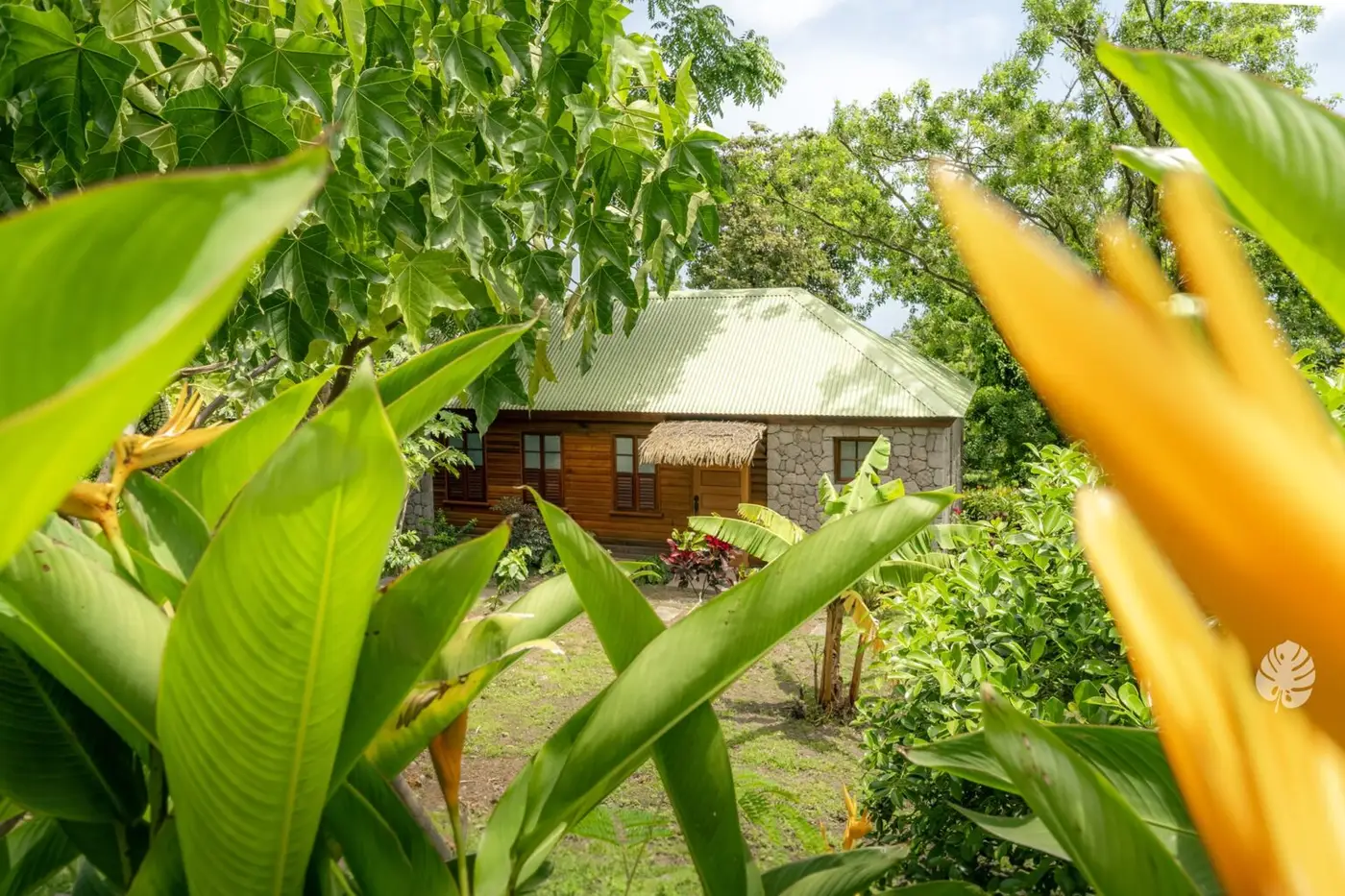
Some websites describe the USD 75,000 as an EDF payment. It is not; it is the fee that sits on top of the property purchase. The real estate route is therefore more expensive up front than the donation, and only makes sense if the property itself has a use or an exit you value. Approved projects are mostly hotel and villa developments, such as Jungle Bay and Secret Bay. Our guide to Dominica citizenship through real estate covers the projects, the resale rules and what the returns look like in practice.
Dominica citizenship cost
What it costs, once the fees are added.
The headline contribution is not the total. Every application also carries these government charges, all from the CBIU:
- Processing fee: USD 1,000 per application.
- Due diligence: USD 7,500 for the main applicant and USD 4,000 for each dependant aged 16 or over. Enhanced due diligence fees apply to some nationalities and profiles.
- Interview fee: USD 1,000 per interview, for everyone aged 16 or over.
- Certificate of naturalisation: USD 500 per person.
Passport issuance, document legalisation, translations and the authorised agent's professional fee come on top, and vary by case.
| Profile | EDF route | Real estate route |
|---|---|---|
| Single applicant | USD 210,000 | USD 285,000 (incl. USD 200,000 property) |
| Couple with two children under 16 | USD 266,500 | USD 316,500 (incl. USD 200,000 property) |
How the figures add up. Single applicant, EDF: 200,000 contribution + 1,000 processing + 7,500 due diligence + 1,000 interview + 500 certificate. Family of four, EDF: 250,000 + 1,000 processing + 11,500 due diligence (two adults) + 2,000 interviews (two adults) + 2,000 certificates (four people). The real estate column swaps the contribution for a USD 200,000 property plus the USD 75,000 or USD 100,000 government fee, and excludes purchase costs on the property itself.
Against its neighbours, Dominica is the cheapest single-applicant entry by USD 30,000 or more. The gap narrows for families: Antigua and Barbuda citizenship by investment charges the same USD 230,000 for one person or four, so a larger family should compare totals, not headline prices. Our comparison of the five Caribbean citizenship by investment programmes sets the totals side by side.
Dominica citizenship benefits
What the passport gives you, and what it doesn't.
Travel, with one large exception
The Dominican passport gives visa-free or visa-on-arrival access to 145 destinations, including the Schengen Area, Singapore and Hong Kong. It does not give visa-free access to the United Kingdom, and since January 2026 it is the wrong passport for a new US visitor visa. If US travel is the point of the exercise, look instead at Grenada citizenship by investment, the only one of the five with a US E-2 investor treaty, or at St Kitts and Saint Lucia, which are not covered by the proclamation.
Citizenship for life, passed to your children
Dominican citizenship is full citizenship, not a residence permit. It does not lapse if you never live there, and it can be passed on to children born later, subject to the rules on adding dependants after approval. Dominica allows dual citizenship, so you keep your existing nationality unless your own country prohibits holding another.
A right to live in Dominica
Citizenship gives the right to live, work and buy property in Dominica, which for some clients is the point: a second home base in a quiet, green, English-speaking island.
Tax, plainly
A second passport does not on its own change where you pay tax. Tax follows residence and, for US citizens, citizenship. Dominica can form part of a tax plan only if you actually move your residence, and that is a conversation for a tax adviser in each country concerned, not a feature of the passport.
Dominica citizenship requirements
Who qualifies, and who can come with you.
The main applicant must be at least 18, of good character, in good health, able to show the lawful source of the funds, and must pass the CBIU's due diligence and interview.
Qualifying dependants
According to the CBIU's own FAQ, the following can be included:
- A spouse.
- Children under 18, biological or legally adopted.
- Children aged 18 to 30 in full-time higher education and fully supported by the main applicant.
- An unmarried daughter under 25 living with and supported by the main applicant.
- Children over 18 with a physical or mental disability.
- Parents or grandparents of the main applicant or spouse aged over 65 and substantially supported by them.
Siblings cannot be included. If you need to bring a brother or sister, Grenada and Antigua and Barbuda both accept them. Note the parent threshold: Dominica sets it above 65, where St Kitts and Antigua use 55.
Restricted nationalities
The CBIU lists Belarus, Iran, Northern Iraq, North Korea, Russia, Yemen and Sudan as banned or limited nationalities, subject to enhanced due diligence and accepted, if at all, only in narrow circumstances. If you hold, or were born with, one of these nationalities, speak to us before preparing anything.
The application file
The documents you will need.
The CBIU's current forms set the exact list, and your agent will give you a checklist for your family. A standard file includes:
- The completed application and disclosure forms, plus a fingerprint and photograph form completed in front of an authorised officer.
- A medical questionnaire and certificate from a licensed physician, with HIV test results for applicants aged 12 and over.
- Certified colour copies of passports, national ID cards and driving licences.
- Birth certificates, marriage or divorce certificates and any name-change documents.
- Police certificates from your country of birth, citizenship and residence, and from any country where you have lived for more than six months in the past ten years.
- Proof of residential address and recent passport photographs.
- Bank statements, a reference letter and evidence of employment or business ownership.
- A sworn statement of the source of funds, with supporting documents.
- For dependants over 18 other than a spouse, a notarised affidavit of support; for children in education, school or university letters.
Anything not in English needs a certified translation, and documents must be certified or apostilled under the rules of the country that issued them. The source-of-funds file is where most delays start; it is worth building it first.
How to get a Dominica passport
The application, step by step.
Applications can only be filed through an agent licensed by the CBIU. The steps:
- Assessment. We review your family, nationalities, travel needs and source of funds, and confirm that Dominica is the right programme before you spend anything on it.
- File preparation. Documents gathered, certified, translated and checked against the CBIU's forms, with the source-of-funds evidence built in full.
- Submission and due diligence. The agent files with the CBIU and the processing and due diligence fees are paid. The unit commissions background checks on every applicant aged 16 and over.
- Interview. Everyone aged 16 or over is interviewed, usually by video.
- Approval in principle. The CBIU issues its decision. The contribution, or the property purchase and government fee, is paid only after approval.
- Certificate and passport. Once payment is confirmed, the certificates of naturalisation and passports are issued. Under the new rules announced in June 2026, expect collection in Dominica to become a requirement.
Processing time
How long it takes, officially and in practice.
The CBIU's guidance is that applicants should expect to wait at least three months from submission to approval in principle. That is a floor, not an average. IMI Daily's processing-time tracker, based on agent-reported cases from late 2025, puts the observed average at 9.3 months, with a range of 4 to 18 months. Complex source-of-funds files and enhanced due diligence account for most of the long cases.
We plan client timelines on nine to twelve months, in line with that observed average, and tell clients early if anything in their history points to longer.
Physical presence
Do you have to live in Dominica? Not yet, but you will have to visit.
As of the CBIU's FAQ of March 2026, you do not have to reside in Dominica before or after citizenship is granted, and no travel is needed during the application. That is about to change. The Prime Minister's June 2026 announcement introduces a requirement to visit the island and spend time there, and press reporting indicates that passports will have to be collected and renewed in person. The number of days and the start date have not been published.
Regionally, the five governments have agreed a genuine-link standard of 30 days in the first five years, and Grenada and Antigua have bills to that effect. Whether Dominica adopts the same 30 days, and whether it applies to applications already filed, is open. We would plan on at least one trip to the island and treat anything more precise as unconfirmed.
Alternatives
Dominica against the other four, briefly.
| Programme | Single applicant (donation) | Main strength | Main limitation in 2026 |
|---|---|---|---|
| Dominica | USD 200,000 | Lowest entry price | US visas suspended; UK visa required |
| Antigua & Barbuda | USD 230,000 | Same price for a family of four; siblings accepted | US visas suspended |
| Grenada | USD 235,000 | US E-2 treaty; siblings accepted | 30-day residence bill awaiting commencement |
| Saint Lucia | USD 240,000 | Refundable bond route | UK visa required since March 2026; slowest processing |
| St Kitts & Nevis | USD 250,000 | Widest visa-free access, fastest official timeline | Highest price; biometrics required |
Dominica remains the right answer for a single applicant or couple who want the lowest-cost Caribbean citizenship and whose priorities are Europe and Asia rather than the US or UK. For travel to the US, St Kitts and Nevis citizenship by investment or Grenada is the better buy. For programmes outside the Caribbean, see our index of citizenship by investment programmes.
Frequently asked
Dominica citizenship by investment, plainly answered.
How much does Dominica citizenship by investment cost?
The minimum is a USD 200,000 contribution to the Economic Diversification Fund for a single applicant, or USD 250,000 for a family of up to four. With processing, due diligence, interview and certificate fees, a single applicant pays about USD 210,000 and a couple with two young children about USD 266,500 in government charges, before passport, legal and agent fees.
What are the requirements for Dominica citizenship?
The main applicant must be 18 or over, of good character, in good health, able to prove the lawful source of the funds, and must pass due diligence and an interview. The qualifying investment is either the EDF contribution or approved real estate of at least USD 200,000.
How do I get a Dominica passport by investment?
Through a CBIU-licensed agent: prepare the file, submit it with the processing and due diligence fees, complete the interview, receive approval in principle, then pay the contribution or complete the property purchase. The certificate of naturalisation and passport follow.
How long does the Dominica citizenship program take?
Officially, at least three months to approval in principle. In practice, agent-reported cases tracked by IMI Daily averaged 9.3 months in late 2025, between 4 and 18 months.
Can I get Dominica citizenship through real estate?
Yes. Buy into a government-approved project for at least USD 200,000, pay the USD 75,000 government fee for a single applicant or USD 100,000 for a family of up to four, and hold the property for three years after citizenship is granted.
Does Dominica have a golden visa or residency by investment?
Not as a separate programme. Dominica offers citizenship, not a residence permit, in exchange for investment. Citizenship already includes the right to live in Dominica, so there is no need for a residency route.
Do I need to live in Dominica?
Not today. The government announced in June 2026 that new citizens will have to visit Dominica in person, with details to follow. No number of days has been published yet.
Can Dominica citizens travel to the US?
Since 1 January 2026 the US has suspended new immigrant visas and B-1/B-2, F, M and J visas for Dominican nationals under Proclamation 10998. Existing valid visas are not cancelled. For US access, Grenada, St Kitts and Saint Lucia are not covered by the proclamation.
Do Dominica passport holders need a visa for the UK?
Yes. Dominica is on the UK visitor visa national list.
Can I travel to Europe with a Dominica passport?
Yes, visa-free for short stays in the Schengen Area. The EU now has a legal mechanism to suspend that access for countries running investor citizenship schemes, and the Commission has named all five Caribbean programmes, but no suspension has been decided.
Does Dominica allow dual citizenship?
Yes. Dominica does not require you to give up your existing nationality. Whether your current country allows you to hold a second one is a question for its own law.
Can I include my parents or siblings?
Parents and grandparents over 65 who are substantially supported by you or your spouse can be included. Siblings cannot. Grenada and Antigua and Barbuda accept siblings.
Is there an interview?
Yes. Every applicant aged 16 or over is interviewed, usually by video. The fee is USD 1,000 per interview.
What is the Citizenship by Investment Unit of Dominica?
The CBIU is the government body that runs the programme, sets the fees, carries out due diligence and approves applications. It only accepts applications through licensed agents.
Is Dominica the same as the Dominican Republic?
No. Dominica is an English-speaking island in the Eastern Caribbean. The Dominican Republic is a separate, Spanish-speaking country with its own naturalisation route, covered in a separate guide.
Can my citizenship be revoked?
Yes, if it was obtained through false or concealed information. Paying the official price through a licensed agent, with a complete and truthful file, is the protection. Once the new visit requirement is legislated, expect it to carry consequences for those who ignore it.
Programme updates
Programme updates
- Jul 2024 — Regional minimum of USD 200,000 takes effect under the March 2024 agreement between the five programmes; Dominica's EDF moves to USD 200,000 single and USD 250,000 for a family of four.
- 18 Sep 2025 — The five governments sign the agreement establishing ECCIRA, the regional regulator. (OECS)
- 19 Dec 2025 — European Commission report COM(2025) 792 names Dominica among the five Caribbean schemes of concern.
- 30 Dec 2025 — Regulation (EU) 2025/2441 enters into force, adding investor citizenship as a ground for suspending visa-free travel.
- 1 Jan 2026 — US Proclamation 10998 suspends immigrant and B, F, M and J visas for Dominican nationals.
- 10 Jun 2026 — Prime Minister announces a requirement for new citizens to visit Dominica; details to follow in the budget.
- 13 Oct 2026 — Guide rewritten: 2026 fees, US, UK and EU position, dependants and processing times reviewed against the CBIU's current pages. (Lincoln Global Partners)

Last reviewed 13 October 2026.
This guide is general information, not legal, tax or immigration advice. Programme terms are set by the relevant government and can change; confirm any figure with the authority, or with us, before acting on it.