







































Two versions of the D8,
and only one leads anywhere
This is the single most consequential choice on the Portugal digital nomad visa, and the one the D8 visa guides skip: and it is routinely presented as a minor administrative detail. It is not. The temporary stay visa builds nothing. Time spent in Portugal under it does not count toward permanent residency or citizenship, however many years you renew it for.
| Temporary Stay Visa | Residency Visa | |
|---|---|---|
| Initial validity | Up to 12 months | 4 months, two entries |
| What it becomes | Renewable, but stays temporary | A 2-year residence permit, then 3-year renewals |
| Counts toward permanent residency | No | Yes, 5 years |
| Counts toward citizenship | No | Yes, 10 years, or 7 for EU and CPLP |
| Family included | Restricted | Yes, spouse, children, dependent parents |
| Accommodation needed | ~4-month lease | 12-month lease |
| Income required | €3,680/month | €3,680/month |
| Renewed through | A consulate, from outside Portugal | AIMA, from inside Portugal |
| Best for | A trial year with no commitment | Anyone who might stay |
The expensive version of this mistake
Someone takes the temporary stay because the lease requirement is shorter and it sounds less committal. They renew it, enjoy Portugal, and three or four years later decide to stay permanently, at which point they discover they are on year zero. The residency route would have had them halfway to permanent residency by then. Identical income requirement, identical monthly cost of living, entirely different outcome.
The honest rule: if there is any realistic chance you will want to stay beyond a year, take the residency visa. The temporary stay is genuinely right for one situation only. You want a defined trial year in Portugal and you know you are leaving.
D8 visa income and
savings requirements for 2026
The D8 visa income threshold is four times the Portuguese national minimum wage. That wage rose to €920 on 1 January 2026, which puts the digital nomad visa income requirement at €3,680 a month, up from €3,480 the previous year.5
| Applicant | Monthly income | Savings |
|---|---|---|
| Main applicant | €3,680 | €11,040 |
| + spouse or partner (50%) | €1,840 | €5,520 |
| + each dependent child (30%) | €1,104 | €3,312 |
| Couple, combined | €5,520 | €16,560 |
| Couple with one child | €6,624 | €19,872 |
AIMA tests the threshold in force on your appointment date
Not the date you filed. Because the figure is indexed to a minimum wage that rises every January, an application prepared in November against €3,680 and heard the following February is assessed against whatever the new figure is. Build your file against next January's likely threshold, not today's. With current processing running six to nine months, most applications straddle an uprating.
Income is assessed over time, not on a snapshot. Consulates typically want three to six months of bank statements showing the money arriving, alongside contracts. A freelancer with variable months is not disqualified, but the average has to clear the bar and the variability has to look like a working pattern rather than an accident.
The savings requirement is separate from the income and is generally expected to sit in a Portuguese bank account. Twelve months at the minimum wage is the benchmark: €11,040 for a single applicant.
Who qualifies for the
Portugal digital nomad visa
Introduced in October 2022, the Portugal digital nomad visa is open to non-EU, EEA and Swiss nationals earning from outside Portugal. The work must be remote and the income foreign, that is the whole premise, and it is what separates it from every other Portuguese route.

Remote employees
Employed by a company outside Portugal, working remotely. Evidence is an employment contract plus a letter from the employer confirming remote work is permitted, alongside payslips and statements. The cleanest version of a D8 application.
Freelancers and contractors
Independent professionals serving foreign clients. Evidence is contracts or invoices with several clients, tax returns, and statements showing receipts. Multiple clients present better than a single one, which can look like disguised employment.
Business owners
Owners drawing income from a company registered outside Portugal. Evidence is company documents, proof of ownership, and a record of distributions or salary reaching you personally.
◇ The D7 used to be the default for remote workers and is now actively discouraged for anyone with active employment income. If you work for a living, the D8 is your route even though its threshold is four times higher, filing a D7 with employment income invites refusal.
Portugal D8 visa requirements: documents and how the application runs
Core documents
- Passport valid beyond the visa period
- Two passport photographs and the application form
- Portuguese NIF tax number
- Criminal record certificate, apostilled
- Permission for a Portuguese criminal record check
- Health insurance valid in Portugal
- Cover letter explaining your work and intentions
Proving the money
- Employment contract, or client contracts and invoices
- Employer letter confirming remote work is permitted
- Three to six months of bank statements
- Recent tax return from your home country
- Portuguese account showing the savings buffer
- Accommodation, 4-month lease for temporary stay, 12 months for residency
The tax number first, remotely through a representative, then an account to hold the savings. Nothing else can proceed until these exist.
Four to six weeks from the US or UK on their own. Start here, not last. This is the step that most often delays an otherwise ready file.
A four-month lease suffices for the temporary stay; the residency route needs twelve months. Either way you commit to a Portuguese address before approval.
Lodged at the consulate or VFS office with jurisdiction over your residence. Document wording varies between posts, follow your own consulate's checklist rather than a generic one.
Temporary stay holders receive a visa valid up to twelve months and can travel. Residency applicants receive a four-month entry visa and must complete the next step in Portugal.
Biometrics in Portugal, then a two-year residence permit. The clock toward permanent residency and citizenship runs from the issue date of this card.1
What the D8 costs
and how long it takes
| Item | Amount | Note |
|---|---|---|
| Consular visa application | ~€109 | Varies slightly by post and currency |
| Residence permit card (AIMA) | ~€186 | Residency route only |
| Apostilles and translations | Varies | Per document, per country |
| Fiscal representative for the NIF | €150 – €300/year | Non-EU applicants |
| Health insurance | €20 – €100/month | Required for the application |
| Lease deposit | 2 – 3 months' rent | Committed before approval |
Processing is currently six to nine months
Older guides quote thirty to sixty days, and that was once accurate. The AIMA backlog has pushed real-world timelines to roughly six to nine months as of mid-2026 on the residency route. Plan on that, and note the compounding problem: a longer wait means your file is more likely to be assessed against a threshold that rose in the interim, and it delays the date your residency clock starts.
Tax on the digital
nomad visa
Tax on the digital nomad visa turns on one number. Spend 183 days or more in Portugal, or keep a home there in circumstances suggesting habitual residence, and you become Portuguese tax resident, taxed on worldwide income at progressive rates reaching 48%. For most D8 holders on the residency route, that is not a risk to manage but an outcome to plan for.
The regime that used to soften this, NHR, closed to new entrants. Its replacement, IFICI, offers a flat 20% on qualifying professional income, but eligibility attaches to a defined list of activities and certified employers rather than to you personally. Some technology and knowledge-work roles qualify. Many remote workers do not, and assuming you will is the most common planning error on this route.
The temporary stay route can leave you outside Portuguese tax residence if you genuinely spend under 183 days and do not establish a habitual home, which is one legitimate reason to choose it. But it comes at the cost of building nothing toward permanent residency, and that trade should be made deliberately rather than discovered.
Where nomads
actually go
More than 2,600 Portugal digital nomad visas had been issued by the end of 2024, with Americans the largest group, followed by Brazilians and Britons.6 Three places absorb most of them.


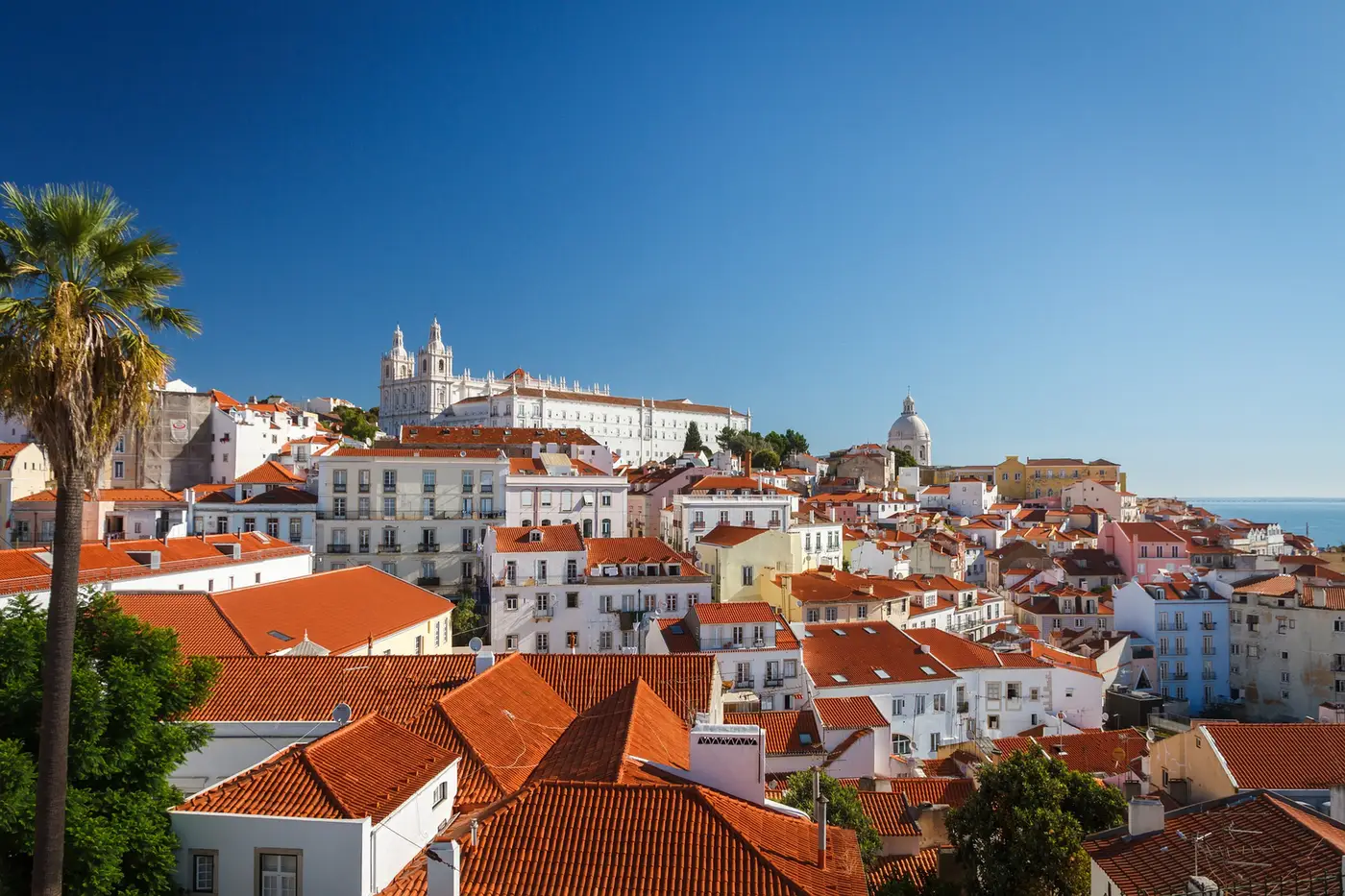
Lisbon
The largest community, the best connections and by a wide margin the highest rents, a one-bedroom in the centre runs well over €1,300. Everything is here, and you pay for it.
Madeira
Home to Europe's first Digital Nomad Village, at Ponta do Sol. Subtropical year-round, a genuine and unusually cohesive community, and considerably cheaper than Lisbon. An hour and a half from the mainland.
Porto
A real city at meaningfully lower cost than Lisbon, with a growing technology base and the country's highest-ranked university. Colder and wetter in winter, and increasingly the choice for people priced out of the south.
The honest caveat
Housing costs have risen sharply and Portuguese wages have not. Arriving on €3,680 a month, four times the local minimum wage, is not a neutral act in a rental market this pressured, and it is worth being aware of that.

Europe's first Digital Nomad Village, and the reason a good share of D8 holders never see the mainland.
D7 vs D8 visa Portugal, and both against the Golden Visa
| D8 | D7 | Golden Visa | |
|---|---|---|---|
| Income type | Active, remote, foreign | Passive, pension, rent, dividends | Capital investment |
| Monthly requirement | €3,680 | €920 | , |
| Capital required | None | None | €200,000+ |
| Presence required | Substantial | Substantial | 7 days, then 14 |
| Trial option | Yes, temporary stay | No | No |
| Path to citizenship | Residency route only | Yes | Yes |
The decision is genuinely simple. If you work remotely for a living, the D8 is your route, the D7 is now discouraged for active income and the Golden Visa is a six-figure solution to a problem you do not have. If you live off passive income, the D7 asks for a quarter of the money. And if you are not actually moving, neither works.
Seven D8 mistakes
1. Taking the temporary stay by default
It builds nothing toward permanent residency or citizenship. Three years in, you are on year zero. Identical income requirement, entirely different outcome.
2. Filing against this year's threshold
AIMA applies the figure in force at your appointment, not your filing date. With six to nine month waits, most applications straddle a January uprating.
3. One client, presented as freelancing
A single client can read as disguised employment. Several contracts present far better, and the employer letter matters more than most applicants expect.
4. Using the D7 for employment income
It was once common and is now discouraged. If you work for a living, the D8 is the honest application even at four times the threshold.
5. Quoting thirty to sixty days to an employer
Old guidance. Real timelines are six to nine months on the residency route, and promising a start date on the old figure creates a problem with your employer, not the consulate.
6. Assuming IFICI will cover you
The 20% flat rate attaches to defined activities and certified employers, not to remote workers generally. Many D8 holders do not qualify and are taxed progressively.
7. Leaving apostilles until last
Four to six weeks from the US or UK. It is the most common reason a file that is otherwise ready cannot be lodged.
What we do about it
Choose the version against what you might want in five years rather than what feels committal now, build the income evidence against next January's threshold, sequence apostilles first, and put the tax question to a Portuguese accountant before you sign a lease.
Portugal digital nomad visa: frequently asked questions
What is the Portugal digital nomad visa?
Is the D8 visa the same as the digital nomad visa?
How much income do I need for the D8 in 2026?
Which version of the D8 should I choose?
Does the temporary stay visa lead to citizenship?
Can freelancers apply?
How long does the D8 take?
What does it cost?
Do I need a Portuguese bank account?
Do I need somewhere to live before applying?
Will I pay tax in Portugal on the D8?
Does IFICI apply to digital nomads?
Can my family come with me?
D8 or D7?
How long can I be outside Portugal?
Where do most digital nomads live?
Can I switch from temporary stay to the residency route?
What is the difference between the D7 and D8 visa in Portugal?
Where these
figures come from
Both the income threshold and the processing time have moved in 2026, and a good deal of published guidance still reflects earlier figures.
- Lei Orgânica n.º 1/2026, the 2026 Nationality Law, setting naturalisation at seven years for EU and CPLP nationals and ten for others, counted from issue of the residence title. diariodarepublica.pt
- Lei n.º 23/2007, the Foreigners Act, the statutory basis for both the temporary stay and residence visa forms of the D8, and the absence limits governing renewal. dre.pt (English)
- Lei n.º 18/2022, the amendments under which the remote work visa was introduced in October 2022. diariodarepublica.pt
- Ministério dos Negócios Estrangeiros, Portal dos Vistos, national visa categories, documentary requirements and consular fees. vistos.mne.gov.pt
- Portuguese Government, the national minimum wage at €920 per month from 1 January 2026, four times which gives the D8 income threshold of €3,680.
- Portuguese visa issuance statistics, over 2,600 digital nomad visas issued by the end of 2024, with United States nationals the largest group, followed by Brazilian and British applicants.
- AIMA, appointments, biometrics, permit issuance, renewal, and the practice of applying thresholds in force at the appointment date. aima.gov.pt
- Código do IRS, Article 16, the tax residence tests, being the 183-day count and the habitual residence limb.
- Estatuto dos Benefícios Fiscais, Article 58.º-A, the IFICI regime and its restriction to defined qualifying activities. Autoridade Tributária (PDF)
- Digital Nomad Village, Ponta do Sol, Madeira, the first initiative of its kind in Europe, and a significant draw for D8 holders outside the mainland.
◇ General information, not legal or tax advice. Income thresholds are indexed to the minimum wage and rise each January, documentary wording varies between consulates and VFS offices, and processing times have lengthened considerably. Verify current figures with your own consulate before filing.


Last reviewed 19 August 2026. Programme terms are set by the relevant government and can change; confirm any figure before acting on it.