








Most retirement destinations ask you to trade something. This one barely does.
Distance from family, a foreign tax system with no carve-out for a pension, a healthcare network with no track record. That is the usual price of a Plan B. The Dominican Republic is the rare market where the trade is small, and in several places it disappears entirely. Here is why it keeps coming up first in conversations with American retirees.
It is closer than most of the United States
Santo Domingo and Punta Cana sit two to four hours from more than twenty US gateway cities, on direct flights run by JetBlue, American, Delta, Spirit, and United. For most of the year the country shares a time zone with New York. A retiree can be at a grandchild's school recital on Friday and back on the veranda by Saturday lunch. No other Latin American or Caribbean retirement market offers that combination of flight volume and time-zone alignment.
That proximity also means the Plan B stays usable rather than theoretical. A US-based specialist, a family emergency, a grandchild's graduation: none of it requires the multi-leg routing or overnight flight that comes with retiring further south or across the Atlantic.
A lifestyle that becomes routine faster than expected
The pull is rarely the beach alone. It is what surrounds it: year-round warm weather, an established foreign community in every major retirement area, and a culture that is genuinely welcoming to outsiders rather than merely tolerant of them. English is widely spoken in the areas retirees actually settle, private services are staffed accordingly, and the day-to-day friction that makes some relocations exhausting is largely absent here.
Because the retiree community is not new, the systems around it are not improvised. Real estate agents, contractors, physicians, and immigration attorneys who work with foreign retirees do it as a specialty, not a side business. That maturity shows up in small ways: paperwork that moves at a predictable pace, a rental market that understands seasonal foreign tenants, a social calendar built around people who arrived the same way you did.
Your pension, protected on both ends
Two facts belong side by side, because most retirees only hear the first one. Fact one: Law 171‑07 exempts qualifying foreign pension and passive income from Dominican tax, permanently, for as long as the status is maintained, with no three-year sunset the way ordinary new residents face. Fact two: Medicare does not follow you. Outside a narrow set of emergency exceptions, Medicare provides no coverage abroad, and even the Medigap plans that touch foreign emergency care cap out with a lifetime limit.
Put together, that is the actual shape of the benefit: the DR removes the tax bite on the income you already earned, while a separate, deliberate decision about private insurance replaces the coverage you leave behind. Retirees who plan for both pieces get the full advantage. Retirees who only hear about the tax exemption are often surprised, later, by the insurance bill.
Social Security still arrives, and the DR doesn't touch it
Social Security payments continue without interruption for a US retiree living in the Dominican Republic. The Social Security Administration will direct-deposit a monthly check into a Dominican bank account just as readily as a US one, once the paperwork with the local Federal Benefits Unit is filed. Most retirees who plan to stay long-term choose the local account, since it avoids the $30 to $50 wire fees that come with moving money from a US account each month.
On the Dominican side, Social Security is treated as pension income: it counts toward the $1,500 monthly threshold for Pensionado status, and once that status is confirmed under Law 171‑07, it is exempt from Dominican tax entirely. On the US side, nothing about the move changes the obligation. Social Security remains part of worldwide income reportable to the IRS, and a US citizen abroad still files an annual US return regardless of where the check lands. The Dominican exemption solves the local tax question. It does not solve, or need to solve, the US one.
What it costs to retire in the Dominican Republic
Most couples retiring in the Dominican Republic budget between US$2,000 and $3,500 a month for a comfortable life, including rent, food, healthcare, and entertainment, and that figure buys considerably more house and more help than the same number would in Florida. Household staff, in particular, is far more accessible: local wages mean a gardener, a housekeeper, or a driver is a routine line item rather than a luxury.
Where that number lands depends heavily on location. The North Coast typically runs 15 to 25 percent below Punta Cana for a comparable lifestyle, and Santo Domingo sits in between, trading beachfront pricing for city infrastructure.
Healthcare that is genuinely good, at a fraction of the price
The private hospital network in Santo Domingo and the major retirement areas is the real story. CEDIMAT is a standout for cardiology and advanced diagnostics, with equipment that holds up against US facilities. HOMS and Clínica Abreu round out a network with bilingual staff and same-week specialist appointments in most cases. A private GP visit runs $30 to $70. An MRI runs a few hundred dollars against a few thousand in the US.
Private insurance built for expats runs roughly $70 to $200 a month at retirement age, rising with age and coverage level, and it is what makes the system work: residents can access the public SeNaSa option, but most retirees stay private for the shorter waits and English-speaking staff. For anything genuinely complex, Miami is a short flight away, not a decision point that has to be made in a hurry.
Retiring in the Dominican Republic: pros and cons
Every advantage above is real. None of them cancel out the friction points below. A retiree who plans around both has a better first year than one who only planned around the highlight reel.
- Two to four hours from most US gateways, sharing a time zone for most of the year
- Permanent foreign-income tax exemption under Law 171‑07, with no sunset
- Comfortable couple's budget of $2,000 to $3,500 a month in most retirement areas
- Private healthcare that rivals US quality at a fraction of the cost
- An established, English-speaking retiree community in every major base
- Social Security and qualifying pension income exempt from Dominican tax, with no waiting period
- A fast-track naturalization option, as short as six months, tied to property or business ownership
- Medicare does not cover care in the DR, so private or international insurance is a real monthly cost, not optional
- Hurricane season runs June through November, and the North and East coasts see the most direct exposure
- Infrastructure reliability (power, water) varies outside the established expat corridors; most residential communities run backup generators as standard, not as a luxury
- Spanish becomes genuinely necessary outside tourist zones, for banking, medical visits, and dealing with the DGM
- Real estate title diligence matters more than in the US; working through a registered attorney at the purchase stage is not optional
That is the case for the country. What follows is how to actually build the residency, structure the tax filing, and choose where to live.
Pensionado, Rentista, or Investor
All three bypass the standard five-year temporary residency track and grant permanent residency directly. The right one depends on how the income is structured, not on which sounds most flattering.
- Requires a formal pension: government, military, or a private employer's retirement plan
- The cleanest file, because the income source is already documented by a third party
- The category the law was written around
- Fits rental income, dividends, or bond income, not a salary
- Requires proof the income is stable and recurring, typically five years of statements
- The right fit for retirees without a traditional pension but with a portfolio
- Company formation, an operating business, or a CD deposit; direct real estate alone does not qualify unless held through a registered company
- Suited to a retiree who wants residency and a property purchase to work as one structure
The retirement visa in full: requirements, documents and processing →
A note on sequencing: active salary income does not qualify a retiree for either Pensionado or Rentista. If income is still partly earned, the file has to be structured around what continues after work stops, not around gross income today.
The retirement visa and the Investor program are not two separate decisions
Pensionado, Rentista, and Investor all resolve into the same permanent residency status under Dominican migration law. What differs is not the destination, it is the clock that naturalization runs on, and that clock is set by property, not by category.
| Route | Naturalization clock under Law 1683 |
|---|---|
| Pensionado / Rentista | The standard track: two years of permanent residence before citizenship eligibility opens |
| Investor ($200,000+) | Six months of uninterrupted residence, because the qualifying investment satisfies the law's property or business-ownership test |
| Pensionado / Rentista + a qualifying property purchase | The same six-month track becomes available once the property is in place, without giving up the pension-based residency underneath it |
This is the detail most retirees never hear, because it is usually pitched as an investor-only benefit. The accelerated naturalization timeline in Law 1683 is triggered by owning real estate in the country, not by which residency card got you there. A retiree who qualifies as Pensionado on pension income, then separately purchases a home at or above the qualifying threshold, does not need to restart the file under Investor status to reach the six-month clock. The two tracks are additive, not exclusive.
The reverse also holds for a retiree without a qualifying pension: structuring a home purchase through a registered company at the $200,000 threshold satisfies the Investor category outright, delivering direct permanent residency and the six-month naturalization clock in a single filing, without ever applying under Pensionado or Rentista at all. Either direction still requires the standard naturalization steps beyond the waiting period: an interview, proof of a legitimate income source, and basic Spanish. This is a sequencing decision worth reviewing case by case, not a rule to apply blindly.
What Law 171‑07 actually exempts
The Dominican Republic runs a territorial tax system: only Dominican-source income is taxed as a rule. Law 171‑07 goes further for qualifying retirees, converting that general territorial position into a permanent, named exemption that does not erode after the standard three-year grace period applied to other new residents.
| Income or asset | Treatment for a qualifying Pensionado or Rentista |
|---|---|
| Foreign pension income | Fully exempt from Dominican income tax, for as long as Law 171‑07 status is maintained |
| Foreign dividends and interest | Exempt, where other new residents lose this exemption after three years |
| Property transfer tax | Exemption on the first property purchase |
| Annual property tax (IPI) | 50% exemption |
| Household goods and one vehicle | Exempt from import duty when relocating |
| Dominican-source income | Taxed normally on the progressive scale; the exemption does not extend to local salary, local rental income, or a local business |
The exemption attaches to the Law 171‑07 status itself, not automatically to Pensionado or Rentista residency. It has to be applied for as a separate filing once residency is granted. Retirees who stop at the residency card and skip this step leave the tax benefit on the table.
From application to citizenship eligibility
The published processing window is two to four months for the residency card itself. The full architecture, card plus tax status plus a settled routine, typically runs longer. Build for that reality.
Documentation and apostille
Pension or income certification, birth certificate, marriage certificate where applicable, police clearance, and medical certificate, each translated into Spanish and legalized before filing. This stage, done properly, is most of the work.
Residency visa and entry
A Residence Visa issued by a Dominican consulate ahead of relocation, converted in-country to the residency card through the Dirección General de Migración.
Local filing
Sworn statements from two people attesting to the applicant's standing in the Dominican Republic, submitted alongside the resubmitted documentation. This is the stage most retirees underestimate, because it depends on being physically present and known.
Law 171‑07 filing
A separate application for the tax exemption status, filed once residency is confirmed.
Citizenship eligibility
Two years of permanent residency opens the door to Dominican citizenship, one of the shorter naturalization timelines available to a retiree anywhere in the hemisphere.
Best places to retire in the Dominican Republic
Residency is a legal status. Where a retiree actually lives determines whether the Plan B gets used. These are the four bases that come up most often in retiree planning conversations, not a ranked list.
Las Terrenas
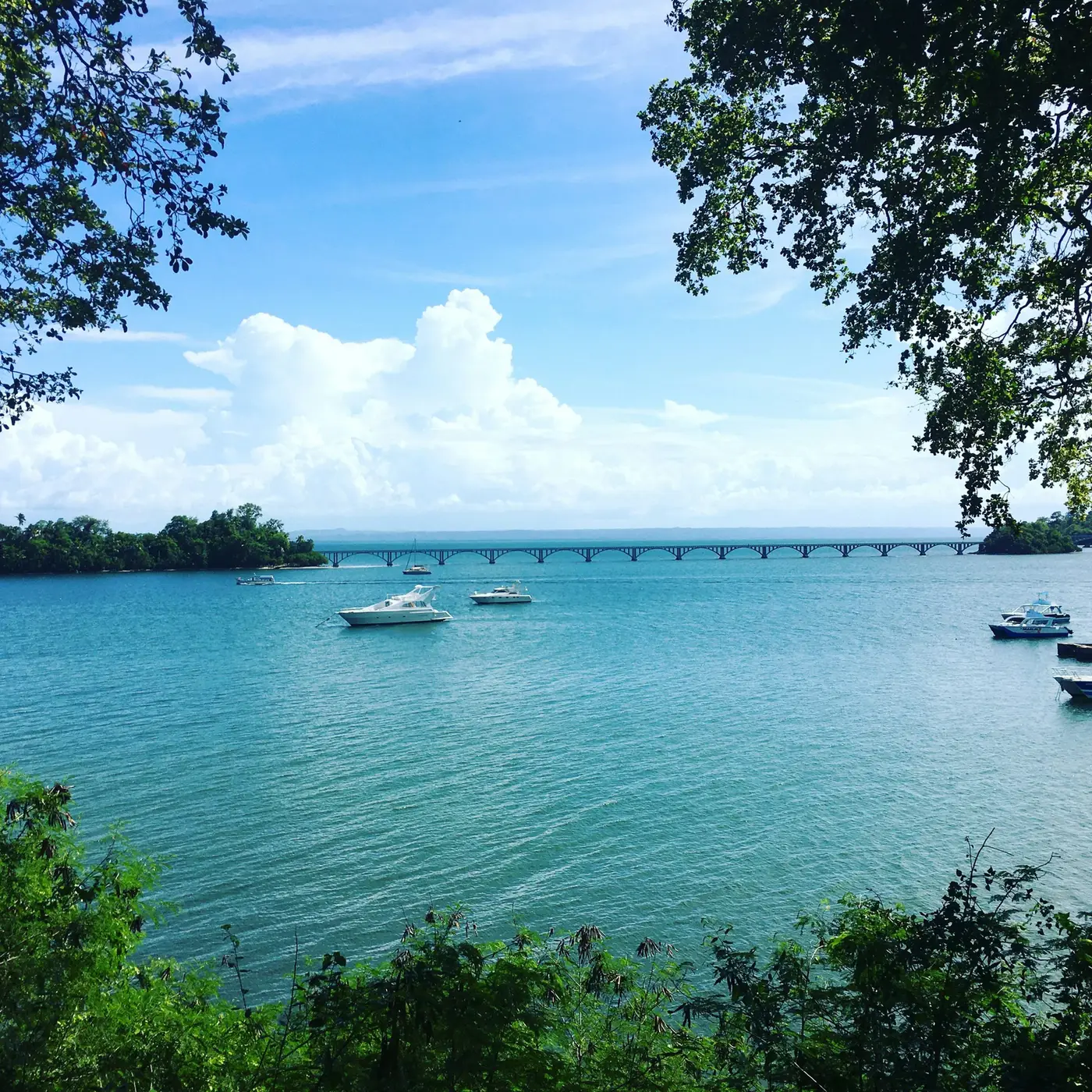
A Samana peninsula town with a strong European and North American retiree base already in place, built around Playa Bonita and Playa Coson. Daily life is walkable; real estate carries a premium for that reason.
Punta Cana
The most developed international infrastructure in the country: direct flights, established private healthcare, and the largest concentration of gated residential communities built specifically for foreign buyers.
Santo Domingo
The capital, and the only base that offers a full-scale city: specialist medical care, a functioning professional and legal infrastructure, and the shortest distance to the immigration and tax authorities that residency actually runs through.
Sosua & Cabarete
The north coast's longer-established expat corridor, more price-accessible than Las Terrenas or Punta Cana, with a slower pace and a smaller, more settled foreign community.
Retiring in the Dominican Republic: common questions
Where should I retire in the Dominican Republic?
It depends on what matters more, lifestyle or infrastructure. Las Terrenas and Punta Cana lead on beach lifestyle and foreign-buyer infrastructure; Santo Domingo leads on healthcare, professional services, and proximity to the immigration authorities that residency runs through; Sosúa and Cabarete lead on affordability with a longer-established, smaller expat community. None of the four is a wrong answer, they suit different retirements.
How do I retire in the Dominican Republic as a US citizen?
Qualify under Pensionado ($1,500/month pension), Rentista ($2,000/month passive income), or Investor ($200,000 investment), then move through document legalization, a Residence Visa issued by a Dominican consulate, in-country conversion to the residency card through the Dirección General de Migración, and a separate filing for Law 171‑07 tax-exempt status. Processing typically runs two to four months once the file is complete.
What does it cost to retire in the Dominican Republic?
Most couples budget $2,000 to $3,500 a month for a comfortable lifestyle, including rent, food, private healthcare, and entertainment. The North Coast runs 15 to 25 percent below Punta Cana for a comparable standard of living; Santo Domingo sits between the two.
What are the pros and cons of retiring in the Dominican Republic?
The case for it: proximity to the US, a permanent tax exemption on foreign pension income, a lower cost of living, strong private healthcare, and an established retiree community. The friction: Medicare does not cover care there, hurricane season runs June through November on the North and East coasts, infrastructure reliability varies outside expat corridors, and Spanish becomes necessary outside tourist zones.
Is my Social Security taxed if I retire in the Dominican Republic?
Not by the Dominican Republic. Social Security counts as pension income under Law 171‑07 and is exempt from Dominican tax once Pensionado status is confirmed. It remains reportable to the IRS as part of worldwide income, the same as it would be living anywhere else outside the US.
Do I need health insurance to retire in the Dominican Republic?
Yes, in practice. Medicare does not cover care outside the US beyond a narrow, capped set of emergency exceptions. Most retirees carry a local ARS plan or an international policy, typically $70 to $200 a month at retirement age, which is what makes the private hospital network, CEDIMAT, HOMS, and Clínica Abreu among them, worth using.


Last reviewed 31 August 2026.
This guide is general information, not legal, tax or immigration advice. Programme terms are set by the relevant government and can change; confirm any figure with the authority, or with us, before acting on it.