















Retiring in Panama, at a glance
Panama's Pensionado programme grants permanent residence to anyone with a guaranteed lifetime pension of at least USD 1,000 a month. There is no investment requirement, no minimum age set by the programme itself, and no temporary stage: approval delivers permanent status directly. Residents then qualify for a statutory schedule of discounts that runs from air fares and hotels to medicine and utility bills, and which is written into Panamanian law rather than offered as a courtesy.
It is the most generous retirement residence programme in the Americas and, measured by what it asks of the applicant, one of the cheapest routes to permanent residence anywhere. What it asks for is not capital. It asks for durable, verifiable income.
Who qualifies: the pension test
The whole application turns on a single question: is your income a pension that is guaranteed for life? Panama is not testing wealth. It is testing permanence.
Income that ordinarily qualifies:
- State and social security retirement pensions, including US Social Security, the Canada Pension Plan and their European equivalents.
- Military and government service pensions.
- Corporate or occupational pensions from an established company or pension trust.
- Lifetime annuities issued by a regulated insurer, where the payment is contractually guaranteed for life.
Income that ordinarily does not:
- Investment income, dividends and rental income, however reliable in practice. They are not guaranteed for life.
- Drawdown from a pension pot that can be exhausted, as opposed to an annuity that cannot.
- Savings, however large. A seven-figure balance does not qualify a person who has no pension.
◇ This is the single most common reason a well-off applicant is refused. If your retirement is funded from a portfolio rather than a pension, the Pensionado route is closed and the Qualified Investor Visa or a self-economic-solvency filing is the usual alternative. Some applicants purchase a lifetime annuity specifically to qualify; that works, but it is an investment decision before it is an immigration one.
The income thresholds
| Applicant | Monthly pension required | With qualifying property |
|---|---|---|
| Single applicant | USD 1,000 | USD 750 |
| Married couple, applying together | USD 1,250 | USD 1,000 |
| Each additional dependant | + USD 250 | + USD 250 |
The reduced thresholds apply where the applicant owns Panamanian real estate with a registered value above USD 100,000. Verify current figures against the Servicio Nacional de Migración before filing.
A couple can combine pensions to reach the joint threshold. What they cannot do is count income that fails the lifetime-guarantee test in order to top up a pension that falls short.
The property discount on the threshold
Buying Panamanian property with a registered value above USD 100,000 lowers the pension requirement by USD 250 a month. For an applicant sitting just under the line, that is often the difference between qualifying and not.
The arithmetic is worth doing properly. A USD 100,000 purchase to unlock a USD 250 monthly reduction is not a discount, it is a capital allocation, and it should be justified by wanting the property. Where it genuinely helps is the applicant who intends to buy in Panama anyway and can time the purchase before the filing.
Registered value is what counts, and under-declaration at the notary is common in Panama and disqualifying here. Check the figure at the Public Registry, not on the invoice.
The discounts, and why they are unusual
Most countries market a retirement visa on climate and cost of living. Panama legislated a discount schedule and made it enforceable. Pensionado residents hold the same entitlements as Panamanian retirees, and businesses are obliged to honour them.
A reduction on air fares, and on hotel rates, with the deeper discount applying on weekdays and a smaller one at weekends.
Reductions on medical consultations, hospital bills, dental and eye examinations, and on prescription medicines. This is the entitlement that matters most and the one applicants most consistently underestimate.
Reductions on restaurant bills, on electricity and telephone accounts up to a consumption ceiling, and on public transport.
Reductions on professional and technical services, on closing costs for a home loan, and an exemption from certain import duties on household goods.
◇ The exact percentages are set by statute and have been amended over the years. We publish them per applicant at the point of advice rather than in a guide, because a stale percentage in a public page is worse than no percentage at all. What does not change is the structure: these are legal entitlements, not loyalty schemes.
What the status actually is
Approval grants permanent residence. Not a temporary permit that converts later, and not a renewable card. There is no two-year stage as there is on the Friendly Nations Visa, and no conversion filing to remember.
Two limits are worth stating plainly:
- It does not carry a work permit. The Pensionado is a retirement status. Employment in Panama requires a separate authorisation.
- The pension must persist. The status rests on the income that qualified you. In practice this is rarely revisited, but it is the condition on which the permit was granted.
How the application runs
- Establish that the pension qualifies. Before anything else. Obtain a letter from the paying institution confirming the amount, its permanence and that it is payable for life.
- Assemble the file. Passport valid at least six months, police clearance covering the past five years of residence, health certificate, photographs, marriage and birth certificates for dependants.
- Apostille and translate. Every foreign document needs an apostille and a Spanish translation by an authorised public translator. This is the step that takes the longest and the one applicants start too late.
- File through a Panamanian lawyer, who must present the application on your behalf.
- Attend in person. The applicant must be in Panama for the filing and for the biometric appointment.
- Receive permanent residence and then the cédula, Panama's national identity document, which is what actually unlocks the discount schedule in daily use.
Spouse, children and parents
A spouse and dependent children are included as dependants, each adding USD 250 a month to the income threshold along with their own fees and document set. Children are ordinarily included while they remain dependent and in full-time study.
Where a couple both hold qualifying pensions, filing jointly against the couple's threshold is usually cheaper than one principal plus one dependant. It is worth modelling both before filing.
What it costs
There is no investment, so the cost is fees and paperwork.
Immigration fees and a repatriation deposit per applicant, payable at filing.
Charged per applicant, with a reduced rate for dependants. A single filing, not the two-stage structure of the Friendly Nations route.
Apostilles, certified translations, police and medical certificates. Modest per person, material for a family.
At least one trip to Panama, and in practice two, given the biometric appointment.
Against almost any other permanent residence in the Americas, the total is small. The programme's cost is not financial; it is the requirement to hold a lifetime pension in the first place.
What retiring in Panama actually costs each month
The USD 1,000 threshold is what the programme requires. It is not what living in Panama costs, and confusing the two is the most expensive mistake made on this subject. What retirement in Panama actually costs is decided almost entirely by one choice: the capital, or not. A couple in the Chiriquí highlands and a couple in Costa del Este are living in the same country under the same residence permit and running budgets that differ by a factor of three.
Rather than publish a monthly figure that will be stale within a year, it is more useful to set out which costs move in your favour when you retire to Panama and which move against you. That structure does not change.
| Cost | Against the United States or Western Europe |
|---|---|
| Domestic help, gardening, maintenance | Substantially cheaper, and the main reason retired budgets stretch further here |
| Produce, fish, local market shopping | Substantially cheaper |
| Medical consultations, dentistry, elective procedures | Substantially cheaper, before the statutory discount is applied |
| Property taxes | Low, and there are exemption regimes on some new construction |
| Restaurants outside the capital | Cheaper |
| Fuel, mobile and internet service | Broadly comparable |
| Imported groceries and branded goods | Dearer, sometimes markedly |
| Cars | Dearer, because of import duty |
| Electricity, if you run air conditioning continuously | Dearer, and the single most underestimated line in a coastal budget |
| Apartments in Punta Pacífica, Costa del Este or Casco Viejo | Priced against Miami, not against the region |
Indicative direction of travel, not quotations. Verify current prices for your specific location and household before committing.
Two things follow from that table. The first is that the discount schedule attaches to precisely the categories a retired household spends most on: healthcare, utilities, travel, restaurants and professional services. It is worth more to a retiree than the headline percentages suggest, because it lands on recurring costs rather than one-off ones.
The second is that air conditioning is the hidden variable. A household in the highlands may not run it at all. A household on the Pacific coast runs it most of the year, and the electricity account is what separates the budget people planned from the budget they have. If you are modelling a move, model it with the air conditioning on.
◇ A note on the figures that circulate. Most published "cost of living in Panama" numbers are drawn from the interior and from single-person households, then quoted at couples considering Panama City. They are not wrong, they are answering a different question. Decide where you intend to live before you accept any monthly figure as applying to you.
Where retirees actually live
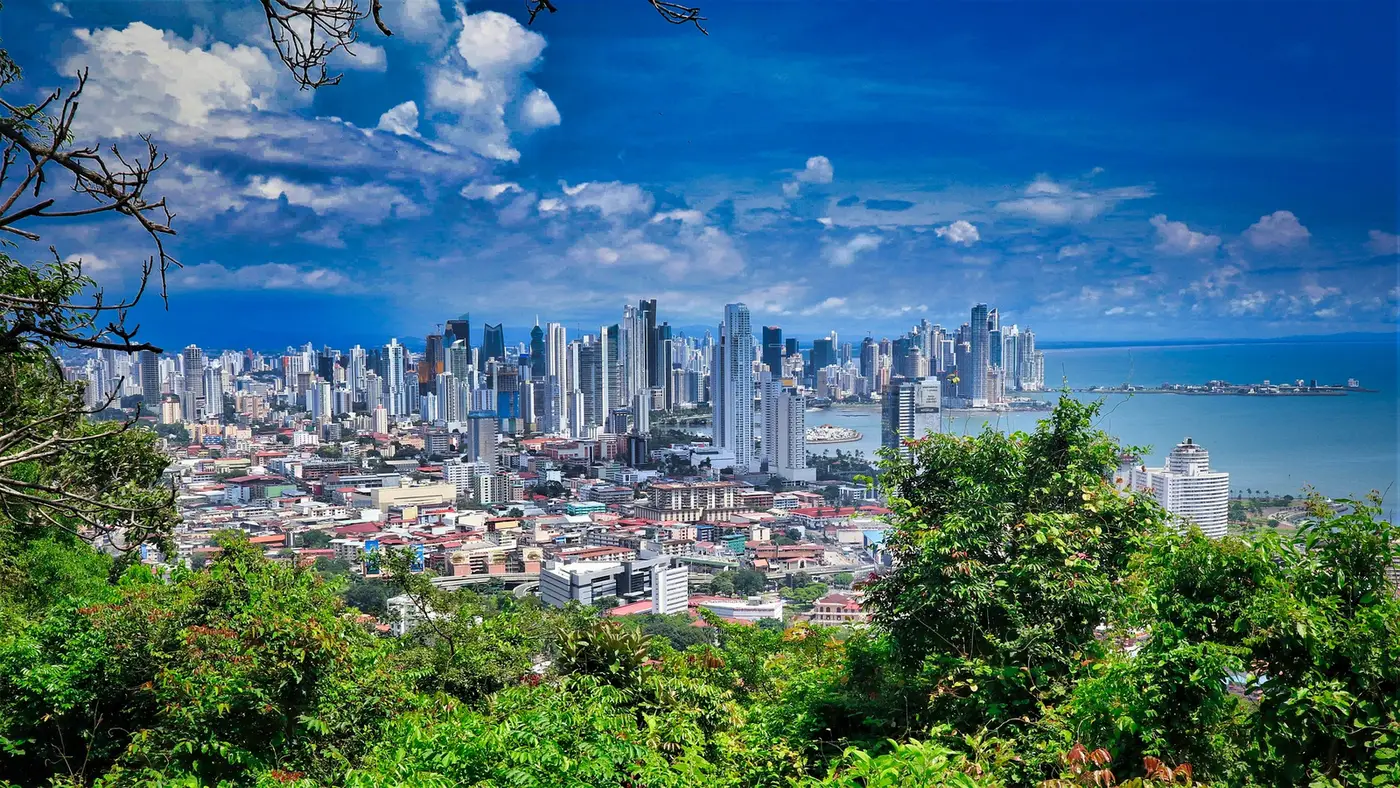
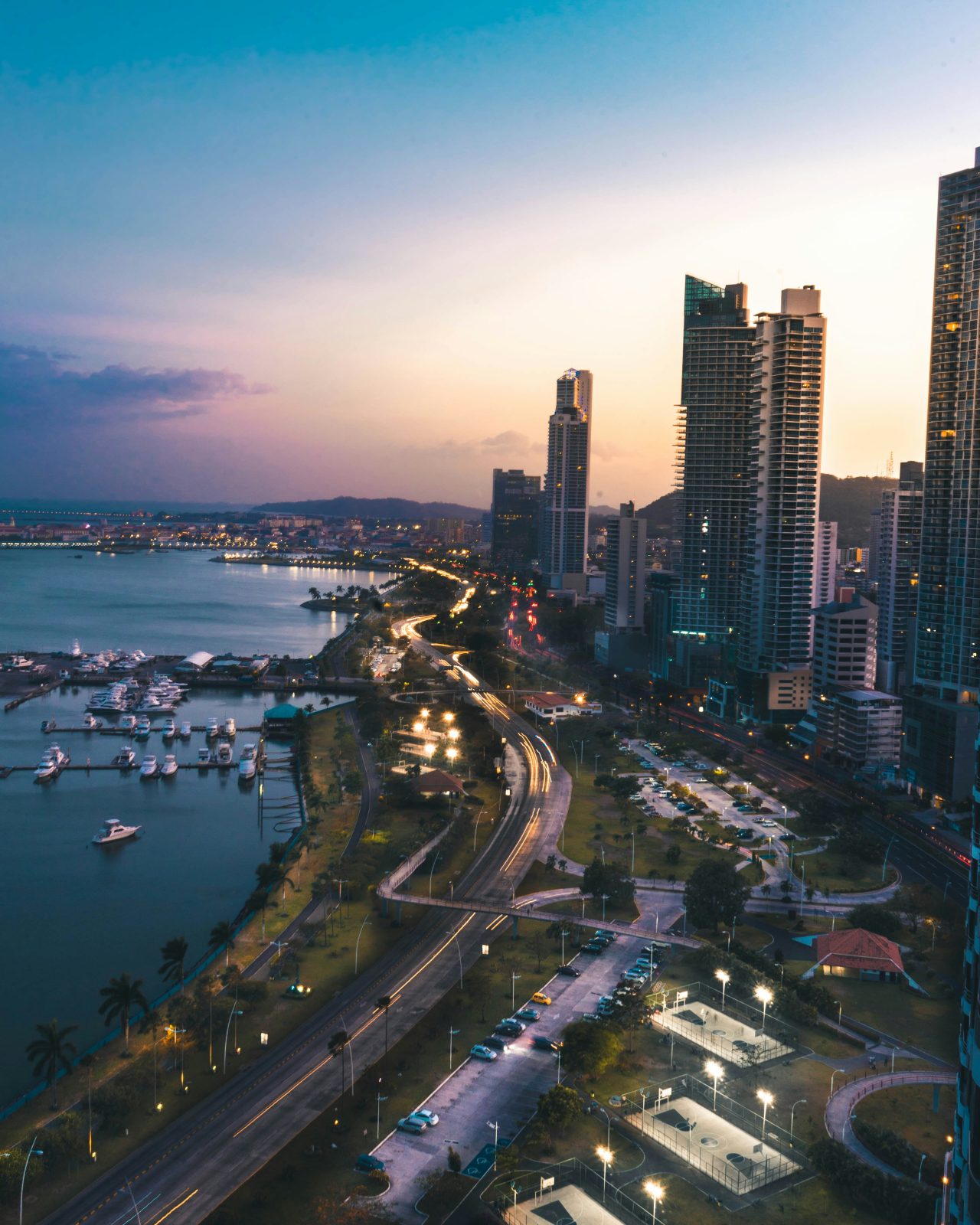
Panama is small, and retired foreigners concentrate in perhaps six places. Each solves a different problem and each imposes a different cost. Choosing between them matters more to how the retirement feels than the choice of residence permit does.
Hospitals, direct flights, restaurants, and the only place in the country where you can live without Spanish. Also the most expensive, the hottest and the most congested. Suits people who want a city and are willing to pay Miami prices for a good address.
The classic retirement choice. Cooler at altitude, no air conditioning required, an established foreign community and a lower cost base. The trade-offs are distance from Tocumen and a smaller pool of specialist medicine, which is why many residents keep a plan for reaching the capital.
An hour or so from the capital on the highway, which is the point: beach living within reach of Panama City hospitals. Well supplied, heavily built, and hot. The compromise choice, and popular for exactly that reason.
Quieter, more Panamanian, and further from everything. Suits people who want the country rather than an expatriate enclave, and who are comfortable driving for specialist care.
Caribbean, informal and beautiful. Also humid, remote, and dependent on small aircraft and boats. Wonderful for some, and the place people most often leave after the first year.
Panama's second city and the practical service centre for the west: hospitals, banks, an airport and none of the capital's prices. Underrated by people who arrive planning on Boquete and end up needing what David has.
The pattern worth noticing is that the highlands solve the climate and the coast does not, while the capital solves medicine and connectivity and nothing else solves them as well. Most people who settle successfully in Panama end up somewhere that trades one of those away deliberately, rather than somewhere they chose from photographs.
◇ Rent for a full year before buying anything. The single most common regret we hear is a purchase made in the first three months, in a place chosen on a two-week visit, in the dry season.
The dollar, and what it takes off the table
Panama uses the United States dollar as its circulating currency. The balboa exists, at parity, essentially as coinage. For a retiree paid a pension in dollars this removes the single largest financial risk of retiring abroad: there is no exchange rate between your income and your expenses, and no devaluation history to price into a thirty-year plan.
This is worth stating plainly because it is the quiet reason Panama keeps appearing on retirement lists above countries that are cheaper. A retirement in a country with its own currency is a bet on that currency holding over the decades you intend to live there. Panama does not ask you to take that bet. A pension of USD 1,000 buys the same in Panama in twenty years as the dollar itself does, no better and no worse.
The corollary is less comfortable and less often mentioned. Because Panama dollarised rather than pegged, it has no central bank able to act as a lender of last resort in the way a monetary authority normally can. In practice this has made Panamanian banking conservative rather than fragile, but it shapes the experience of being a customer:
- Opening an account takes weeks, not days. Expect to provide bank references, proof of the source of your funds, a utility bill and, usually, a personal interview. Arriving without a working arrangement elsewhere is a mistake.
- Compliance is heavy. Panama has spent the last decade rebuilding its standing with international regulators, and the burden of that lands on new account holders.
- The cédula changes things. Much of the friction eases once you hold the national identity document, which is one more reason not to delay that step after approval.
Healthcare, and the age problem nobody raises early enough
Private medicine in Panama City is the reason a great many retirees choose Panama over cheaper neighbours. It is good, it is fast, and the same procedure costs a fraction of what it costs in the United States before the statutory discount is applied. The problem is not the medicine. The problem is insurance, and it is a problem of timing: cover becomes harder and dearer to arrange the older you are when you first ask for it, and some insurers will not write a new policy at all past a cut-off age.
Three facts decide the healthcare question for most applicants, and they should be established before the residence application, not after.
- Medicare does not travel. United States Medicare does not pay for care received in Panama, in almost all circumstances. A retiring American is therefore buying private cover, self-insuring, or planning to fly home for anything major. All three are legitimate. Drifting into one by default is not.
- Buy cover before you need it, and before you turn a corner. Local and regional policies are readily available to a healthy applicant in their sixties and materially harder to obtain later. Pre-existing conditions are underwritten. The worst version of this is the person who moves at sixty-eight, stays healthy for four years, and then tries to buy cover at seventy-two.
- Decide where your serious medicine happens. The capital's private hospitals are the regional standard, and several maintain affiliations with United States institutions. The highlands and the peninsula do not have that depth. A retirement in Boquete with a cardiac history needs a written plan for reaching Panama City, not an assumption.
Set against that, the day-to-day experience is better than most new residents expect. Consultations are quick to arrange and inexpensive to pay for out of pocket, pharmacies dispense a good deal that would require a prescription elsewhere, and the Pensionado schedule reaches consultations, hospital accounts, dental and eye examinations and prescription medicines. For a household with recurring medical costs, the discount entitlement is worth more than any other element of the status.
◇ The order matters. Establish that you can obtain cover, at a premium you accept, before you commit to the move. It is the one part of this decision that gets strictly worse the longer it is left, and it is not recoverable once a condition has been diagnosed.
Getting there, and staying close to home
For a North American retiree, Panama's real advantage over most of the alternatives is not cost. It is proximity. Tocumen is the connecting hub of the Americas, Panama runs on a single time zone all year with no daylight saving, and the country sits below the belt where Caribbean hurricanes ordinarily track. Those three facts do more for the practicality of a retirement than any brochure item.
Tocumen carries direct service to a long list of United States and Canadian cities, and onward connections across Latin America. A retiree in Panama can be at a family event in North America the same day. That is not true of most of Europe or Asia and it is what keeps people in the country when grandchildren arrive.
Panama observes UTC-5 year round and does not change clocks. It therefore sits on United States Eastern time for part of the year and Central time for the rest. Calls home happen at civilised hours, banking and medical appointments can be handled in real time, and remote family arrangements stay workable.
Panama lies below the latitudes where Atlantic hurricanes ordinarily form and track. It is not a guarantee, and it does not exempt the country from heavy rain, flooding or seismic activity, but it removes the annual insurance and evacuation problem that shapes retirement in much of the Caribbean.
Spanish is the working language everywhere outside a few districts of the capital and the established foreign enclaves. English will carry you through a Panama City hospital and a Boquete restaurant. It will not carry you through a bank, a notary, a municipal office, or the counter where you claim a statutory discount.
Is Panama actually a good place to retire?
For the right household, it is among the strongest options anywhere, and the residence programme is the least of the reasons why. For the wrong household it is humid, more expensive than expected, and a long way from the life that was left behind. The honest version of the answer depends on which of the following you are willing to accept.
| What Panama does well | What it asks you to accept |
|---|---|
| Permanent residence immediately, on income rather than capital | The income has to be a pension guaranteed for life, which excludes many wealthy applicants |
| Your currency is the local currency | Prices in the capital are set against Miami, not against the region |
| Statutory discounts that are legally enforceable | They are claimed at a counter, in Spanish, sometimes from someone who needs reminding they exist |
| Foreign pension income outside Panamanian tax | Your home country's rules still decide your actual tax bill |
| Same-day flights to North America, and no clock changes | You are still leaving your medical system, your professional advisers and your friends |
| Excellent private hospitals in the capital | Insurance gets harder to buy every year you wait, and Medicare does not travel |
| Below the main hurricane track | Humid for most of the year, and the wet season is long |
| No requirement to live there full time | The discounts, and the point of the exercise, only work if you do |
The people for whom Panama works best tend to share a profile: a pension that qualifies comfortably, a genuine willingness to learn functional Spanish, health cover arranged before the move, and a decision to live outside the most expensive districts of the capital. The people who leave in the first two years tend to have arrived in the dry season, bought quickly, underestimated the humidity, and expected to manage in English.
Neither group is unusual. The difference between them is almost entirely a matter of what was checked before the move rather than what was discovered after it.
Does it lead to a passport?
Yes, on the same terms as any other permanent residence. Naturalisation requires five years of residence, and because the Pensionado grants permanent status immediately, the clock starts at approval rather than two years later.
Naturalisation is a separate petition with its own tests, including Spanish and Panamanian civics, and Panama's constitutional position on dual nationality has a wrinkle that is worth understanding before you begin. Both are covered in our guide to Panamanian citizenship.
Most Pensionado applicants never file for naturalisation, and that is a reasonable choice: permanent residence delivers the discounts, the cédula and the right to live in Panama indefinitely, which is what they came for.
How a pension is taxed
Panama taxes territorially. A pension paid from abroad is foreign-source income and falls outside Panamanian income tax entirely, whatever your residence status.
That does not settle the question, because the country paying the pension usually has a view. US Social Security remains taxable by the United States for US citizens wherever they live. UK state and occupational pensions are generally taxed at source unless a double taxation treaty says otherwise, and the UK and Panama have no comprehensive income tax treaty. The tax outcome of retiring to Panama is decided by the rules of the country paying you, not by Panama. Take advice there first.
The part the brochures leave out
- Panama City is not cheap. The cost-of-living figures that circulate are drawn from the interior. A comparable apartment in Punta Pacífica or Costa del Este is priced against Miami, not against Medellín.
- Healthcare is genuinely good, and private. The best hospitals in Panama City are excellent and are paid for. Cover becomes harder and dearer to buy the later you arrange it, and some insurers will not write new policies past a certain age.
- The climate is humid, year round. The dry season is pleasant. The rest of the year is not, and it is the most common reason people leave.
- Spanish is not optional outside the expatriate districts. The discount schedule is claimed at a counter, in Spanish, from someone who may need reminding it exists.
- Banking is slow. Opening a Panamanian account as a new resident takes weeks and a thick file. Do not arrive without a working arrangement elsewhere.
Pensionado, Friendly Nations or Qualified Investor?
| Pensionado | Friendly Nations | Qualified Investor | |
|---|---|---|---|
| Capital required | None | USD 200,000, or none on a job | From USD 300,000 |
| Income test | Lifetime pension, USD 1,000/month | None | None |
| Nationality restriction | None | Around 50 countries | None |
| First status | Permanent | Temporary, 2 years | Permanent |
| Right to work | No | Yes, on the employment route | No |
| Statutory discounts | Yes | No | No |
If you hold a qualifying pension, the Pensionado is almost always the right route: it costs the least, grants permanent status immediately, and carries an entitlement the others do not. The reason to look elsewhere is a pension that does not qualify, or a need to work in Panama.
The Pensionado sits alongside five other ways into Panama, and the right one is not always the cheapest. All of them, with the tax position and the cost of living behind them, are set out in our Panama country guide.
What goes wrong
- Presenting income that is not a lifetime pension. Portfolio income, rent and drawdown do not qualify, however large.
- A pension letter that omits the word permanent. The institution's letter has to confirm the payment is for life. A payment statement is not the same document.
- Starting apostilles late. They routinely take longer than the rest of the file put together.
- Police certificates from the wrong countries. Every country of residence over the past five years, not only the country of nationality.
- Counting on a property purchase that under-declares. The registered value is the value assessed.
- Assuming residence settles the tax position. It settles Panama's. It does not settle the position of whoever pays your pension.
The first year, in order
Almost every avoidable problem in a Panamanian retirement comes from doing these in the wrong order. The residence permit is step four, not step one, and the two steps that are hardest to reverse are the two people do first.
- Settle the tax position where your pension is paid. Before anything else, and in that country, not this one. Panama will not tax a foreign pension. Whoever pays it may well continue to. That answer changes the arithmetic of the whole exercise and it is cheapest to obtain before you have moved.
- Establish that you can buy health cover, at a price you accept. Get a quotation in writing while you are still healthy and still in your current jurisdiction. This is the step that cannot be recovered later.
- Confirm the pension qualifies. Ask the paying institution for a letter stating the monthly amount and that it is payable for life. If they will not use that language, the application has a problem and it is better to discover it now than after the apostilles.
- File the residence application. Through a Panamanian lawyer, in person, with apostilled and translated documents.
- Collect the cédula. Permanent residence is the status. The cédula is what actually works at a counter, and it is what unlocks the discount schedule in daily use.
- Open the bank account. Materially easier with the cédula in hand. Keep the account at home open until this one works.
- Rent, for a full year, in the place you think you want. Through one wet season, not one dry one. Buy afterwards or do not buy at all.
- Learn functional Spanish. Not fluency. Enough for a bank, a notary, a pharmacy and a discount counter. It is the difference between living in Panama and visiting it indefinitely.
Steps one and two are the ones people skip, because they are unglamorous and happen before the interesting part. They are also the only two on the list that get strictly worse the longer they are left.
The questions we get every week
How much money do I need to retire in Panama?
The Pensionado programme requires a guaranteed lifetime pension of at least USD 1,000 a month for a single applicant, USD 1,250 for a couple filing together, and USD 250 more for each additional dependant. Those thresholds fall to USD 750 and USD 1,000 respectively where the applicant owns Panamanian property with a registered value above USD 100,000. There is no investment or savings requirement.
Is there a minimum age for the Panama Pensionado visa?
The programme itself sets no minimum age. What it requires is a pension that is guaranteed for life, which in practice means most applicants are of retirement age. A younger applicant with a qualifying military, government or annuity pension can apply.
Does the Panama Pensionado visa give permanent residency?
Yes, immediately. Approval grants permanent residence directly, with no temporary stage, no renewals and no conversion filing. That is the main structural advantage over the Friendly Nations Visa, which begins with a two-year temporary permit.
Does US Social Security qualify for the Panama Pensionado?
Yes. US Social Security is a state retirement pension payable for life and is among the most commonly accepted forms of qualifying income, provided the Social Security Administration issues a letter confirming the monthly amount and its permanence, apostilled and translated into Spanish.
Can I work in Panama on a Pensionado visa?
No. The Pensionado is a retirement status and does not carry the right to work in Panama. Employment requires a separate work authorisation. Income earned outside Panama is unaffected, and remains outside Panamanian income tax under the territorial system.
Do I have to live in Panama full time?
There is no continuous-presence requirement for the permit, though prolonged absence can put any Panamanian residence at risk, and the discount schedule is only useful to someone actually in the country. Naturalisation, if you pursue it later, applies a stricter test of genuine residence.
Is Panama a good place to retire?
For a household with a qualifying lifetime pension, health cover arranged in advance and a willingness to learn functional Spanish, Panama is among the strongest retirement options anywhere: permanent residence immediately, the United States dollar as the local currency, a statutory discount schedule, foreign pension income outside Panamanian tax, and same-day flights to North America. It suits people less well if they expect to manage in English outside the capital, if they underestimate the humidity, or if they intend to live in the most expensive districts of Panama City on a modest pension.
How much does it cost to live in Panama as a retiree?
It depends almost entirely on whether you live in Panama City or outside it, and the difference between those two budgets can be a factor of three. Domestic help, produce, medical care and property taxes cost substantially less than in the United States or Western Europe. Imported goods, cars and electricity cost more, and apartments in Punta Pacifica or Costa del Este are priced against Miami. Published monthly figures are usually drawn from the interior and quoted at people considering the capital, which is why they so often disappoint.
Where do most foreign retirees live in Panama?
Six places account for most of them: Panama City for hospitals and flights, Boquete and the Chiriqui highlands for the cooler climate, Coronado and the Pacific beaches as the compromise within reach of the capital, Pedasi and the Azuero peninsula for a quieter and more Panamanian life, Bocas del Toro for the Caribbean, and David as the practical service centre for the west. The highlands solve the climate, the capital solves medicine and connectivity, and no single place solves both.
Does Panama use the US dollar?
Yes. The United States dollar is the circulating currency of Panama, and the balboa exists at parity essentially as coinage. For a retiree paid a dollar pension this removes exchange rate risk between income and expenses entirely, which is a substantial and often underrated advantage over cheaper countries that run their own currency.
Does Medicare cover me in Panama?
No. United States Medicare does not pay for care received in Panama in almost all circumstances. A retiring American is therefore buying private cover, self-insuring, or planning to return home for anything major. Private cover should be arranged before the move: policies become harder and dearer to obtain with age, pre-existing conditions are underwritten, and some insurers will not write a new policy past a cut-off age.
Is Panama safe for retirees?
The areas where foreign retirees concentrate are generally quiet, and the risks are the ordinary urban ones rather than anything exceptional: opportunistic theft, and particular districts of the capital to avoid at night. The practical safety questions in a Panamanian retirement are usually not about crime at all. They are about driving on unlit rural roads, the distance to specialist medicine from the highlands and the peninsula, and the wet season.
Sources, and how to check them
Panama's Servicio Nacional de Migración for the Pensionado category and its income thresholds; the statutory retiree benefits regime for the discount schedule; the Gaceta Oficial for amendments.
◇ Income thresholds and discount percentages are set by statute and amended periodically. Every figure here was verified at the review date below and should be confirmed against the current rules before you act on it, including by us.

Last reviewed 31 August 2026.
This guide is general information, not legal, tax or immigration advice. Programme terms are set by the relevant government and can change; confirm any figure with the authority, or with us, before acting on it.