
















































Botswana citizenship by investment: the current status
Botswana citizenship by investment is legislated but not operational. The enabling Act passed in December 2025 and was assented to, but it has not been commenced because the regulations that would make it workable are still being drafted. No applications are being accepted as at September 2026.
Botswana announced its intention to create a citizenship by investment programme in September 2025, and for most of the following year the international investment migration market has discussed the country as though a launch were imminent. It is worth separating what has happened from what has been marketed.
What has happened is that Botswana passed a law. On 15 December 2025 the Minister of Labour and Home Affairs, Maj. Gen. Mokgware, presented the Citizenship (Amendment) Bill 2025 to Parliament. It was approved on 17 December 2025 and became the Citizenship (Amendment) Act, 2025, No. 30 of 2025. That Act creates the legal category of economic citizenship in Botswana law, inserting a new section into the principal Citizenship Act. It received presidential assent.
What has not happened is commencement. In Botswana, as in most Commonwealth jurisdictions, an Act that has been passed and assented to does not necessarily have legal effect on that date. Many Acts specify that they come into operation on a date fixed by the responsible minister by notice in the Gazette, and that date is usually held back until the subsidiary regulations are ready. The Ministry of Labour and Home Affairs set out the position plainly in its Committee of Supply speech on 24 February 2026: the Act had been passed and assented to, the regulations to operationalise it were still being finalised, and the Act would come into effect once that work was done.
Six months later the position had not changed materially. As at August 2026 the official programme portal was still collecting expressions of interest. Reporting from Botswana in late August 2026 described the programme as having stalled before launch, with prospective investors waiting for the legal and administrative machinery needed to activate it.
For anyone comparing programmes, the practical consequence is simple. Botswana cannot presently be included in a shortlist of citizenship options, because there is nothing to apply to. It belongs in a watchlist, alongside other announced but unlaunched frameworks. That is not a criticism of Botswana. Building a citizenship programme properly takes an authority, a due diligence supply chain, a fee structure, an appeals mechanism and an oath and registration process, and a government that publishes those before opening the door is behaving more carefully than one that does not.
The risk sits with the investor who treats an announcement as an offer. Several of the pages currently ranking for this topic in search results still describe a first quarter 2026 launch, a window that closed some time ago. If you are researching Botswana, check the date on whatever you are reading before you act on it.
What “registration of interest” actually means
Registering interest is a marketing sign-up. It creates no application, no priority, no legal status and no commitment from the Government of Botswana. It should not be confused with a pre-approval, and it does not lock in any advertised price.
The programme has been promoted with a pre-registration portal, and the language around it has been described in the market as a fast-track or an expression of interest mechanism. Hundreds of prospective investors registered during the development phase, and a wave of early registrations in the first month drew attention from across the industry.
It is important to be precise about what a registration is. Registering an interest is not the same as submitting a citizenship application, and it does not guarantee approval. In legal terms it is closer to joining a mailing list than to filing a petition. Until the Act is commenced and regulations are gazetted, there is no statutory application, no prescribed form, no fee payable to government and no decision-maker with power to grant anything.
Three things follow.
First, priority is not established. Where a programme is expected to run under a limited annual quota, early registrants naturally assume they are near the front of a queue. Nothing published to date establishes that registration confers a place in any queue, or that the eventual regulations will recognise pre-commencement registrations at all. A new statutory scheme is entitled to start its ordering from the date the scheme legally exists.
Second, price is not locked. Contribution levels discussed publicly are indicative figures from programme outlines and media briefings, not a gazetted fee schedule. Registering at a moment when USD 75,000 is being quoted does not create a contractual right to that figure once the schedule is published.
Third, the personal data question deserves a moment of thought. Anyone registering interest in a citizenship programme is disclosing identity, nationality and intent to a third-party platform, sometimes before the data handling framework for the programme has been established. That is a low but non-zero consideration for clients whose reason for seeking a second citizenship is itself sensitive.
None of this makes registering irrational. It is free, it takes a few minutes, and it puts you on the notification list for a programme that may well open. It simply should be understood as what it is, which is an option on future information rather than a step in an application.
The Citizenship (Amendment) Act 2025: what it does and does not do
The Act creates a legal basis for granting citizenship to investors of value and addresses the dual nationality obstacle. It does not set the contribution amount, define due diligence, name an administering authority or open an application route. Those belong to regulations that have not yet been made.
The amendment inserts a new provision into the Citizenship Act creating what has been described in parliamentary reporting as economic citizenship, structured around a new section 15A. The policy intention set out when the Bill was presented was to attract investors who would assist in job creation and bring skills into the country, against a background of high unemployment, particularly among young people, and a constrained national budget following a prolonged downturn in the global diamond market.
The sectors identified as priorities for investor skills and capital were manufacturing, mining and energy, agriculture, infrastructure, financial services, and the green and renewable energy economy, with scope for the minister to prescribe further sectors. Proceeds have been discussed in connection with housing, tourism, renewable energy, mining diversification and financial services.
Two features of the Act are worth flagging for prospective applicants.
Ministerial discretion is broad
Reporting from the parliamentary debate indicates that the minister would prescribe the use of funds raised, that economic citizens would be required not to commit financial crime in Botswana or abroad, and that the minister would retain power to withdraw citizenship in defined circumstances. Discretionary revocation powers are common in newer programmes and are not in themselves a red flag. What matters is the procedural protection attached to them: the grounds, the standard of proof, the right to be heard and the route of appeal. Those details sit in the regulations, which is one reason the regulations matter more than the Act.
The Act is enabling, not self-executing
An enabling Act of this kind sets the frame and delegates the substance. The contribution amount, the application form, the fee schedule, the due diligence standard, the identity of the vetting provider, the quota, the processing service standard and the oath or registration formalities are all things that a scheme of this type would ordinarily carry in subsidiary legislation. None of them exist yet in published form. This is precisely why Parliament passing the Bill in December 2025 did not open an application route, a distinction that has been lost in a good deal of the commentary since.
For clients, the useful test is this: ask any adviser presenting Botswana to show you the gazetted regulations and the prescribed application form. Until those exist, what is being presented is a policy, not a programme.
Why regulations, not legislation, are the real blocker
A citizenship programme needs an administering authority, a vetting supply chain, a gazetted fee schedule, a decision and appeal process and a registration mechanism. Botswana has the statute but not yet the machinery, and building that machinery is the slow part.
Investment migration coverage tends to treat the passage of a bill as the finish line. In practice it is closer to the halfway mark. The work between assent and the first approved application is administrative rather than political, which makes it less visible and often slower.
A functioning programme requires, at minimum, the following to be stood up.
A designated authority. Someone must receive applications, hold funds, make decisions and answer for the programme. That means an office, a mandate, a budget line, staff with vetting experience and a reporting relationship to a minister. Established programmes run dedicated units for exactly this reason.
A due diligence supply chain. Serious programmes contract independent international risk firms to run enhanced checks, and layer domestic and international law enforcement database searches on top. Procuring those providers, agreeing standards, setting who pays and building an escalation path for adverse findings is a substantial exercise. Public commentary during the development phase indicated that the due diligence arrangements for Botswana, including where checks would be conducted and by whom, had not been determined.
A gazetted fee schedule. Contribution levels, government processing fees, due diligence fees per applicant category and dependant fees all need to be prescribed, not merely announced. Until they are, quoted totals are estimates.
Banking and fund flow. Contributions must land somewhere with a clear statutory purpose, auditable segregation and correspondent banking that will accept the flows. For a new programme in a jurisdiction without an established investment migration track record, correspondent banking appetite is a genuine constraint and is frequently underestimated.
Decision, appeal and registration. There must be a lawful decision, a route to challenge refusal, and a mechanism by which an approved applicant is registered as a citizen and issued a passport. The passport issuance workflow in particular tends to expose capacity limits in civil registries that were not built for a foreign applicant stream.
None of this is exotic. It is the standard build. The reason it is worth spelling out is that it explains the delay in terms that do not require any adverse assumption about the government's intent. Botswana has not gone quiet on the programme; it is doing the part of the work that does not generate press releases.
The corollary for planning is that the meaningful signal to watch for is not another ministerial statement. It is a Gazette notice bringing the Act into operation, followed by regulations. Until those appear, timelines quoted anywhere are projections.
Timeline: from memorandum to today
A memorandum of understanding was signed in September 2025, legislation passed in December 2025, regulations were confirmed outstanding in February 2026, and the programme remained registration-only through August 2026. The originally advertised first quarter 2026 launch was missed.
- 26 September 2025President Duma Boko's government signs a memorandum of understanding with investment migration consultancy Arton Capital, formalised in New York during the United Nations General Assembly. The programme is branded the Impact Citizenship Programme.
- September 2025Reuters reports the announcement, noting the government's stated aim of diversifying revenue away from diamonds and that the required investment amount had not yet been established.
- Late 2025The programme is outlined in the government's State of the Nation Address detailed report as a route for qualifying investors to obtain citizenship in exchange for contributions to national development priorities. Indicative contribution levels from USD 75,000 for a single applicant enter public circulation.
- October 2025A pre-registration portal opens. Reported registrations pass one thousand within the first month, with interest recorded from the United States, Zimbabwe, India, South Africa, Pakistan and residents of Botswana itself.registration figures are programme-side, unaudited
- October 2025At an industry conference in Rome, Arton Capital's Mohamed Bennis indicates a target processing time of 60 days and describes a first quarter 2026 launch as realistic, while confirming that the citizenship law must first be amended to allow dual citizenship and that due diligence arrangements were still under discussion.
- 15 December 2025The Citizenship (Amendment) Bill 2025 is presented to Parliament by the Minister of Labour and Home Affairs.
- 17 December 2025Parliament approves the Bill. It becomes the Citizenship (Amendment) Act, 2025, No. 30 of 2025, and is assented to.
- Early January 2026The Financial Times reports that the initiative still requires further approval and that guidelines are not yet fully specified.
- 24 February 2026The Ministry of Labour and Home Affairs states in its Committee of Supply speech that the Act has been passed and assented to but that regulations are still being finalised, and that the Act will come into effect once they are complete.
- Q1 2026The advertised launch window passes without an application route opening.
- August 2026The programme portal continues to invite expressions of interest rather than applications. Botswana press reporting describes the programme as stalled before launch, with formal application procedures, compliance systems and an operational launch date still unconfirmed.
- 1 September 2026Position at the date of this review: legislated, not commenced, not open.

The pattern here is not unusual. Announced programmes routinely slip by twelve to twenty-four months between political commitment and first approval, and a meaningful minority never open at all. What makes Botswana's case instructive is how clean the paper trail is: the government has stated the obstacle in its own words, which is more transparency than most delayed programmes offer.
Contribution levels: what has been said and what has been prescribed
Public figures indicate a contribution of USD 75,000 to USD 90,000 for a main applicant, with the range reflecting family composition rather than separate investment tiers. These are indicative. No fee schedule has been gazetted, and legal, due diligence, dependant and passport fees are unpublished.
The headline figure attached to Botswana in market commentary is USD 75,000. Government programme outlines described indicative contribution levels beginning at that number for a single applicant, and the public-facing programme site has advertised a range of USD 75,000 to USD 90,000. Reporting has consistently characterised the variation within that band as reflecting family composition rather than a choice between different investment products.band and structure unconfirmed pending gazetted schedule
If that structure holds, Botswana would sit at the accessible end of the global market on headline contribution. It is worth understanding what such a comparison does and does not tell you.
| Programme | Status | Indicative minimum contribution | Applications accepted |
|---|---|---|---|
| Botswana Impact Citizenship Programme | Legislated, not commenced | USD 75,000 to USD 90,000announced | No |
| São Tomé and Príncipe | Operational | From USD 90,000 | Yes |
| Caribbean fund options (range) | Operational | From USD 200,000 single applicantvaries by state | Yes |
Three cautions apply to the headline number.
The first is that headline contribution is rarely the total. Across the market, government processing fees, due diligence fees for each applicant over a threshold age, passport and registration fees, document translation and apostille costs, and professional fees typically add a meaningful percentage to the sovereign contribution. For Botswana, none of the ancillary items have been published, so any total presented today is constructed from assumption.
The second is that price is a weak proxy for value. A contribution buys a specific passport with specific mobility, a specific tax and residence position, and a specific level of programme stability. A lower entry price attached to a passport with narrower access and no operating history is not automatically the better purchase for a client whose objective is mobility or long-horizon security. It may be the better purchase for a client whose objective is a low-cost second nationality with African standing, which is a legitimate but different brief.
The third is that pre-launch pricing frequently moves. Programmes commonly revise indicative figures upward once due diligence costs and administrative overheads are properly modelled, and sometimes introduce dependant pricing that materially changes the family total. Planning a family application around an announced single-applicant figure is planning around the least reliable number in the set.
The two announced routes: government to citizen and government to government
Botswana's programme outline described both a direct route for individual investors and a government to government channel. The second is unusual in this market and, if it proceeds, would place part of the programme outside ordinary private-client access.
The government's 2025 programme outline described two channels: a government to citizen route and a government to government channel, with indicative contribution levels beginning at USD 75,000 for a single applicant.
The government to citizen route is the conventional one. An individual applies, is vetted, contributes and is granted citizenship. Everything discussed elsewhere in this guide applies to it.
The government to government channel is less common and deserves comment because it has been reported without much explanation. In investment migration, arrangements of this type have historically taken several forms: bulk allocations negotiated between states, humanitarian or displaced-person arrangements, or bilateral schemes attached to a development partnership. Each has a different risk profile, and some have attracted significant international scrutiny where the vetting attached to bulk allocation has been weaker than for individual applications.
Two implications matter for private clients.
The first is quota interaction. If a programme runs under a limited annual quota, and part of that quota is committed to a government to government channel, the volume available to individual applicants is smaller than the headline number suggests. Neither the quota figure nor its allocation between the two channels has been published.
The second is reputational coupling. The international standing of a citizenship, and specifically its visa-free treatment by third countries, is affected by how the granting state is perceived to vet. Where a bulk channel exists alongside an individual channel, third countries assessing visa policy will look at the weakest link. This is not a prediction about Botswana, which has a strong governance reputation, and no adverse finding of any kind has been made. It is a structural point about why the design of the second channel is worth watching before committing capital.
Until regulations are published, we treat the government to government channel as an open question rather than a feature, and we do not advise clients on the assumption that it will exist in the form described.
Dual citizenship in Botswana: the position before and after the Act
Botswana historically restricted dual citizenship, which made an investor citizenship programme unworkable for most foreign applicants. The 2025 amendment was passed to address this. The practical effect for an applicant depends on commencement and on the regulations.
This was always the structural obstacle. A citizenship programme sells a second passport to people who intend to keep their first. A jurisdiction that requires renunciation cannot sell that product to anyone except those willing to give up their existing nationality, which is a small and very particular market.
Botswana's restriction on dual nationality was identified early as the item that had to change before the Impact Citizenship Programme could function, and it was named as such by the programme's implementing partner in late 2025. The Citizenship (Amendment) Act 2025 was the vehicle for that change, and reporting on its passage described it as legally permitting dual or multiple citizenship in connection with attracting high net worth individuals.
The verify flag on that last point is deliberate and important. There is a meaningful legal difference between a general liberalisation of dual nationality for all Batswana and a narrower provision permitting dual nationality only for persons naturalised under the economic citizenship route. Both are plausible readings of the reporting. The distinction affects whether an economic citizen holds a nationality on the same footing as any other citizen, or a status carved out by a specific section with its own conditions and its own revocation grounds. Until the gazetted text is available for review, we do not state which applies.
There is also a timing point that clients regularly miss. Even where legislation permitting dual citizenship has been passed and assented to, commencement governs when it has effect. A provision that is on the statute book but not in force does not change anyone's nationality position. Reporting in mid-2026 indicated that the dual citizenship amendment was still awaited in operative terms, with November 2026 cited in market commentary as a milestone by which the citizenship law was expected to be fully amended.milestone is market commentary, not a government commitment
For anyone whose own nationality restricts dual citizenship, none of this changes their side of the equation. Botswana permitting dual nationality does not permit it for a client whose current state does not. That analysis is always run separately, and for several nationalities it is the binding constraint regardless of what Botswana does.
What is not yet known
The unpublished list is longer than the published one: commencement date, regulations, fee schedule, due diligence provider and standard, quota, administering authority, dependant eligibility, physical presence obligations, appeal rights and passport issuance process.
It is more useful to state the gaps precisely than to summarise around them. As at 1 September 2026, the following remain unpublished.
Legal and administrative
- The commencement date of the Citizenship (Amendment) Act 2025.
- The regulations themselves, in draft or final form.
- The administering authority, its powers and its reporting line.
- The prescribed application form and supporting document schedule.
- Appeal rights on refusal, and the grounds and process for revocation.
Financial
- The gazetted contribution schedule, and whether the announced band is confirmed.
- Government processing fees.
- Due diligence fees by applicant category and age threshold.
- Dependant fees and the definition of eligible dependants.
- Passport, registration and oath fees.
- The fund into which contributions are paid, and its audit and reporting arrangements.
Compliance and operations
- The due diligence standard and the identity of the vetting provider.
- Restricted nationality list, if any.
- The annual quota and its allocation between channels.
- Whether any physical presence, interview or oath attendance is required.
- Service standards, and whether the 60-day target survives into regulation.
- Whether pre-commencement registrations of interest carry any recognition.
We publish this list rather than a projected fee table because a projected fee table would be a guess dressed as guidance. When the regulations are gazetted, this section becomes the shortest in the guide and the rest of the page is rewritten around them.
Botswana passport power and visa-free access
The Botswana passport carries visa-free or visa-on-arrival access to roughly 88 destinations on the most commonly used measure, placing it around 60th globally. Published counts range from 51 to 88 depending on methodology, so compare like with like before drawing conclusions.
Mobility is the single most examined attribute of any citizenship offered for investment, and it is also the attribute most often misrepresented, because different published datasets count different things.
On the most commonly cited measure, the Botswana passport provides visa-free or visa-on-arrival entry to approximately 88 destinations as at 2026, which places it in the region of 60th globally.count varies by dataset and date A separate dataset accessed during preparation of this guide recorded 84 destinations. Reporting in the Financial Times in early 2026 described the passport as offering visa-free access to 51 countries, a materially lower figure that reflects a narrower definition excluding visa-on-arrival and electronic authorisation categories. One published ranking places the passport at 120th globally on a weighted methodology that scores the economic footprint of accessible destinations rather than counting them.
All of these numbers can be correct at once. The differences are definitional:
- Visa-free only counts destinations you may enter with no prior authorisation and no payment at the border.
- Visa-free plus visa-on-arrival adds destinations where a visa is issued at the frontier, usually for a fee, sometimes with conditions.
- Weighted measures score destinations by the share of global GDP, trade or travel they represent, so access to a large economy counts for more than access to a small one.
Under a weighted approach, a passport can hold a respectable raw count while ranking lower, because the accessible destinations are concentrated in smaller economies. That is the pattern for Botswana: on one such measure, citizens have access to roughly 42 per cent of countries but around 24 per cent of global travel.weighted figures vary by publisher and year

What the Botswana passport does well
Regional mobility within southern Africa is strong, reflecting Southern African Development Community arrangements, and access across much of the Commonwealth and a broad set of African, Caribbean and Asian destinations is straightforward. For a client whose life and business sit substantially within Africa, this is a practical travel document rather than a symbolic one.
Where it is limited
Botswana nationals require a visa for the Schengen Area, the United Kingdom and the United States as at the date of this review. That is the decisive point for most clients who buy citizenship primarily for mobility. If the objective is visa-free entry to Europe, Botswana does not deliver it, and no announced feature of the investment programme changes that. Visa policy is set by destination states, not by the issuing state, and third countries do not extend access because a passport has become purchasable.
It is also worth noting that Botswana does not appear on the United States E-2 treaty country list, so the passport does not open the E-2 investor visa route. For United States and United Kingdom clients this is usually irrelevant in any event, since E-2 is not available to them as a planning tool, but it matters for clients of other nationalities who use E-2 access as a screening criterion.
Always check current entry requirements with the destination government or an airline source before travelling. Published mobility datasets lag policy changes, sometimes by months.
Where Botswana sits in Africa
Botswana holds the fourth strongest passport in Africa, behind Seychelles, Mauritius and South Africa. On governance and macroeconomic stability it ranks at or near the top of the continent, which is the substantive case for the citizenship rather than mobility.
On raw mobility, the Botswana passport ranks fourth in Africa, behind Seychelles, Mauritius and South Africa.ranking varies by dataset That is a genuinely strong regional position, and it is a better one than most African passports available through investment.
| Passport | Africa rank | Approximate destinations | Available by investment? |
|---|---|---|---|
| Seychelles | 1 | Highest in Africa | No |
| Mauritius | 2 | High | No, residence routes only |
| South Africa | 3 | Moderate to high | No |
| Botswana | 4 | Approximately 88 | Legislated, not yet open |
| São Tomé and Príncipe | Lower tier | Limited | Yes, operational |
The table makes the market position clear. The African passports with the strongest mobility are not for sale, and the African citizenship you can currently buy does not carry strong mobility. Botswana is interesting precisely because it would be the first African programme to offer a passport with a credible regional standing behind it. That is the strategic reason the programme has attracted attention out of proportion to its size.
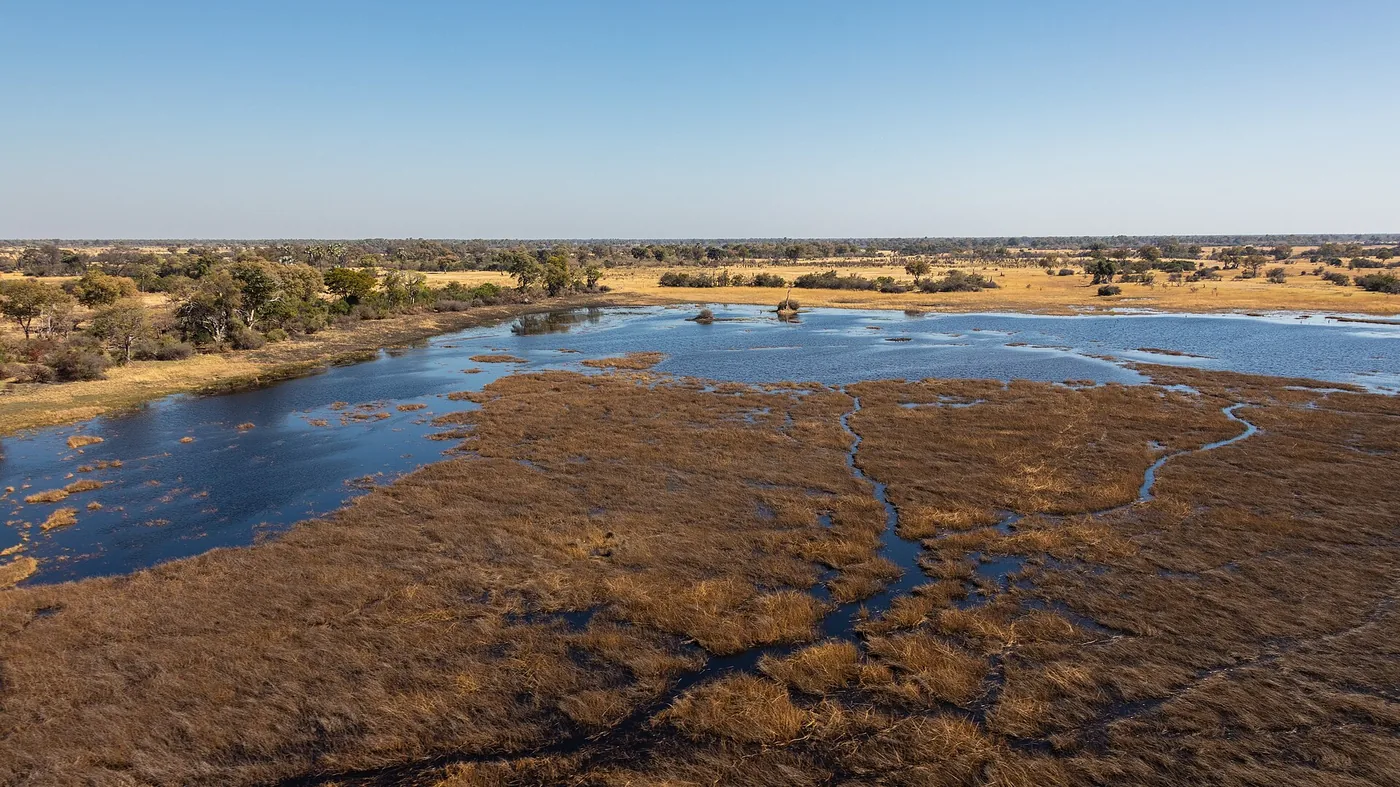
The governance argument
Mobility is not the whole of the case. Botswana's distinguishing characteristic in an African context is institutional quality. It has held continuous multi-party elections since independence in 1966, transferred power peacefully following the 2024 general election, maintained an independent judiciary rooted in a Roman-Dutch and common law tradition, and sustained one of the continent's more consistent records on corruption perception and macroeconomic management. Its currency, the pula, has been managed conservatively, and the country has historically run substantial foreign reserves relative to its size.
That record is the reason a Botswana citizenship would carry a different weight from a citizenship issued by a jurisdiction with no comparable history. For a client seeking a second nationality as institutional insurance rather than as a travel document, the quality of the granting state matters more than the visa count. It is also why the delay should be read charitably: a government with this record has more to lose from a poorly built programme than it stands to gain from a fast one.
The fiscal driver
The programme exists because of diamonds, or rather because of their decline. Botswana is the world's leading producer of diamonds by value, and a prolonged downturn in the global diamond market constrained the national budget through 2025. The citizenship programme was presented explicitly as a diversification measure, with proceeds directed toward housing, tourism, renewable energy, mining and financial services.
Understanding the driver helps predict the behaviour. A programme created to close a fiscal gap has strong political incentive to open, which supports the view that Botswana will eventually launch. It also carries a risk that pricing and volume decisions are taken with revenue in mind, which is a reason to watch the eventual quota and due diligence design closely.
Botswana routes that are open today
Botswana has no golden visa, but it does have business investment and long-term residence permit routes that are operational now. These build presence and may ease a later transition into the citizenship programme, though no continuity has been guaranteed.
For clients whose interest in Botswana is substantive rather than opportunistic, there are existing mechanisms. They are immigration routes for real activity, not investment migration products, and they should be approached on that basis.
Business investment visa
An investor who establishes or acquires a company meeting Botswana's minimum capital and employment thresholds may generally obtain a renewable investment visa, commonly issued for five years, conditional on the business remaining active and compliant. This route carries genuine obligations: a real trading entity, local employment, tax registration and ongoing compliance. It suits an operator, not a passive applicant.
Long-term residence permit
Investors placing capital in approved sectors, or meeting prescribed financial conditions, may apply for residence permits covering themselves and dependants, renewable while the investment continues to satisfy the requirements.
Does presence help with the citizenship programme later?
Commentary has suggested that existing routes will form the foundation of the eventual citizenship framework, easing the transition for those already established. Treat that as plausible rather than assured. No published instrument links the two, and a new statutory scheme is under no obligation to credit prior residence. Establishing a Botswana business because you want a Botswana business is sound. Establishing one on the assumption that it converts into economic citizenship is speculative.
Note also that these are residence routes, not citizenship routes. Ordinary naturalisation in Botswana carries residence duration, character and other statutory requirements that are separate from the economic citizenship provision, and the historical dual nationality restriction has practical consequences for anyone contemplating that path.
LGP Programme Durability Rating: Botswana
Botswana rates low on durability today, not because the jurisdiction is weak but because the programme does not yet exist operationally. Sovereign quality is high; programme maturity is at zero. The rating is expected to move substantially once regulations are gazetted.
Our durability rating assesses how likely a programme is to remain available, respected and useful over a ten-year horizon. It is deliberately separate from price and from mobility, because those are the attributes clients already compare.
Two observations follow from the shape of that profile.
The first is that the weakness is programme-side, not country-side. That is the more favourable of the two failure modes, because programme design can be fixed by publishing good regulations, whereas a weak sovereign cannot be fixed at all. A high sovereign score with a zero maturity score describes a programme worth watching.
The second concerns external scrutiny. Citizenship by investment has been under sustained international review, and newly launched programmes attract closer attention than established ones. A programme that opens with a robust, published due diligence framework and a conservative quota enters that environment in reasonable shape. One that opens with an undisclosed vetting arrangement and an aggressive volume target does not. Botswana's eventual regulations will determine which description applies, and that is the single most important document for any prospective applicant to read when it appears.
We will restate this rating when the Act is commenced.
Should you pre-register? A due diligence pre-mortem
Pre-registering is low cost and reasonable if you understand it confers nothing. Committing capital, professional fees or planning assumptions to Botswana before commencement is not advisable. Assume the programme opens later and differently than announced.
A pre-mortem works backwards. Assume it is 2028, a client committed to Botswana in 2026, and the outcome was poor. What went wrong? The plausible answers are worth stating before rather than after.
The programme opened but the price changed
Announced figures were indicative and predated a full costing of due diligence, administration and dependant processing. The gazetted schedule came in materially above USD 75,000 for a family, and the family total bore little relation to the number the client planned around.
The programme opened but the client was ineligible
Regulations introduced a restricted nationality list, a source-of-funds standard or a dependant definition that excluded the client's circumstances. New programmes commonly adopt restrictions in their first regulations that were never signalled during promotion.
The dual citizenship provision proved narrower than reported
The amendment permitted dual nationality only within the economic citizenship provision, on conditions, with revocation grounds attached. The client received a status rather than a nationality on the ordinary footing they had assumed.
The client paid fees to an intermediary before there was anything to apply for
Professional fees, retainers or reservation payments were made against a programme with no commencement date. When the timeline slipped again, recovery depended entirely on the terms of the engagement.
The programme did not open
Fiscal conditions improved, political priorities shifted, or the administrative build proved harder than expected. The client spent two years without a second citizenship while operational alternatives were available throughout.
The last scenario is the one that costs the most and is discussed the least. For a client with a genuine need for a second nationality, whether for mobility, succession planning or contingency, two years of waiting is not a neutral position. It is two years of exposure to the risk the citizenship was meant to address.
Our position
Register interest if you want the notification. Do not pay anyone anything for Botswana until the Act is commenced and regulations are gazetted. If your need is real and present, solve it with a programme that is accepting applications, and treat Botswana as a possible addition later rather than a substitute now. Adding a second citizenship afterwards is straightforward. Recovering two lost years is not.
African citizenship by investment routes that are operational today
São Tomé and Príncipe is the African citizenship by investment programme accepting applications now. Egypt operates an investment-linked route with a higher threshold. Other African options are residence programmes rather than citizenship.
Clients arriving at Botswana usually want one of three things: an African citizenship, a low-cost second passport, or both. Two of those are available today.
São Tomé and Príncipe
A Portuguese-speaking island state in the Gulf of Guinea operating a contribution-based citizenship programme with indicative minimums from USD 90,000. It is the closest operational analogue to what Botswana has announced, at a similar entry point, with the decisive difference that it accepts applications. Covered in detail in the next section.
Egypt
Egypt operates citizenship routes linked to substantially larger deposits, property purchases or contributions, at thresholds several multiples above the Botswana band. It suits a different client: one with meaningful capital seeking a large-population regional state, rather than one seeking an economical second nationality.
Residence rather than citizenship
Mauritius, Namibia, South Africa and others operate residence routes tied to property, business or retirement income. These deliver presence, and in some cases a long-run naturalisation path, but they are not citizenship by investment and should not be presented as such. For clients whose objective is African presence rather than a second passport, they are frequently the better answer and are rarely considered because the market talks about passports.
Watchlist
Several African jurisdictions have announced or explored investor citizenship frameworks. Announcements are cheap; commencement is not. Our standing approach is to advise only on programmes that are accepting applications and to keep announced programmes on a watchlist with a stated trigger for review. For Botswana, that trigger is a Gazette notice bringing the Citizenship (Amendment) Act 2025 into operation.
São Tomé and Príncipe: the African citizenship you can apply for now
São Tomé and Príncipe operates a contribution-based citizenship programme at a comparable entry point to Botswana's announced band, and it is open. Lincoln Global Partners holds government-accredited marketing agent status for the programme under Licence No. STP-2025-8.
If the attraction of Botswana is an African citizenship at an accessible contribution level, São Tomé and Príncipe answers the same brief and is available today.
It is a small Portuguese-speaking republic in the Gulf of Guinea, a member of the African Union, the Community of Portuguese Language Countries and the Economic Community of Central African States. Its citizenship programme is contribution-based, with indicative minimums from USD 90,000, and it has been the operational African option for clients seeking a second nationality on the continent.
Lincoln Global Partners is an accredited marketing agent
LGP holds government-accredited marketing agent status for the São Tomé and Príncipe citizenship programme under Licence No. STP-2025-8. Accreditation means our submissions go through the programme's official channel rather than through an intermediary chain, which matters for file control, timeline visibility and accountability if a question arises during processing.

How it compares with what Botswana has announced
| São Tomé and Príncipe | Botswana | |
|---|---|---|
| Accepting applications | Yes | No |
| Legal basis in force | Yes | Act passed, not commenced |
| Indicative minimum | From USD 90,000 | USD 75,000 to USD 90,000announced |
| Published fee schedule | Yes | No |
| Passport mobility | Limited | Approximately 88 destinations |
| Region | Central Africa, Lusophone | Southern Africa, Anglophone |
| LGP accreditation | Yes, Licence No. STP-2025-8 | Not applicable |
The honest comparison is that Botswana would offer the stronger passport and the stronger sovereign, and São Tomé offers the ability to do something this year. Which matters more depends entirely on why the client wants the citizenship.
Where mobility is the objective, neither is likely to be the right answer on its own, and the conversation should move to Caribbean or European options. Where the objective is a lawful, documented second nationality at an accessible contribution, held for optionality and succession rather than for travel, São Tomé does the job now and can sit alongside a Botswana application later if the programme opens on acceptable terms.
Caribbean comparison for the same client
Caribbean fund options start from around USD 200,000 for a single applicant, roughly two to three times the Botswana band, and deliver substantially wider visa-free access including the Schengen Area and the United Kingdom for several programmes. The premium buys mobility and operating history.
Most clients researching Botswana eventually compare it with the Caribbean, and the comparison is instructive because the two sit at opposite ends of the same trade-off.
Caribbean programmes have operated for decades in some cases, have processed tens of thousands of applications, publish their fee schedules, use independent international due diligence firms and offer visa-free access that includes Europe for several of the five states. Entry through the fund or donation route generally begins from around USD 200,000 for a single applicant, with additional fees for dependants and processing.
| Attribute | Botswana (announced) | São Tomé and Príncipe | Caribbean fund routes |
|---|---|---|---|
| Entry contribution | USD 75,000 to 90,000 | From USD 90,000 | From USD 200,000 |
| Operating history | None | Established | Long, in several states |
| Schengen visa-free | No | No | Yes for severalunder review |
| UK visa-free | No | No | Varies by stateunder review |
| Processing target | 60 daystarget only | Published | Typically 4 to 9 months |
| Available now | No | Yes | Yes |
The decision rule we use with clients is straightforward. If the citizenship must produce travel access to Europe, the Caribbean or a European route is the conversation, and the African options are not substitutes at any price. If the citizenship is being acquired as a documented alternative nationality, held for optionality, succession or contingency, and travel is served by the client's existing passport, then the African options do the job at a third of the cost and the premium is not worth paying.
The failure mode we see most often is a client buying the cheap option for a mobility objective it cannot serve, then buying the expensive option two years later. That is not a saving.
Ten-year cost model
Headline contribution is between roughly 60 and 80 per cent of the true ten-year cost once fees, renewals, tax compliance and professional support are counted. For Botswana, the model cannot be completed because the fee schedule is unpublished.
We model citizenship decisions over ten years rather than at the point of purchase, because the acquisition cost is the part clients see and the smaller part of what they pay.
The full model includes the sovereign contribution, government processing fees, due diligence fees for each applicant, dependant fees, document procurement, translation and apostille, professional and legal fees, passport issuance, passport renewal across the period, any renewal or maintenance obligation, the cost of tax and reporting compliance arising from the new status, and the opportunity cost of capital where an investment rather than a donation route is used.
For Botswana, four of those lines cannot be populated. Government processing fees, due diligence fees, dependant fees and passport fees are unpublished. We can model the announced contribution and nothing else, which means any Botswana total circulating today has been assembled from assumptions about the largest unknown components. Publishing that as guidance would be presenting a guess with a decimal point.
United States taxpayers
United States citizens and green card holders should treat any second citizenship as a compliance event before treating it as a planning benefit. Acquiring another nationality does not alter United States tax obligations, which follow citizenship rather than residence. Foreign accounts opened in connection with a new status create FBAR and FATCA reporting obligations. Where a contribution is routed through a foreign fund or an investment vehicle rather than a direct donation, PFIC exposure requires analysis before subscription rather than after. Clients considering expatriation should understand the section 877A exit tax framework, including the mark-to-market regime and the covered expatriate tests, before taking any step that alters their position. None of this is a reason not to proceed. It is a reason to sequence the tax advice before the application rather than after the passport.
United Kingdom clients
UK residents should consider the interaction between a new nationality and their residence and domicile position, and should be aware that acquiring a second citizenship does not by itself change UK tax residence, which is determined by the statutory residence test. Where a second citizenship is being acquired as part of a wider relocation plan, the sequencing of the departure and the acquisition matters more than the acquisition itself.
Common questions on Botswana citizenship by investment
The most frequent question is whether the programme is open. It is not. The second most frequent is when it will open, and no government commencement date has been published.
Can I apply for Botswana citizenship by investment today?
No. The Citizenship (Amendment) Act 2025 has been passed and assented to but has not been brought into force, and the regulations required to operationalise it have not been published. The official portal accepts registrations of interest, which are not applications.
When will the Botswana programme open?
No commencement date has been published by the Government of Botswana. The originally advertised first quarter 2026 launch was missed. The Ministry of Labour and Home Affairs indicated in February 2026 that the Act would come into effect once regulations were finalised. Market commentary has referred to November 2026 as a milestone, but that is commentary rather than a government commitment.
How much will Botswana citizenship cost?
Public figures indicate USD 75,000 to USD 90,000 for a main applicant, with the range reflecting family composition. These are indicative rather than prescribed. Government processing fees, due diligence fees, dependant fees and passport fees have not been published, so no reliable total exists.
Does Botswana allow dual citizenship?
Botswana historically restricted dual nationality. The Citizenship (Amendment) Act 2025 was passed to address this, and reporting describes it as permitting dual or multiple citizenship. Whether the liberalisation is general or limited to the economic citizenship route requires review of the gazetted text, and commencement governs when it takes effect. Your own nationality's rules on dual citizenship are a separate question and are often the binding constraint.
How strong is the Botswana passport?
It provides visa-free or visa-on-arrival access to approximately 88 destinations on the most commonly used measure, placing it around 60th globally and fourth in Africa. Published counts range from 51 to 88 depending on methodology. It does not provide visa-free access to the Schengen Area, the United Kingdom or the United States.
Does registering interest reserve a place or lock in the price?
Nothing published indicates that it does either. Registration is not an application, confers no priority, creates no legal status and does not fix the contribution level.
Is there a Botswana golden visa?
Botswana does not operate a golden visa in the sense used in Europe. It does have business investment visas for those establishing or acquiring a qualifying company, and long-term residence permits for those meeting prescribed investment or financial conditions. Both are operational and both carry substantive obligations.
Will time spent in Botswana on a residence permit help with the citizenship programme?
Possibly, but nothing published links the two. Commentary has suggested existing routes will underpin the eventual framework. Treat that as plausible rather than assured, and do not structure a business around it.
How long will processing take?
A 60-day target has been discussed by the programme's implementing partner. That is an ambition stated before regulations were drafted, and it should not be relied upon. Whether it survives into the gazetted service standard is unknown.
Is Botswana a good country to hold citizenship of?
On institutional grounds, it compares well within Africa. Continuous multi-party democracy since 1966, a peaceful transfer of power following the 2024 election, an independent judiciary and a conservative macroeconomic record are meaningful. The open question is not the country. It is the programme.
What should I do if I want an African citizenship now?
São Tomé and Príncipe is the operational African citizenship by investment programme, with indicative minimums from USD 90,000. Lincoln Global Partners is an accredited marketing agent for the programme under Licence No. STP-2025-8.
What is the single signal that Botswana has genuinely opened?
A Gazette notice bringing the Citizenship (Amendment) Act, 2025 into operation, followed by published regulations containing a fee schedule and a prescribed application form. Until both exist, any launch announcement is a marketing statement.
How Lincoln Global Partners advises on pre-launch programmes
We advise on programmes that are accepting applications. Announced programmes go on a watchlist with a stated review trigger. We do not take fees against a programme that cannot yet be applied for.
Pre-launch programmes present a particular problem for advisers. There is client demand, there is a compelling story, and there is nothing to sell. The temptation to take a retainer against a future launch is real, and it is not a temptation we act on.
Our approach on Botswana is as follows.
We monitor a defined trigger. Not press coverage, not conference commentary, and not portal updates. The trigger is the Gazette notice commencing the Act, followed by the regulations. This page is reviewed against that trigger and restated when it moves.
We solve the present need with a present option. If a client's reason for wanting a second citizenship is live, we address it with a programme that is open, and we say plainly which parts of the brief that programme does and does not satisfy. Botswana is then discussed as a possible later addition rather than as a reason to wait.
We do not charge for a queue. No engagement fee, retainer or reservation payment is taken from a client for Botswana while the programme is not accepting applications.
We read the instrument, not the summary. When the regulations appear, we will review the gazetted text, in particular the scope of the dual nationality provision, the due diligence standard, revocation grounds and appeal rights, the dependant definition and the fee schedule. Our restated view will follow that review rather than the launch announcement.
If Botswana is on your list, the useful next step is a short conversation about why. In most cases the underlying objective can be met now, and Botswana turns out to be one candidate answer to a question that has better ones available today. In some cases it is worth the wait, and we will say so.
Sources
- Committee of Supply Speech, Ministry of Labour and Home Affairs, FY2026/27 (delivered 24 Feb 2026) — Government of Botswana (botswanaspeaks.gov.bw, official parliamentary speeches portal)
- Parliament Approves Citizenship Amendment Bill — Botswana Daily News (Department of Information Services, government-owned news service)
Sources checked 2026-09-20.

Last reviewed 1 September 2026.
This guide is general information, not legal, tax or immigration advice. Programme terms are set by the relevant government and can change; confirm any figure with the authority, or with us, before acting on it.