





























Sierra Leone citizenship by investment: the current position
The programme is live and has been since January 2025. It is one of only three operational routes to citizenship by investment on the African continent. Entry is USD 100,000 on the heritage route with a DNA test, or USD 140,000 without one. The passport reaches 62 destinations, does not reach Europe, and since 1 January 2026 does not reach the United States at all.
Sierra Leone announced its programme on 2 January 2025 and has been processing files since. That makes it one of a very small number of live direct citizenship routes outside the Caribbean and the Pacific, and, alongside Egypt and São Tomé and Príncipe, one of only three in Africa that actually accept applications rather than announce an intention to.
The structure is unusual enough to be worth setting out plainly before anything else, because most of the coverage of this programme repeats a sales sheet rather than describing what is on offer.
Sierra Leone is not selling citizenship through a statute written for that purpose. It is granting citizenship through an exception in an existing nationality law, packaged as a programme, priced, and administered under contract by a private operator. That is a materially different thing from the Caribbean model, from Egypt's model, and from São Tomé's, and it is the single most important structural fact about it.
The second most important fact is one that no competing page on this subject mentions. Since 1 January 2026, Sierra Leonean nationals have been under a full entry suspension to the United States. Anyone considering this programme as a mobility instrument needs to understand that before, not after.
The third is that the heritage route is genuinely distinctive. A USD 100,000 route conditioned on evidence of African ancestry is not a discount gimmick. It is a deliberate diaspora policy, and for a specific client it is the most interesting thing Sierra Leone has done. Whether the DNA condition is the right mechanism for that policy is a separate question, and we come to it below.
What follows covers the programme as it is, with its price, its legal basis, its passport and its risks stated at the same volume.
The legal basis, and why the instrument matters
The programme runs on a 2026 regulation made under the Citizenship Act, 1973, not on a dedicated investment migration statute. Ordinary naturalisation in Sierra Leone requires eight years of residence for applicants of African descent and fifteen for everyone else, so the programme exists precisely because it sits outside the ordinary route.
Sierra Leonean nationality is governed by the Citizenship Act, No. 4 of 1973, amended in 1976, in 2006 and again in 2017. The ordinary naturalisation provisions are demanding. An applicant of Negro African descent, which is the statutory term the Act uses, requires eight years of continuous residence. An applicant who is not requires fifteen. Both must satisfy a language requirement in a language indigenous to the country, be of good character, and demonstrate a capacity to contribute to the growth of Sierra Leone.
None of that is compatible with a 90 day product, which is the point. The programme is not a fast version of ordinary naturalisation. It is a separate mechanism that sits beside it.
The instrument the programme cites is the Citizenship (Special Naturalization) Regulation, 2026, made under section 27(a) of the 1973 Act, which the programme describes as empowering a grant of citizenship by exception where an applicant's participation serves the national interest. We have not been able to verify the wording of that section against a published consolidated text of the Act, and we say so rather than presenting the citation as settled.the 1973 Act is available online only as a scanned image; confirm the section text against the gazetted version before relying on it
What the 2006 amendment actually did
Three provisions of the Citizenship (Amendment) Act, No. 11 of 2006 bear directly on anyone acquiring Sierra Leonean nationality by this route, and all three are verifiable from the gazetted text.
Section 10 was repealed and replaced with a single sentence: a citizen of Sierra Leone may hold the citizenship of another country in addition to his citizenship of Sierra Leone. Dual nationality is therefore permitted as a matter of statute, not of practice, and has been since 2006. This is the strongest legal point in the programme's favour.
Section 16 was also repealed and replaced, and it runs the other way. As amended, the Minister may by Order deprive any person who is a citizen by naturalisation of that citizenship if satisfied that it would not be conducive to the public good that the person should continue to be a citizen. That is a broad power, it applies to naturalised citizens only, and a person naturalised under this programme falls squarely inside it.
The same amendment inserted a new section 22A providing an appeal. A person deprived under sections 16 or 19 may appeal to a committee chaired by a judge of the Superior Court of Judicature appointed by the Chief Justice, and comprising the Ombudsman, the chairman of the Human Rights Commission, and one representative each of the Christian Council of Sierra Leone and the Sierra Leone Council of Imams. The committee may uphold or reverse the Minister's decision, and on reversal the citizenship is restored.
Read those two together and the position is clear enough. Naturalised citizenship in Sierra Leone is revocable on a public good test, and there is a defined appeal body with judicial and civil society membership rather than pure ministerial finality. That is not unusual for a naturalisation regime. It is unusual to find it disclosed on a page selling one.
What it costs, line by line
USD 100,000 on the heritage route or USD 140,000 on the fast track, each quoted as all inclusive of programme, legal, due diligence and documentation costs, plus USD 10,000 per dependant. The lines the quote does not cover are the DNA test, document legalisation in your own jurisdiction, and travel, none of which is large.
The pricing is simpler than any Caribbean programme and simpler than Egypt's, because there is one number and it is stated as all inclusive rather than as a contribution to which fees are added.
| Line | Heritage route | Fast track route |
|---|---|---|
| Total quoted | USD 100,000 | USD 140,000 |
| Stated to cover | Programme fees, legal costs, due diligence, documentation and passport issuance | |
| Each qualifying dependant | USD 10,000 | |
| Quoted timeline | 60 days | 90 days |
| Eligibility condition | DNA evidence of African ancestry | Open to all nationalities |
| Residence required | None, before or after | |
| Physical visit required | None; the file is handled remotely | |
| Language test | None on this route | |
The lines outside the quote
An all inclusive quote is a good sign, and it is still worth knowing what sits outside it. On the heritage route, the DNA test from an approved laboratory is a separate cost and a separate delay. On both routes, police clearance certificates, apostilles and certified translations are obtained and paid for in your own jurisdiction, and a file spanning three or four countries of past residence will cost more and take longer to assemble than one that does not. Neither line is large against a six figure contribution, but both sit on your side of the invoice.
The comparison worth making is not against other African programmes but against the Caribbean, where a single applicant on a fund route now starts at USD 200,000 before agent fees, due diligence, government processing and passport issuance are added, and where the total frequently lands well above the headline. Sierra Leone's fast track at USD 140,000 all in is genuinely cheaper, and its heritage route at USD 100,000 is cheaper again. What that buys is the subject of the rest of this guide.
The GO-FOR-GOLD Club, priced
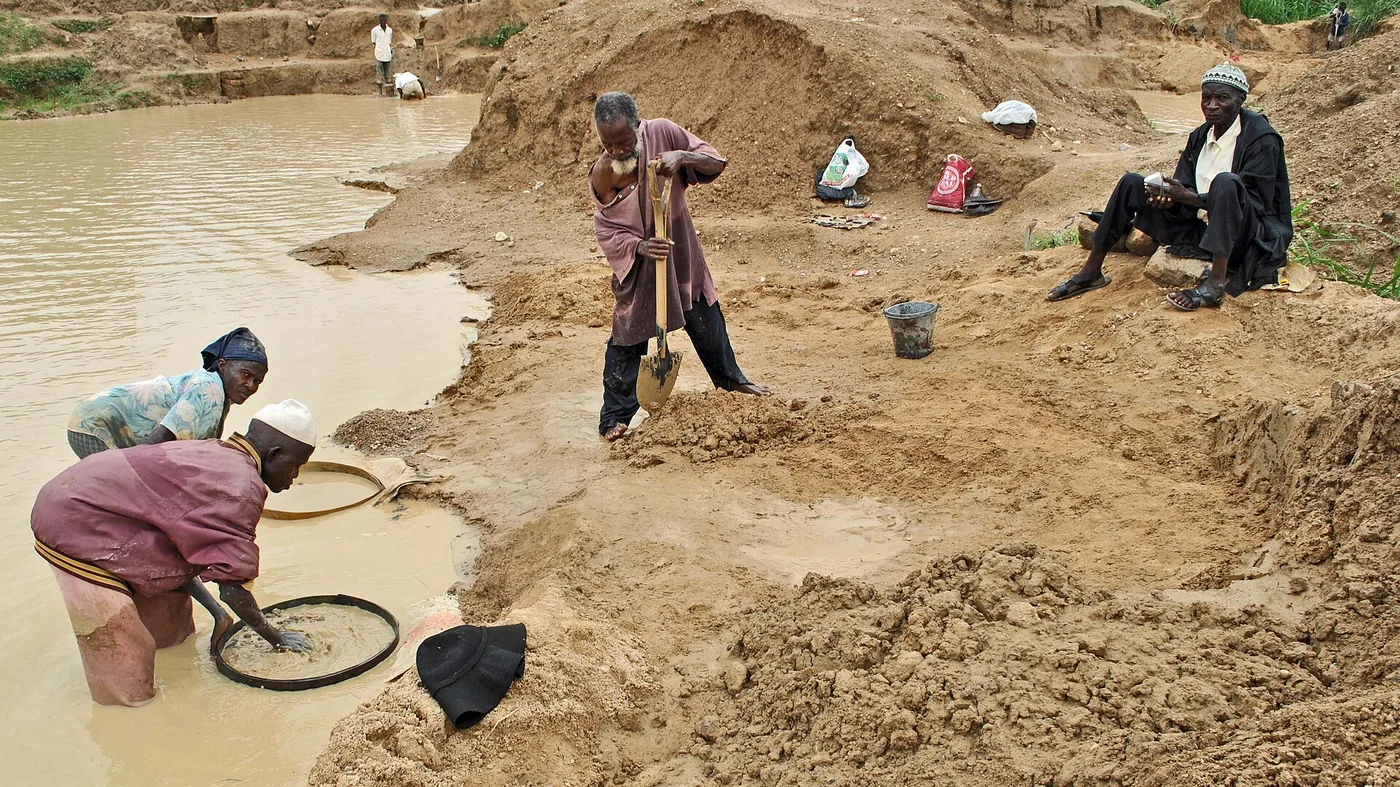
Successful applicants may buy Sierra Leone mined gold bullion at 2 per cent below market, capped at 20 kilograms over five years. At the September 2026 gold price that cap is worth about USD 2.9 million of bullion and the discount about USD 57,000. It is a real benefit for someone who was going to buy that much gold anyway, and worth nothing to anyone else.
The gold club is the programme's signature feature and the reason for its name, and it is almost always described without a number attached, which is how a benefit gets oversold.
Here is the arithmetic. Twenty kilograms is 643 troy ounces. Gold traded at about USD 4,443 an ounce on 6 September 2026, so the cap represents roughly USD 2.86 million of bullion. Two per cent of that is about USD 57,000, available over five years rather than at once.
Three things follow from that number.
The first is that the discount can exceed the cost of the fast track route, and comfortably exceeds the heritage route, but only for a client who deploys the full USD 2.86 million. A client who buys two kilograms saves about USD 5,700, which is a rounding error against a USD 140,000 contribution. The benefit scales entirely with the capital you were already going to commit to physical gold, and for most applicants that figure is zero.
The second is that a 2 per cent discount on spot is not the whole economics of a bullion purchase. Assay, refining, insured storage, export documentation and the spread you pay on eventual sale all sit against it, and in a jurisdiction whose gold sector is dominated by artisanal production, verification is not a formality. A 2 per cent discount that costs 3 per cent to realise is a loss dressed as a benefit.
The third is the point in the programme's favour. It states that gold sold through the club is purchased from small scale miners, which is a defensible development rationale rather than a marketing flourish, and it ties the programme to an export the country actually has. Whether that holds in practice is something we would want to see evidenced, and it is one of the questions we put to the operator on any live file.
Our position for clients is simple. Price the citizenship on the citizenship. If the gold club turns out to be valuable to you, treat that as upside you did not pay for. Do not let it carry the decision, because a benefit whose value depends on you committing nearly three million dollars to bullion is not a reason to buy a passport.
Who qualifies
Main applicants must be 18 or over, of clean record, and able to evidence the lawful source of their funds. Spouse, children under 18 and dependent parents of any age may be included at USD 10,000 each. The heritage route additionally requires a DNA test from an approved laboratory. No nationality is excluded.
The eligibility criteria are conventional and the family definition is broader than most.
- Main applicant. Eighteen or over, of full capacity.
- Clean criminal record. Police clearance from the country of citizenship and from any country of residence for more than six months in the preceding ten years, for the applicant and every adult dependant.
- Source of funds. Documentary evidence that the funds are lawfully derived. This is the line that most often determines whether a file proceeds, and it should be assembled before an application is opened rather than after.
- Due diligence. Every file goes to third party background checks, the cost of which is inside the quoted price.
- Dependants. Spouse, including a legally recognised second spouse, dependent children under 18, and dependent parents of any age. The inclusion of parents without an age threshold is more generous than most programmes.
- Heritage route only. A DNA test from a government approved laboratory evidencing African ancestry.
No nationality is excluded, which distinguishes Sierra Leone from several Caribbean programmes that maintain restricted nationality lists. For an applicant from a restricted jurisdiction who has been turned away elsewhere, that is a material difference, and it is one of the more common reasons this programme reaches our desk.
On the DNA condition
We flag this because a client should decide about it with open eyes. Conditioning a reduced price on a genetic ancestry test is not the same as conditioning it on documented descent, and it raises questions that are not merely technical: which laboratories are accepted, what threshold of African ancestry satisfies the test, how the result is stored, and who else may see it. Those are reasonable questions to ask before submitting a sample, and we ask them on a client's behalf. The saving between the routes is USD 40,000, which is real money and still not a reason to skip the questions.
How to apply, and what the timeline really means
Applications go through licensed agents only. The stated 60 and 90 day timelines run from a complete submission, not from your first enquiry, and the part that varies is document assembly at your end. Funds are paid after approval in principle, into a government approved escrow account.
- Step 1Eligibility and route. Nationality, family structure, past residence and the source of funds position determine whether the file is viable and which route fits. If the heritage route is in play, the DNA test is commissioned here, because it sits on the critical path.
- Step 2Documents. Passports, birth and marriage certificates, police clearances from every relevant jurisdiction, and the source of funds file. This is the stage that determines the real timeline, and it is entirely within your control.
- Step 3Submission and due diligence. The complete file goes to the Immigration Department and to third party background checks in parallel. The quoted clock starts here.
- Step 4Approval in principle, then payment. Funds are transferred only after the file clears, into a government approved escrow account which holds them until citizenship is granted. Paying before an approval in principle is not how this programme is structured, and a request to do so is a reason to stop.
- Step 5Certificate of naturalisation, then passport. The certificate is the legal grant. The passport follows, delivered by courier or collected at a Sierra Leonean mission.
Two observations about the timeline. First, 60 and 90 days are quoted from a complete submission. A client with clean documents in one jurisdiction may see something close to it. A client with residence history across four countries and a complex source of funds position will spend longer at step two than the entire quoted processing period, and no programme controls that. Second, these are among the fastest quoted timelines in the market, and speed in this industry is usually a function of how much vetting is done. That is not an accusation, it is a thing to weigh, and it is reflected in our durability rating below.
Applications are accepted only through licensed agents. Anyone who offers to file directly with the Immigration Department on your behalf outside that channel is describing something the programme does not permit.
What the passport actually does
Sixty two destinations visa free or on arrival, ranked around 70th. Singapore and Malaysia are the notable entries, along with nine Caribbean states. There is no Schengen, no United Kingdom and no Canada. Since 1 January 2026 the United States has suspended entry for Sierra Leonean nationals entirely.
This is where a decision on Sierra Leone is usually made or unmade, so it is worth being exact.
The Sierra Leonean passport gives visa free or visa on arrival access to 62 destinations as at 2026, placing it around 70th in the published rankings, having improved from 76th the year before. Counts vary by a few destinations between indices because they measure slightly different things, and the shape of the access matters more than the number.
What is in it: Singapore and Malaysia visa free, which is the genuinely useful pair and the one most people do not expect. Nine Caribbean states including Barbados, Jamaica, Trinidad and Tobago, St Kitts and Nevis, Antigua and Barbuda, Dominica, Grenada, St Vincent and the Grenadines and Haiti. Fiji, the Maldives and Vanuatu. Visa on arrival for Ethiopia, Sri Lanka, Nepal, Cambodia, Bolivia, Iran, the Seychelles and a number of others. The United Arab Emirates operates an eVisa.
What is not in it: the Schengen Area, the United Kingdom, Canada, China and Russia all require a visa. None of that changes because the passport was acquired by investment.
The United States position, stated plainly
Under the Presidential Proclamation of 16 December 2025, effective 1 January 2026, Sierra Leone is on the full suspension list. Entry to the United States is suspended for Sierra Leonean nationals across both immigrant and non immigrant visa categories. Sierra Leone had been on the partial list under the June 2025 proclamation, restricted to visitor and student categories, and was moved to full suspension in December.
Two qualifications matter, and both are in the proclamation itself. It exempts a dual national of a designated country when that person is travelling on a passport issued by a country that is not designated. And it does not revoke visas issued before its effective date.
So for a client acquiring Sierra Leonean citizenship as a second nationality while retaining a first, and travelling to the United States on the first, the ban is not an operative obstacle. For a client whose first nationality is also designated, or who intended this passport to improve their position with the United States, it is fatal to the plan. Either way it is a fact about the nationality you are buying, and a page that sells this programme without stating it is not describing the product.
ECOWAS: twelve by treaty, fifteen in practice
The standard claim about this passport is free movement across fifteen ECOWAS member states. That has not been accurate since 29 January 2025, when the withdrawal of Burkina Faso, Mali and Niger took effect and the bloc went to twelve members. Nigeria alone accounts for roughly two thirds of the population of the twelve.
The practical position is better than the treaty position, for now. ECOWAS declared that it would continue to recognise the passports and identity cards of the three departing states, and to allow their citizens visa free movement, residence and establishment, until further notice. The Alliance of Sahel States declared the reciprocal, treating its territory as visa free for ECOWAS nationals. A Sierra Leonean passport therefore still moves across all fifteen in practice.
What it moves on is a declaration rather than a treaty right, and declarations are withdrawn more easily than treaties are amended. Burkina Faso issued the first Sahel States biometric identity card in December 2025, intended to replace ECOWAS documents within five years. Anyone whose case for this passport rests on regional mobility should build the plan around the twelve and treat the other three as a benefit that may not last the decade.
Tax, and a correction worth making
Sierra Leone taxes residents on worldwide income, not on a territorial basis. Citizenship alone does not make you tax resident, and residence turns on physical presence rather than on holding the passport, so for a non resident holder the practical tax consequence is usually none.
A claim circulates widely on this programme, including on pages we have published ourselves, that Sierra Leone operates a territorial tax system under which foreign source income is not taxed. That is wrong, and correcting it matters more than defending it.
Sierra Leone taxes residents on their worldwide income. Non residents are taxed on Sierra Leone source income only. Residence turns on physical presence, with the usual 183 day threshold, not on nationality. Personal income tax is charged through progressive PAYE bands rising to a top marginal rate of 30 per cent.
For most people acquiring this citizenship the practical consequence is nothing at all, because they will never be tax resident in Sierra Leone and the passport does not make them so. But the reasoning has to be right. The correct sentence is that citizenship does not create tax residence, so a non resident citizen is taxed only on Sierra Leone source income. The incorrect sentence is that Sierra Leone does not tax foreign income, because it does, of residents.
Anyone who intends to spend real time in the country should take specific advice before doing so. Anyone who does not should understand that this citizenship is not a tax instrument and was never sold to us as one.
LGP Programme Durability Rating: Sierra Leone
Sierra Leone rates well on legal permissiveness, because dual nationality is statutory, and on external scrutiny, because it has no European access to lose. It rates poorly on legal certainty, on mobility and on route maturity, because the programme is young, rests on a regulation rather than a statute, and is operated under private contract.
Two scores need explaining.
The external scrutiny score is high for the same counter intuitive reason it is high for Egypt. The dominant regulatory risk in this market through 2026 has been aimed at programmes whose value rests on European visa free access, and in June 2026 the European Commission wrote to five Eastern Caribbean states asking them to phase their programmes out. Sierra Leone has no Schengen waiver, so there is nothing to suspend and no leverage of that kind to apply. A programme with nothing to lose on that axis carries none of that risk. That is not a compliment to the passport. It is an observation about which risks attach to it.

The legal certainty score reflects the instrument. A programme created by regulation can be amended or withdrawn by regulation, and the depriving power in section 16 as amended in 2006 applies to naturalised citizens on a public good test rather than on a defined list of grounds. The section 22A appeal committee is a genuine safeguard and it does not change the underlying position. Compare that with a programme written into primary legislation and debated in parliament, and the difference is real.
The domestic criticism is part of the same picture and we report it rather than omitting it. The scheme was launched without parliamentary debate and questions about where the proceeds are directed have not been fully answered. The 2026 regulation formalised the process. It did not resolve the transparency question.
Sierra Leone compared with the alternatives
Against São Tomé it is more expensive with a comparable passport and a less transparent programme. Against Egypt it is cheaper and much faster with a weaker passport and a far smaller sovereign. Against the Caribbean it is roughly a third of the price and does not deliver Europe.
| Attribute | Sierra Leone | São Tomé & Príncipe | Egypt | Caribbean fund routes |
|---|---|---|---|---|
| Entry point | USD 100,000 heritage, USD 140,000 standard | From USD 90,000 | USD 250,000 | From USD 200,000 |
| Quoted processing | 60 to 90 days | Two months average, first year | 6 to 12 months | 4 to 9 months typical |
| Legal instrument | Regulation under the 1973 Act | Programme statute | Law No. 190 of 2019 plus decrees | Dedicated statutes |
| Schengen visa free | No | No | No | Yes for severalunder EU review |
| US position | Full entry suspension since 1 January 2026 | Visa required | Visa required, E-2 treaty access | Visa required, E-2 for Grenada |
| Restricted nationalities | None | None | Applies in practice | Lists apply |
| Physical visit required | No | Generally not | Yes, at least one | Generally not |
| Dependent parents | Any age | Conditions apply | Not on the standard file | Age thresholds apply |
The comparison that most clients should actually run is Sierra Leone against São Tomé, because they occupy the same price band and the same position in the market. São Tomé is cheaper, published a first year report with real figures behind it, and sits inside the Portuguese speaking community with what that implies for onward routes. Sierra Leone is faster, imposes no restricted nationality list, includes dependent parents of any age, and offers the heritage route, which São Tomé does not.
Where Sierra Leone wins that comparison is on family scope, on nationality neutrality, and for a diaspora applicant on price. Where it loses is on transparency and on the United States position. Neither answer is universal.
Who this suits, and who it does not
It suits diaspora applicants using the heritage route, applicants from nationalities excluded elsewhere, and people who want a second nationality as a legal status rather than as a travel document. It does not suit anyone buying mobility, anyone whose plan involves the United States, and anyone who needs a programme with a long public track record.
Where it fits
The African diaspora applicant. A USD 100,000 route conditioned on evidenced African ancestry, granting a nationality in the country of that ancestry, with a passport that moves freely across West Africa, is a coherent proposition. For a client whose objective is connection and standing rather than visa waivers, this is the strongest case the programme makes, and it is the case we see most often.
The restricted nationality applicant. Sierra Leone operates no nationality exclusions. For an applicant from a jurisdiction that Caribbean programmes will not accept, this is one of a very short list of live options, and price is not the reason it is on the list.
The West Africa operator. If your business is in the region, ECOWAS establishment rights are worth more than a Schengen waiver you will use twice a year, and the twelve state bloc is where that value sits.
The insurance buyer. A second nationality that cannot be taken away by your first country's government, transmissible to your children, at a five figure entry point, is a legitimate contingency instrument. Judge it on that, not on the passport index.
Where it does not
Anyone buying mobility. Sixty two destinations, no Europe, no United Kingdom, no Canada and a full United States suspension. If the objective is to travel more easily, this programme does not deliver it and no amount of framing will change that.
Anyone with a United States plan. Covered above. If your first nationality is also designated, this route leaves you no better placed and arguably worse.
Anyone who needs a long track record. The programme has been live since January 2025 and has published no programme report, no approval statistics and no fund allocation account. If your risk tolerance requires that, wait for it or look elsewhere.
Anyone buying it for the gold. The arithmetic is above. Unless you intend to buy millions of dollars of bullion, the club is a feature and not a return.
Common questions on Sierra Leone citizenship by investment
The two questions that decide most files are what it costs and what the passport reaches. It costs USD 100,000 or USD 140,000 all in depending on route, plus USD 10,000 per dependant, and the passport reaches 62 destinations with no Europe and no United States.
Is Sierra Leone citizenship by investment real?
Yes. The GO-FOR-GOLD programme was announced on 2 January 2025 and has been processing applications since. It is administered by the Sierra Leone Immigration Department with day to day operation contracted to a private concessionaire, and applications are accepted only through licensed agents. It is one of three live citizenship by investment routes in Africa.
How much does it cost?
USD 140,000 on the fast track route or USD 100,000 on the heritage route, each quoted as all inclusive of programme fees, legal costs, due diligence and documentation. Each qualifying dependant is USD 10,000. The DNA test on the heritage route and document legalisation in your own jurisdiction sit outside the quote.
What is the heritage route?
A reduced price route, USD 100,000 and 60 days rather than USD 140,000 and 90 days, for applicants who evidence African ancestry through a DNA test at a government approved laboratory. It is a diaspora policy rather than a promotional discount. Ask which laboratories are accepted, what threshold satisfies the test and how the sample and result are stored before you submit one.
How long does it take?
Sixty days on the heritage route and 90 on the fast track, quoted from a complete submission rather than from first contact. The variable part is assembling police clearances and source of funds evidence in your own jurisdictions, which for a file spanning several countries can take longer than the quoted processing period.
Do I have to visit Sierra Leone?
No. There is no residence or physical presence requirement before or after, and the application is handled remotely. Most successful applicants never travel there.
Does Sierra Leone allow dual citizenship?
Yes, and by statute rather than by practice. The Citizenship (Amendment) Act, No. 11 of 2006 replaced section 10 of the 1973 Act with a provision that a citizen of Sierra Leone may hold the citizenship of another country in addition to their Sierra Leonean citizenship.
How many countries can I visit visa free?
Sixty two destinations visa free or visa on arrival as at 2026, ranking the passport around 70th. Singapore and Malaysia are visa free, as are nine Caribbean states, Fiji, the Maldives and Vanuatu. The Schengen Area, the United Kingdom, Canada, China and Russia all require a visa.
Can I travel to the United States on a Sierra Leonean passport?
No. Under the Presidential Proclamation of 16 December 2025, effective 1 January 2026, Sierra Leone is under a full entry suspension covering both immigrant and non immigrant categories. The proclamation exempts dual nationals travelling on the passport of a country that is not designated, and does not revoke visas issued before its effective date. If you retain your first nationality and travel on it, the ban is not an operative obstacle for you personally.
Does it give me free movement across West Africa?
Across the twelve current ECOWAS member states, yes, including rights of residence and establishment. Burkina Faso, Mali and Niger left the bloc on 29 January 2025, and free movement to and from those three continues under reciprocal declarations made until further notice rather than under a treaty right. Plan around the twelve.
Will I be taxed in Sierra Leone?
Only if you become tax resident there, which turns on physical presence rather than on nationality. Sierra Leone taxes residents on worldwide income and non residents on Sierra Leone source income only, with PAYE bands rising to 30 per cent. A non resident citizen with no Sierra Leone source income has no Sierra Leone tax liability. Contrary to a claim that circulates widely, Sierra Leone does not operate a territorial system.
Can the citizenship be revoked?
Section 16 of the 1973 Act, as replaced in 2006, allows the Minister to deprive a naturalised citizen of citizenship by Order where satisfied that it would not be conducive to the public good for them to remain one. Section 22A provides an appeal to a committee chaired by a Superior Court judge and including the Ombudsman, the chair of the Human Rights Commission and representatives of the Christian Council of Sierra Leone and the Sierra Leone Council of Imams, which may reverse the Minister and restore the citizenship. The power applies to naturalised citizens and not to citizens by birth.
Who can I include in the application?
Spouse, including a legally recognised second spouse, dependent children under 18, and dependent parents of any age, at USD 10,000 each. The absence of an age threshold on parents is more generous than most programmes.
Are any nationalities excluded?
No. Sierra Leone operates no restricted nationality list, which distinguishes it from several Caribbean programmes and is one of the more common reasons applicants come to it.
What is the GO-FOR-GOLD Club worth?
It allows the purchase of Sierra Leone mined gold bullion at 2 per cent below market, capped at 20 kilograms over five years. At the September 2026 gold price that is roughly USD 2.86 million of bullion and about USD 57,000 of discount. It is worth having if you were buying that quantity of gold anyway, and worth very little otherwise. Assay, storage, export and sale spreads all run against the 2 per cent.
How Lincoln Global Partners advises on Sierra Leone
We lead with the United States position, we price the citizenship on the citizenship rather than on the gold, we ask the diaspora client whether the heritage route is really the best answer for them, and we say plainly that this is not a mobility purchase.
We put the United States position first, not last. A client who learns after paying that the nationality they bought is under a full US entry suspension has been badly served, regardless of whether the exemption for dual nationals saves them in practice. It is the first thing we raise.
We do not let the gold carry the decision. The club is worth roughly USD 57,000 to a client deploying USD 2.86 million into bullion and close to nothing to everyone else. We show the arithmetic and then set it aside.
We test the diaspora case properly. For a client of African descent, Sierra Leone's heritage route is one option among several, and Ghana's Right of Abode, which costs no capital at all, is sometimes the better answer to the same underlying question. We check that before quoting on this.
We are honest about what a regulation is. A programme created by regulation under a 1973 Act, operated under private contract, launched without parliamentary debate, is a different risk profile from one written into primary legislation. That does not make it a bad option. It makes it an option to enter with the risk understood and the capital sized accordingly.
We correct our own pages. The territorial tax claim in the section above appeared on this page in an earlier version. We have corrected it rather than quietly deleting it, because a client who read the old version deserves to know it was wrong.
If Sierra Leone is on your list, the useful first conversation is about what the second nationality is for. If the answer is travel, we will tell you to look elsewhere before you spend anything.