














































What Article 19 is
A discretionary power, not a programme. The Government of Serbia may admit a foreigner to citizenship where that admission is of interest to the Republic. There is no threshold because the law sets none, no application fee schedule because there is no scheme, and no entitlement however large the contribution.
Most jurisdictions answer the second citizenship question through ordinary routes: descent, marriage, naturalisation after residence. A smaller number keep a discretionary door open for people whose admission benefits the state itself. Serbia is one of them, and Article 19 of the Law on Citizenship of the Republic of Serbia is that door.
Three characteristics define it, and each is the opposite of what the investment migration market is used to.
It is a power, not a product. A citizenship by investment programme is a scheme: you meet published criteria, pay a published amount, and an administrative unit processes you against a service standard. Article 19 is a discretion vested in the Government. Nobody qualifies for it. The Government may exercise it.
There is no price because the law does not set one. This is a legal fact rather than a marketing position. The statute contains no financial threshold, and no subordinate instrument publishes one. Anyone quoting you a Serbian figure as though it were official is quoting something that does not exist. Serbian counsel can give indicative guidance at assessment based on what has succeeded, and that guidance is a professional judgement rather than a schedule.
The ordinary conditions fall away. No residence in Serbia is required. No Serbian language test is required. That is what makes it interesting, and it is why the route is most often discussed as Serbian citizenship without residency.
What remains is the hard part. You need a case. Not a payment, a case: a documented, verifiable benefit to the Republic of Serbia that a government minister is prepared to put to Cabinet with their name attached. Most enquiries about Article 19 should end at that sentence, and in our practice most do.
This guide sets out the law, what has been granted, what a credible petition contains, and the external development that has changed the risk profile of the whole route since June 2026.
The statutory text, and what it waives
Article 19 operates by disapplying specified conditions in Article 14. It opens by providing that irrespective of the conditions in Article 14 paragraph 1 points 2 to 4, a foreigner whose admission would be of interest to the Republic of Serbia may be admitted. Reading which points survive is the whole exercise.
Precision matters here because the provision works by exception rather than by grant, and what it does not disapply is as important as what it does.
Article 19 provides, in substance, that irrespective of the conditions set out in Article 14 paragraph 1 points 2 to 4 of the Law, a foreigner whose admission to the citizenship of the Republic of Serbia would be of interest to the Republic may be admitted to citizenship.this is a working English rendering; the authoritative text is the Serbian original and should be read with Serbian counsel
Article 14 is the ordinary naturalisation provision. Its paragraph 1 conditions include age and capacity, release from existing foreign citizenship or evidence that release will follow, a qualifying period of residence with approved permanent residence, and a written statement that the applicant considers Serbia their state.
So the exception removes the residence requirement, the renunciation requirement and the declaration, and leaves the baseline capacity condition intact.
What survives the exception
Removing conditions is not the same as removing scrutiny. What remains, in practice rather than in the text, is the part that decides most cases.
- The national interest test itself. This is not a formality. It is the entire substance of the petition and it must be evidenced.
- Security and criminal screening. Conducted on every case. Serious prior criminal matters, unresolved legal proceedings or reputational exposure create significant obstacles.
- Government discretion. Even a strong case may not be taken forward, and there is no entitlement to reasons in the way an administrative refusal against published criteria would carry.
Why the drafting matters commercially
Because a provision that waives conditions rather than creating a scheme cannot be converted into a product, however much anyone would like it to be. There is no legal requirement to establish a Serbian company. There is no fixed sum. There is no route that consists of paying and waiting.
Any presentation of Article 19 as a package with a number attached is a description of that firm's commercial offering, not of Serbian law. The distinction is worth holding onto, because it is the source of most of the disappointment this route produces.
Who decides, and how the decision is recorded
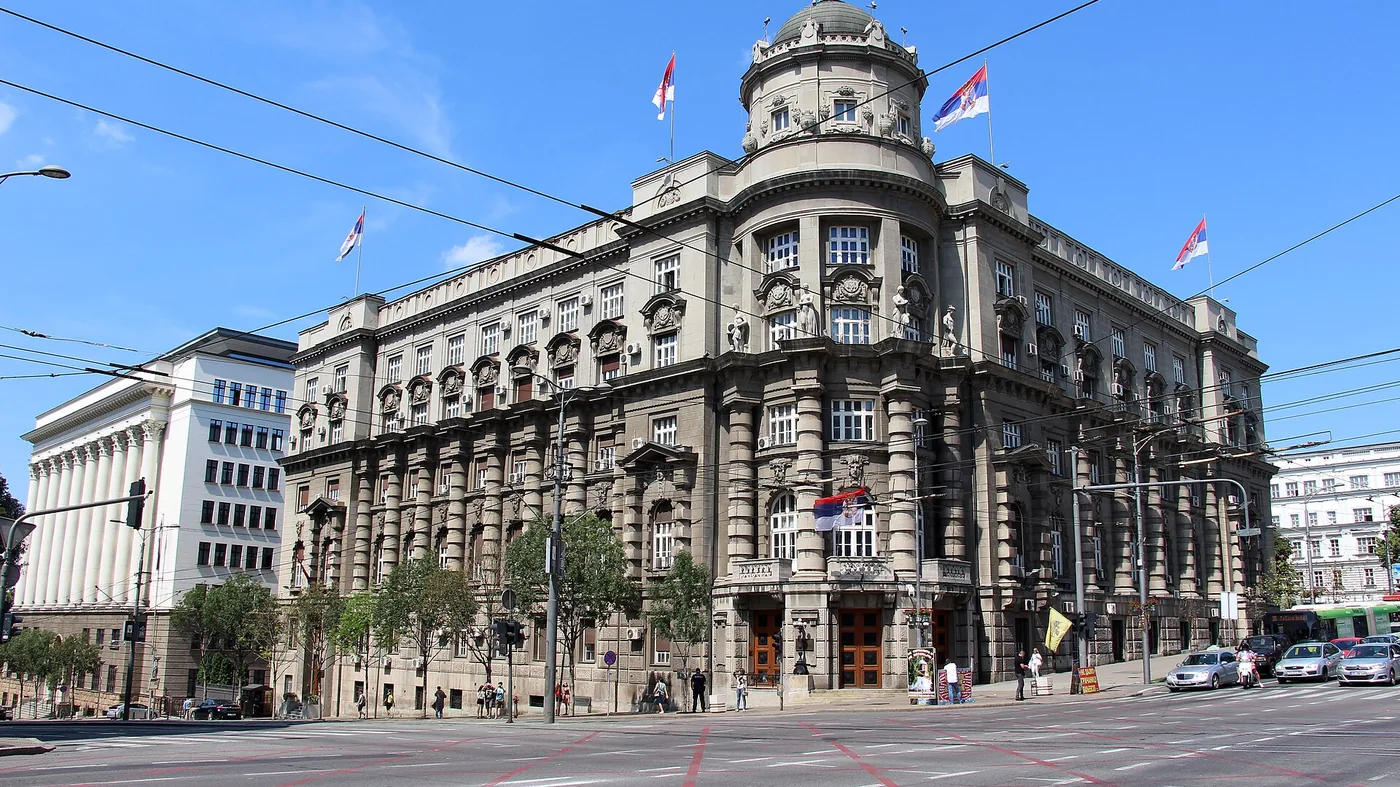
The Government of the Republic of Serbia decides, on the basis of a proposal from the competent ministry following background and security review. Decisions are published in the Official Gazette. Citizenship takes effect on registration in the civil registers, after which the passport follows.
The institutional route is short, and understanding it tells you what kind of case succeeds.
A petition is prepared and lodged with supporting evidence of the claimed national interest. The competent ministry reviews the applicant's background, conducts security and criminal screening, and forms a view on whether the admission serves the Republic. Where it does, the matter proceeds to the Government, which takes the decision. Decisions are published in the Official Gazette of the Republic of Serbia.
Two consequences follow, and both are practical.
The decision is political in the proper sense. It is taken at Cabinet level, on a ministerial proposal. That means the persuasion has to work on a minister and their officials, and the case has to be one the state is comfortable being seen to have taken. Publication in the Official Gazette means every grant is a matter of public record and can be, and is, analysed by journalists and by foreign governments.
There is no appeal in the ordinary sense. A discretion not exercised is not a refusal against criteria. Administrative review of a decision of this kind is materially harder than challenging a refusal by a citizenship unit applying a published rulebook, and any assessment of the route should assume that an unsuccessful petition is simply unsuccessful.
What follows a grant
Citizenship takes effect on registration in the Serbian civil registers. The passport follows from the citizenship. Where a grant is made under Article 19 the holder becomes entitled to a Serbian passport without ever having held Serbian residence, which is the feature that makes the route distinctive and, as set out later on this page, the feature that has drawn external attention to it.
What national interest has meant in practice
There is no statutory list. Grants have been made across sport, culture, science, technology and business. Publicly known recipients include internationally recognised figures from film and the arts. Since 2022 the largest single category by nationality has been Russian citizens.
The law does not define national interest and no formal list of qualifying professions exists. What can be observed is what has been granted, because the decisions are published.
The recognised broad areas, drawn from Serbian practitioner descriptions of successful cases, are these.
| Category | What the case rests on |
|---|---|
| Business and enterprise | Investment generating Serbian employment, exports or supply chain depth, evidenced rather than projected |
| Science and research | Work with demonstrable impact on Serbian research and development priorities |
| Technology | Expertise in IT, engineering or telecommunications supporting Serbian infrastructure or capability |
| Sport | Athletes and coaches raising Serbia's international sporting profile |
| Culture and the arts | Artists, writers and musicians contributing to Serbian cultural life |
Publicly reported grants include internationally recognised figures from film, and Serbia has used the provision to admit prominent individuals whose association with the country was judged to be of value. Those cases are widely cited in marketing material about this route, and they are illustrative of the cultural limb. They are not illustrative of what an ordinary international businessperson can expect.
The composition of grants since 2022
The more useful evidence is quantitative, and it is uncomfortable.
Analysis of publicly available government data, published by RFE/RL in June 2026, found that Serbia granted citizenship on national interest grounds to 44 Russian citizens in the first five months of 2026, and to more than 300 Russian citizens since the beginning of 2022. In the same 2026 period, grants to Russian nationals were reported as roughly four times the number made to all other foreign nationals combined.figures derive from journalistic analysis of published decisions; the Serbian Interior Ministry did not provide totals in response to that reporting
Read that as an applicant rather than as a commentator. It tells you two things.
First, the mechanism is being used at genuine volume, which means grants to non-celebrities are real and the route is not theoretical.
Second, the composition is heavily concentrated in one nationality, and that concentration is precisely what has attracted the scrutiny covered in the next section. A prospective applicant of any nationality is entering a mechanism whose recent usage pattern is the subject of an active diplomatic problem. That does not disqualify a strong case. It does change the environment in which the case will be read.
The June 2026 problem: Article 19 under European Commission scrutiny
A Commission non-paper warned that accelerated acquisition of EU visa-free travel rights by Russian citizens through Serbian citizenship represents a potential security risk. In late June 2026 the EU did not exclude suspending Serbia's visa-free regime. The mechanism under discussion is Article 19 itself.
This is the section that changes the assessment of this route, and it is absent from every treatment of Article 19 we have reviewed.
What was reported
In June 2026, RFE/RL's analysis of publicly available government data established the pattern set out above: 44 Russian nationals admitted on national interest grounds in the first five months of 2026, more than 300 since the start of 2022, and grants to Russian nationals running at roughly four times all other nationalities combined.
Among the recipients was an individual who has been subject to United States sanctions since April 2023 in connection with business links to a sanctioned Russian businessman, and who was admitted to Serbian citizenship in January 2026.details derive from published reporting and United States Treasury designations; confirm current sanctions status independently
What Brussels said
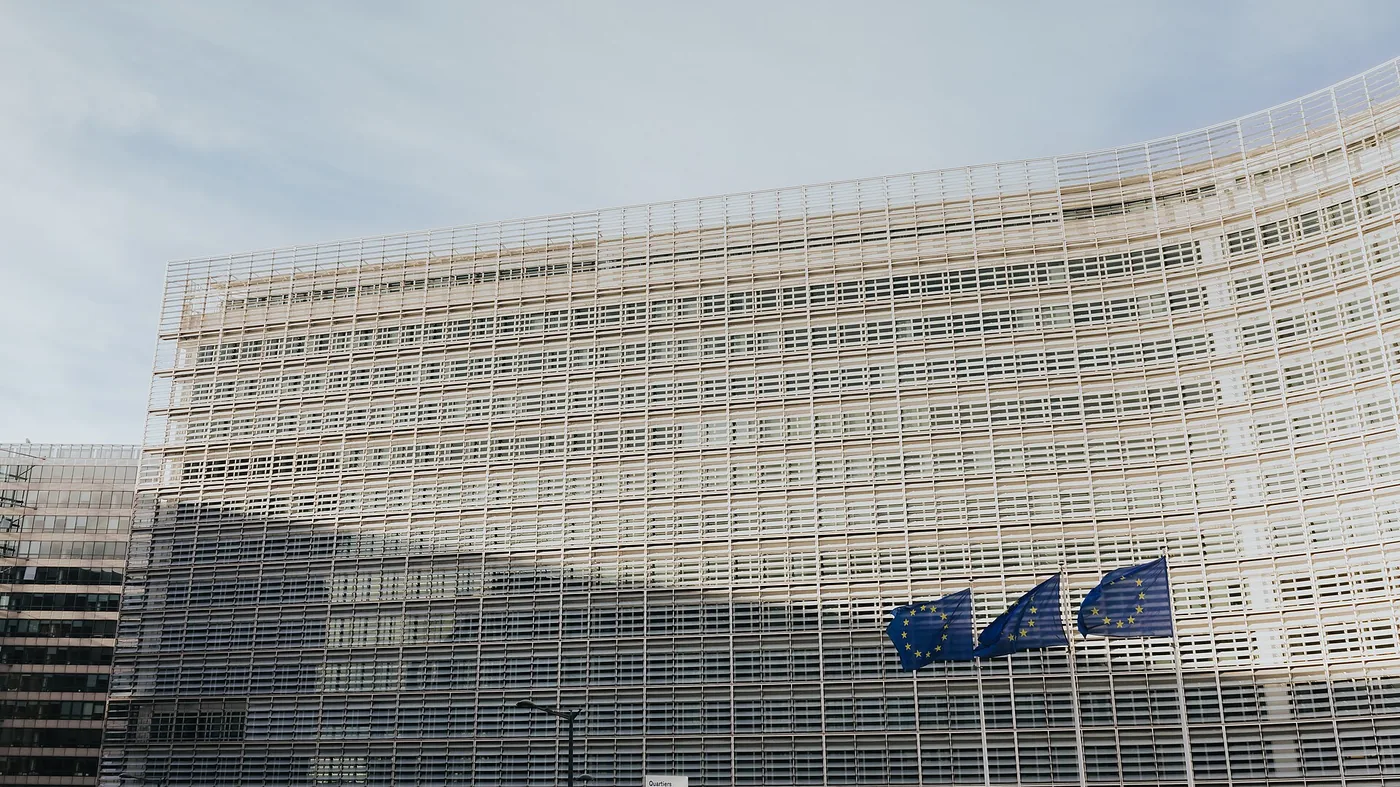
An informal European Commission discussion document, a non-paper, warned that the accelerated acquisition of visa-free travel rights to the European Union by an increasing number of Russian citizens through Serbian citizenship represents a potential security concern.
In late June 2026 it was reported that the European Union did not exclude suspension of the visa-free regime with Serbia in connection with the continued granting of citizenship to Russian nationals.no suspension has been enacted; this reflects reported statements rather than a decision
Why this is structurally serious
Serbian citizens hold visa-free access to the Schengen Area. That access is the single largest component of the Serbian passport's value and the principal reason most international applicants want it.
The concern the Commission has articulated is not about Serbia's vetting quality in the abstract. It is about a specific channel: a discretionary provision that admits foreign nationals without residence, producing citizens who immediately hold EU visa-free rights. Article 19 is that channel. There is no way to separate the criticism from the route, because the route is the criticism.
The pattern across the same month
On 25 June 2026 the European Commission wrote to five Eastern Caribbean states asking them to phase out their citizenship by investment programmes by 1 June 2028 or risk Schengen visa suspension, on the basis that operating such a programme is in itself a ground for suspension under the revised Visa Suspension Mechanism.
In the same period the Commission's concern about Serbian national interest naturalisations became public and suspension of Serbia's visa-free regime was reported as not excluded.
Read together, these are not two unrelated stories. They are one policy applied to two different mechanisms: Brussels is treating third-country citizenship channels that produce rapid EU mobility as a visa policy question, whether the channel is a priced programme or a discretionary power.
We set this out at length because a client considering Article 19 is entitled to know it, and because the commercial incentive across this industry runs the other way. A route with no published price and no formal programme is attractive to advisers precisely because it is opaque. That does not make it wrong to pursue. It makes it essential to pursue with the risk stated.
What EU scrutiny means for a prospective applicant
Expect heavier screening, longer timelines and greater caution on any file with a sanctions, Russian or dual-use dimension. Do not assume Schengen access is permanent. Assess whether the case survives if that access were suspended.
Four practical consequences follow, and they should shape the decision rather than sit in a footnote.
Screening will tighten
A government under external criticism for the composition of its grants has strong incentive to demonstrate rigour. Expect background review to be more thorough and slower than the reported historical range, and expect files with any exposure to sanctions regimes, dual-use goods, or politically sensitive commercial relationships to face substantially more difficulty.
Composition risk attaches to the applicant
Where a mechanism has attracted attention because of who has been using it, later applicants inherit some of that attention. This is uncomfortable and it is true. A grant made under Article 19 in 2026 or 2027 is a published decision that sits in a dataset journalists and foreign officials are actively analysing.
The core benefit is the thing at risk
This is the decisive point. The reason to want a Serbian passport is overwhelmingly its mobility, and the strongest single element of that mobility is Schengen visa-free access. That access is what has been reported as not excluded from suspension. An applicant buying Serbian citizenship for Schengen access is acquiring an asset whose central feature is under review by the party that grants it.
The test to apply
Ask whether the case still works if Schengen access were suspended. If the answer is yes, because the applicant has real Serbian business interests, family connections, or values the Russia and China access which is unaffected by any EU decision, then the route is sound and the EU question is a manageable risk. If the answer is no, because Schengen was the entire point, then the applicant is concentrating their risk in exactly the wrong place and should look at routes where the access is held directly rather than derivatively.
None of this is a prediction that Serbia will lose visa-free access. No suspension has been enacted, Serbia's visa-free regime has been in place since 2009, and suspending it would carry significant political cost for the Union in a candidate country. The probability is not the point. The concentration is.
Serbia's accession position, and why it bears on this
Serbia has been a candidate since 2012 and negotiating since 2014, but has not opened a new chapter since December 2021, largely over foreign policy alignment. It has not joined EU sanctions on Russia and retains a visa-free regime with Moscow. Article 19 usage sits inside that wider dispute.
The Article 19 question is a symptom rather than a cause, and understanding the wider position explains why it is unlikely to resolve quickly.
Serbia has held EU candidate status since March 2012, with accession negotiations opened in January 2014. Twenty-two chapters have been opened and two provisionally closed. No new chapter has been opened since December 2021, and the principal reason is foreign policy alignment: Serbia has not adopted EU sanctions against Russia and has not ended its visa-free regime with Moscow. At a Western Balkans summit in 2026, European leaders again pressed Belgrade to take a clearer strategic direction.
Various EU figures have projected possible membership around 2029 to 2030, with Kosovo normalisation and rule of law reform as the principal obstacles alongside foreign policy alignment.projections are commentary rather than commitments and have moved repeatedly
What this means for the accession argument
Serbian residence and citizenship are frequently marketed on the basis that they position the holder for future EU citizenship on accession. That argument deserves scrutiny.
The principle is sound: on accession, Serbian citizens would become EU citizens. What is wrong is the confidence with which it is usually presented. A country that has opened no new chapter in nearly five years, that has not aligned on sanctions, and whose citizenship practice is the subject of a Commission non-paper is not on a short or certain path. Anyone acquiring Serbian citizenship as a route to EU citizenship is making a bet with a horizon measured in a decade or more and a real probability of never paying out.
We would not advise a client to acquire Serbian citizenship principally for accession optionality. As a secondary benefit alongside a case that stands on its own merits, it is a reasonable thing to hope for. As the primary rationale, it is speculation dressed as planning.
Why there is no price, and what that means
The statute sets no financial threshold and no subordinate instrument publishes one. Serbian counsel can give indicative guidance at assessment based on cases that have succeeded. That guidance is professional judgement, not a schedule, and it is not a price for citizenship.
This is the question every enquiry opens with and the answer is that there is no answer, for reasons that are legal rather than evasive.
Article 19 does not create a scheme. It disapplies conditions. A scheme has a price because the state has set one and published it. A discretion has no price because the state has not created a product to sell. Serbia has not published a figure because there is nothing for a figure to attach to.
What does exist
Serbian counsel who have run these petitions have a view, formed from cases that have succeeded and cases that have not, about the scale of contribution that has supported a credible national interest argument in comparable circumstances. Our Serbian counsel provide that indicative guidance at the assessment stage, on the facts of the specific case.
Three things about that guidance.
It is a professional judgement, not a tariff. It will vary with the nature of the case, the sector, the evidence available and the applicant's profile. Two clients with different profiles will be given different guidance for the same nominal amount of capital.
It is not a purchase price. The contribution supports an argument that the applicant's admission benefits Serbia. It does not buy the decision, and framing it that way in a petition is the fastest route to a refusal.
It is given at assessment, not on a webpage. We do not publish a figure because publishing one would convert a legal fact into a marketing claim, and because a client who arrives anchored to a number from the internet is harder to advise than one who arrives with an open question.
The question to ask any adviser
If you are given a Serbian figure, ask what instrument it comes from. If the answer is a statute, a decree or a gazetted schedule, ask to see it. If the answer is experience, that is a fair answer and it should be described as such. The difference between those two answers is the difference between a fact and an opinion, and both have their place provided they are labelled.
Professional fees for a petition of this kind are quoted on application, because the work varies enormously with the complexity of the case and any single published figure would be wrong for most clients.
What a credible national interest case looks like
Evidence rather than projection, ongoing rather than historic, Serbian rather than general, and independently verifiable. The strongest cases already exist before the petition is drafted, because the applicant was doing the thing anyway.
The single most useful reframing we offer clients is this: the question is not what you would pay, it is what you would contribute. Everything else follows from that.
The four characteristics of a case that works
Evidenced, not projected. A signed lease, a registered company, employees on payroll, filed accounts, an executed contract, a completed research collaboration. Not a business plan, an intention or a memorandum of understanding. Projections are what unsuccessful petitions are built on.
Ongoing, not historic. Article 19 rewards active and continuing benefit. A significant achievement with no current Serbian dimension is a biography, not a case. The question the ministry is answering is what Serbia gets going forward.
Serbian, not general. International eminence is not itself a Serbian national interest. The link has to be to the Republic: Serbian jobs, Serbian exports, Serbian research capability, Serbian cultural life, Serbia's international standing.
Independently verifiable. Everything asserted should be provable from a third-party source: registry filings, tax records, published work, competition results, contracts, media coverage. A ministry putting a name to Cabinet needs to be able to defend every claim in the file.
The strongest cases are accidental
In our experience the petitions that succeed most readily belong to people who were not originally seeking Serbian citizenship. They built something in Serbia because it made commercial sense, employed Serbians because they needed staff, and then discovered that what they had already done constituted a case.
The petitions that struggle are the reverse: a client who wants the passport and works backwards to assemble a contribution that will justify it. Ministries read a great many files and the difference between the two is visible on the page.
The practical implication is a sequencing one. Where a client has a real commercial reason to operate in Serbia, our advice is generally to do that properly first, on its own merits, and to assess the Article 19 position once there is something real to point at. That is slower and it is far more likely to work.
On sport and culture
These limbs account for a meaningful share of grants, but they are narrow. Sporting cases involve athletes and coaches capable of representing or materially advancing Serbian sport at international level. The cultural cases involve figures whose association carries real weight. Neither is a category that can be manufactured, and clients should be candid with themselves about whether they belong in them.
What does not qualify
Passive investment with no Serbian operational footprint, property purchase alone, wealth alone, historic achievement with no current Serbian link, and any case whose only Serbian element was created for the petition.
Stating the negatives plainly saves clients money, and it is the part of the conversation most likely to be skipped elsewhere.
Wealth by itself. Being wealthy is not a national interest. Substantial net worth with no Serbian dimension is not a case, and no amount of it becomes one.
Passive investment. Capital placed in Serbian securities, deposits or funds without operational substance is difficult to present as a benefit to the Republic in the sense Article 19 contemplates. The provision is about what you contribute, and passive capital contributes little that the state can point to.
Property purchase alone. Buying Serbian real estate is straightforward and it does not constitute a national interest case. Property may support residence, which is a different route covered later on this page, but it is not by itself an Article 19 argument.
A company incorporated for the petition. A Serbian entity registered shortly before filing, with no trading history, no employees and no revenue, is transparent to the people reading it. There is no legal requirement to establish a company at all, and establishing an empty one is worse than establishing none.
Historic achievement with no Serbian link. A distinguished career elsewhere, without any current connection to Serbia, does not engage the provision.
Urgency. Not a disqualifier but a mismatch. If a second passport is needed within a defined window, a discretionary process with no timeline is the wrong instrument regardless of how good the case is.
We turn away more Article 19 enquiries than we accept. That is the correct ratio for a discretionary route, and any adviser accepting most of what arrives is either seeing an unusual client base or is not assessing candidly.
Process and documents
Assessment, evidence assembly, petition drafting with the national interest argument, ministerial review including security screening, Government decision, registration and passport. The drafting of the argument is the work; the documents are the easy part.
- Candid assessmentEstablish whether a national interest case exists at all. This is the stage at which most enquiries should end, and the question is what you would contribute rather than what you would pay.
- Build or document the contributionWhere the case rests on business, investment or philanthropy, the contribution generally needs to exist or be credibly committed before the petition rather than promised after it.
- Evidence assemblyRegistry extracts, financial statements, employment records, contracts, tax filings, published work, competition records, letters of support from Serbian institutions or counterparties where these are real.
- Personal documentationPassport, birth certificate, marriage certificate where applicable, criminal record certificates from every jurisdiction of residence, all legalised or apostilled and translated into Serbian by a certified court translator.
- Petition draftingThe national interest argument, prepared by Serbian counsel. This is the document that decides the case and it is the reason the route requires Serbian legal representation rather than an intermediary.
- Lodgement and ministerial reviewBackground review, security and criminal screening, and formation of the ministry's view on whether admission serves the Republic.
- Government decisionTaken at Cabinet level on the ministry's proposal, and published in the Official Gazette.
- Registration and passportCitizenship takes effect on registration in the civil registers. The passport application follows.
Note where the effort sits. Clients expect the documentation to be the hard part. It is not. The hard part is whether there is a case, and after that whether it is argued well. A file with impeccable apostilles and a weak national interest argument fails; a file with a compelling argument and a missing certificate gets the certificate.
Timeline
Reported ranges run from around six months to two years, subject entirely to Government discretion. There is no service standard and no statutory deadline. Expect the longer end given the current external environment.
Practitioner reporting places the range from roughly six months to two years from lodgement to decision, subject to Government discretion.no official processing standard exists; ranges are practitioner observation
Three qualifications, all of which push the estimate outwards.
There is no deadline binding anyone. A discretionary power carries no obligation to decide within any period, or at all.
The current environment argues for longer. A government under external criticism about the composition of its national interest grants has every reason to slow down and to look harder. We would plan on the longer end of the reported range and treat anything faster as a pleasant surprise.
The preparation phase is separate and often longer than the decision phase. Where the contribution needs to be built rather than merely documented, the real timeline starts well before lodgement. A client establishing real Serbian operations is measuring the total exercise in years.
Any adviser offering a guaranteed timeline on Article 19 is offering something that is not theirs to give.
The Serbian passport
Published counts range from roughly 86 to 148 destinations and rankings from about 30th to 67th, depending entirely on methodology. What is consistent across every dataset is the combination: Serbia is one of very few countries whose citizens travel visa-free to the Schengen Area, Russia and China. A visa is required for the United Kingdom, the United States, Canada and Australia.
The spread across published sources on this passport is the widest we have encountered, and it matters because the marketing tends to quote whichever number flatters.
Counts range from approximately 86 visa-free destinations on a strict measure, through roughly 135 on a combined visa-free and visa-on-arrival basis, to 148 on the most inclusive counts. Global rankings across the same sources run from about 30th to about 67th.counts and ranks vary by publisher, methodology and date; confirm current position
The composite number is the least useful figure. The specific access rights are what matter.
The combination that is rare
Serbia is one of a small handful of countries whose citizens may travel visa-free to the Schengen Area, to China and to Russia. That is the distinguishing characteristic of this document and it exists almost nowhere else.
For an individual doing business across Europe, Russia and China, that combination removes a visa burden that no other single passport of comparable accessibility removes. It is the reason this passport attracts the interest it does, and it is why the applicant profile has looked the way it has looked since 2022.
What is open
The Schengen Area for 90 days in any 180, alongside Bulgaria, Romania and Cyprus. Russia, China, Hong Kong, Macau, Singapore, Japan, South Korea, Turkey, the United Arab Emirates, Brazil and much of Latin America. Regional movement within the Western Balkans on an identity card alone for several neighbours.
What is closed
The United Kingdom, Ireland, the United States, Canada and Australia all require a visa for Serbian citizens. Anyone acquiring this passport principally for access to the English-speaking world will be disappointed.
Note also that from the introduction of the European Travel Information and Authorisation System, Serbian citizens travelling to the Schengen Area will require that authorisation. It is a pre-clearance step rather than a visa, and it does not change the visa-free status, but it should be built into planning.
Confirm entry requirements with the destination authority before travelling.
Dual citizenship
Serbia permits dual citizenship and Article 19 disapplies the renunciation condition that applies to ordinary naturalisation. The binding constraint is usually the applicant's own nationality rather than Serbia's position.
Serbia allows dual citizenship, and this is one of the clearest advantages of the exception route over ordinary naturalisation.
Ordinary naturalisation under Article 14 includes a condition concerning release from existing foreign citizenship or evidence that release will follow. Article 19 disapplies that condition along with the others in the relevant range. An applicant admitted under the exception therefore retains their existing nationality without needing to address renunciation at all.
Two qualifications apply, as always.
Your own country's rules govern your side. Serbia permitting dual nationality does nothing for an applicant whose existing state does not. That analysis runs separately and for several nationalities it is the constraint that decides the matter.
Disclosure obligations may exist. Some states require notification when a citizen acquires another nationality. Check your own position rather than assuming.
For applicants from states that permit dual nationality, which includes most Western jurisdictions, this is a clean position and does not require further planning.
Tax in Serbia
Serbia taxes on a residence basis. Citizenship does not create Serbian tax residence, which depends on presence and connecting factors. Rates are low by European standards, with personal income tax broadly in the 10 to 20 per cent range and corporate tax at 15 per cent.
The tax position is attractive for someone who intends to live in Serbia and largely irrelevant for someone who does not.
Serbia operates a residence-based system. Acquiring Serbian citizenship does not by itself make you a Serbian tax resident: residence depends on physical presence and connecting factors such as centre of vital interests. An Article 19 citizen who does not live in Serbia generally remains a non-resident and is within Serbian tax only on Serbian-source income.
For those who do relocate, headline rates are low by European standards, with personal income tax broadly in the 10 to 20 per cent range depending on income type and corporate tax at 15 per cent. Serbia has an extensive double taxation treaty network.
What citizenship does not solve
It does not change your existing tax position anywhere. United States taxpayers are taxed on worldwide income by virtue of status, and a second nationality changes nothing; a Serbian bank account creates FBAR and FATCA obligations from the day it opens, Serbian corporate structures require controlled foreign corporation and PFIC analysis before formation rather than after, and anyone contemplating expatriation should understand the section 877A framework, including the mark-to-market regime and the covered expatriate tests, before taking any step. United Kingdom clients should note that Serbian citizenship does not affect UK tax residence, which is determined by the statutory residence test, and that the sequencing of any departure relative to acquisition is the part requiring advice.
International information exchange means Serbian holdings are visible to home revenue authorities. Any plan whose logic depends otherwise is not a plan.
The residency route, which is the honest answer for most people
Serbia's Law on Foreigners, amended in 2023 with a digitalised system from February 2024, permits temporary residence for up to three years, permanent residence after three years of continuous temporary residence, and naturalisation thereafter. It is slower than Article 19 and available to people who have no national interest case at all.
Most people who arrive asking about Article 19 do not have a national interest case. For them this is the route, and it is a good one.
The Law on Foreigners was substantially amended in 2023, with the reforms taking full effect in February 2024 alongside a digitalised application system. Two changes matter.
What the 2023 reforms changed
- Temporary residence permits may now be issued for up to three years, in place of the previous one-year maximum.
- The qualifying period for permanent residence was shortened from five years to three years of continuous temporary residence.
Grounds for temporary residence include employment, company ownership and management, property ownership, study and family reunification. Serbia is unusual in not imposing a high minimum capital or property value for the residence grounds, which places it at a very different price point from European residency programmes requiring investment from several hundred thousand euros upwards.
The route to citizenship
Ordinary naturalisation under Article 14 requires a qualifying period of continuous residence on the basis of approved permanent residence, together with the other conditions in that Article. In practice the sequence runs approximately three years of temporary residence, then permanent residence, then a further qualifying period before naturalisation, giving a total commonly described as around six years.
Note what this route requires that Article 19 does not: actual residence, and the renunciation and declaration conditions in Article 14. For applicants from states that do not permit dual citizenship, or who cannot spend real time in Serbia, that is the trade.
Which route is right
The test is straightforward. If you have a documented, ongoing, verifiable benefit to Serbia, Article 19 is faster and requires no relocation. If you do not, the residency route is available, considerably cheaper, and does not depend on a discretionary decision. A client without a national interest case who spends money pursuing Article 19 has bought an expensive refusal.
LGP Programme Durability Rating: Serbia Article 19
Strong on legal basis and on the rarity of the passport's access combination. Weak on certainty, timeline and, since June 2026, on external scrutiny. The route's own success is what has made it visible.
Two observations.
The legal basis score is high and deserves to be. This is a provision of primary legislation that has existed for many years, applied across sport, culture, science and business. It is not an emergency decree, not a marketing scheme and not a thing that can be withdrawn by ministerial decision overnight. That is a stronger foundation than several priced programmes possess.
The external scrutiny score is as low as any we have given. The concern articulated by the Commission attaches to the mechanism rather than to its administration, and the benefit at risk is the passport's principal value. Improving the quality of individual cases does not address a criticism aimed at the channel.
The tension between those two scores is the whole assessment. Article 19 is a well-founded legal route to an unusually well-connected passport, arriving in the year that the route itself became a diplomatic issue.
Our review trigger is any formal step by the European Commission in respect of Serbia's visa-free regime, or any amendment to the Law on Citizenship. Commentary and non-papers reported in the press inform the assessment; they do not by themselves change the rating further.
Compared with structured programmes
Article 19 offers no residence requirement, no language test and no price, in exchange for no certainty and no timeline. A structured programme offers the reverse. The choice is determined by whether you have a case and whether you can wait.
| Attribute | Serbia Article 19 | Structured CBI programmes | Serbia residency route |
|---|---|---|---|
| Legal character | Discretionary power | Statutory scheme | Immigration route |
| Published price | None | Yes, gazetted | Low, no high threshold |
| Certainty of outcome | None | High if criteria met | High if criteria met |
| Timeline | 6 months to 2 years, no standard | Published service standards | Approximately 6 years to citizenship |
| Residence required | No | Generally no | Yes |
| Language test | No | No | Per Article 14 conditions |
| Requires a case | Yes, decisively | No | No |
| Schengen visa-free | Yesunder review | Several, under EU review | Yes on citizenship |
| Russia and China visa-free | Yes | No | Yes on citizenship |
The row that decides most cases is "requires a case". A structured programme does not ask what you contribute; it asks what you pay and whether you pass vetting. Article 19 asks the opposite. Clients who cannot answer the contribution question should not be on this page, and we would rather say so than take an instruction.
The row that decides the remainder is timeline. If a passport is needed inside a defined window, a discretionary process with no service standard is the wrong instrument. Assess the structured options first and treat Serbia as an addition rather than a substitute.
And the row worth reading twice is the last one. Russia and China visa-free access is unaffected by any European decision. For a client whose mobility need runs east as well as west, that part of the Serbian proposition is durable in a way the Schengen element currently is not.
Five questions before you spend anything
Can you evidence a benefit to Serbia? Is it ongoing? Is your record clean? Do you need a passport by a date? And does the case survive if Schengen access were suspended? Four affirmatives and a no to the fourth means Article 19 is worth assessing.
These are the questions we ask at the first conversation, before any fee is discussed.
1. Can you document a verifiable benefit to the Republic of Serbia?
Investment creating Serbian employment, exports, innovation or cultural contribution, with evidence rather than projections. If the honest answer is that the benefit would be created in order to support the petition, that is a different and much weaker case.
2. Is the contribution ongoing?
Article 19 rewards active and continuing benefit. Historic achievement with no current Serbian dimension does not engage the provision.
3. Is your record clean?
Security and criminal screening is conducted on every case. Serious prior criminal matters, unresolved legal disputes or reputational exposure create significant obstacles. Given the current environment, any connection to sanctions regimes, dual-use goods or politically sensitive commercial relationships requires candid assessment at the outset rather than discovery during screening.
4. Do you need a passport within a defined window?
If yes, this is the wrong instrument. Assess structured programmes before committing time and capital to a discretionary process with no timeline. Article 19 can run alongside afterwards.
5. Does your case survive if Schengen access were suspended?
This is the question that did not need asking a year ago. If the entire rationale is European mobility, you are concentrating your risk in the feature currently under review. If the rationale includes Serbian business interests, family connection, the Russia and China access, or long-horizon accession optionality, the case is robust to that risk.
Four clear answers and a considered response to the fifth means an assessment is worth running. Anything less and we will tell you so at no cost, because the alternative is taking a fee for work that was never going to succeed.
Common questions
The two most common are how much it costs, which has no answer because the law sets no threshold, and whether residence is required, which it is not.
How much does Serbian citizenship by exception cost?
There is no statutory financial threshold and no published fee schedule, because Article 19 is a discretionary power rather than a programme. Serbian counsel can give indicative guidance at assessment based on cases that have succeeded, which is a professional judgement rather than a tariff. Any figure presented to you as official is not.
Do I need to live in Serbia?
No. Article 19 disapplies the residence condition that applies to ordinary naturalisation. This is the feature that makes the route distinctive and it is why it is often described as Serbian citizenship without residency.
Is there a language test?
No language requirement applies to the exception route.
Does Serbia have a citizenship by investment programme?
No. There is no formal investment-for-citizenship scheme. Article 19 is a discretionary provision under which the Government may admit a foreigner whose admission is of interest to the Republic.
Who decides, and can I appeal?
The Government of the Republic of Serbia decides, on a proposal from the competent ministry following background and security review. Decisions are published in the Official Gazette. Because the decision is discretionary rather than an administrative determination against published criteria, review is materially harder than challenging a refusal by a citizenship unit, and an unsuccessful petition should be assumed to be simply unsuccessful.
How long does it take?
Practitioner reporting places the range from roughly six months to two years, subject entirely to Government discretion. There is no service standard and no statutory deadline, and the current external environment argues for the longer end. Where the contribution itself needs to be built, the total exercise is measured in years.
Does Serbia allow dual citizenship?
Yes, and Article 19 disapplies the renunciation condition that applies to ordinary naturalisation. Whether your own country permits it is a separate question and is frequently the binding constraint.
How strong is the Serbian passport?
Published counts range from roughly 86 to 148 destinations and rankings from about 30th to 67th, depending on methodology. The consistent and distinguishing fact is the combination: Serbia is one of very few countries whose citizens travel visa-free to the Schengen Area, Russia and China. Visas are required for the United Kingdom, Ireland, the United States, Canada and Australia.
Is Serbia's visa-free access to Europe at risk?
It has been reported as not excluded from suspension. A European Commission non-paper raised concern that accelerated acquisition of EU visa-free rights by Russian citizens through Serbian citizenship represents a potential security risk, following reporting in June 2026 on the composition of national interest grants. No suspension has been enacted. This is the central risk in the proposition and should be assessed before proceeding.
Will Serbian citizenship give me EU citizenship?
Only on accession, which is not assured. Serbia has been negotiating since 2014 but has opened no new chapter since December 2021, largely over foreign policy alignment. Projections of membership around 2029 to 2030 are commentary rather than commitments. Accession optionality is a reasonable secondary benefit and a poor primary rationale.
Will buying property in Serbia get me citizenship?
No. Property purchase is not a national interest case. It may support temporary residence under the Law on Foreigners, which is a separate and much slower route to naturalisation.
Do I need to set up a Serbian company?
There is no legal requirement to do so. A company registered shortly before a petition with no trading history, employees or revenue is transparent to those reading the file and is worse than no company at all. Where a real operating business exists, it is frequently the strongest available evidence.
What is the alternative if I have no national interest case?
The residency route. Temporary residence for up to three years on grounds including employment, company ownership or property, permanent residence after three years of continuous temporary residence, and naturalisation thereafter, commonly described as around six years in total. It is slower, considerably cheaper and does not depend on a discretionary decision.
How Lincoln Global Partners advises on Article 19
We assess candidly and decline most enquiries, we publish no figure because none exists, we state the European position to every client, and we work through Serbian counsel because the petition is a legal document rather than an application form.
We assess before we engage. The first conversation establishes whether a national interest case exists. Most enquiries end there, and that is the correct outcome for a discretionary route. We would rather lose the instruction than take a fee for a petition that was never going to be put to Cabinet.
We publish no figure. The statute sets no threshold, so we do not invent one. Our Serbian counsel provide indicative guidance at assessment, on the facts, described as professional judgement rather than as a schedule. Professional fees are quoted on application because the work varies enormously with the case.
We tell every client about the European position. The Commission's concern, the reporting that prompted it, the fact that visa suspension has been described as not excluded, and the fact that Schengen access is the passport's principal value. A client who proceeds knowing all of that is making a properly informed decision. A client who proceeds without it has been failed.
We work through Serbian counsel. The petition is a legal argument prepared by lawyers admitted in Serbia, not a form completed by an intermediary. Where a case has any exposure to sanctions regimes, dual-use goods or politically sensitive relationships, that is assessed candidly at the outset.
We sequence the substance before the petition. Where a client has commercial reason to operate in Serbia, our advice is generally to do that properly first, on its own merits, and to assess the Article 19 position once there is something real to point at. Slower, and far more likely to succeed.
We offer the residency route without embarrassment. For clients with no national interest case, it is the right answer, it costs a fraction of a petition, and it does not turn on anyone's discretion.
If Serbia is on your list, the first question is not what it costs. It is what you would contribute, and whether the case still works if the Schengen element came under pressure.
Sources
- Закон о држављанству Републике Србије (Law on Citizenship of the Republic of Serbia), consolidated text — Правно-информациони систем Републике Србије (official state legal database)
- Ministarstvo unutrašnjih poslova (MUP) — Državljanstvo — Serbian Ministry of Interior (MUP)
- Serbia Fast-Tracks Citizenship For Russians, Despite EU Concerns — RFE/RL (Radio Free Europe/Radio Liberty) (secondary source)
Sources checked 2026-09-20.

Last reviewed 1 September 2026.
This guide is general information, not legal, tax or immigration advice. Programme terms are set by the relevant government and can change; confirm any figure with the authority, or with us, before acting on it.