













































"Why does a studio cost €250,000?"
It is the question we hear most from clients looking at Athens. A 35 m² converted studio in Peristeri or Piraeus is listed at €250,000. Two streets away, an older flat of similar size is advertised for a fraction of that. The conclusion many investors reach is quick: the developer is using the programme to overcharge, and the buyer is the one paying for it.
We will not pretend otherwise. Measured against the ordinary Athens resale market, these properties are priced higher. That is a fact, and any adviser who tells you the opposite is not being straight with you.
But it is the wrong comparison. A €250,000 conversion unit is not competing with the flat two streets away. It is the entry ticket to a five-year, renewable EU residence permit with no minimum stay, attached to a real, titled asset that earns rent. Price it as a plain apartment and it looks expensive. Price it as what it is, and the picture changes.
Key facts (September 2026):
- €250,000 buys Greek residence only through a commercial or industrial building converted to residential use, or a restored listed building (Law 5100/2024, Art. 64). Standard homes need €800,000 in Attica and €400,000 elsewhere.
- 30,439 investors held a valid Greek investor residence permit in March 2026, plus 56,917 family members (Ministry of Migration and Asylum).
- Gross rental yields in Athens averaged 5.52% in May 2026, from about 3.4% in Kolonaki to 6.95% in Patision (Global Property Guide).
- Greek apartment prices rose 8.1% in 2025 and 5.7% year on year in Q1 2026 (Bank of Greece).
- Greece is the one Schengen country where buying property, with no government donation on top, still leads to residence.
This article explains that picture with official data: why this market exists, what it costs developers to supply it, what you can realistically earn from it, and why prices are unlikely to return to where they were.
What changed in 2024: the conversion rule
In 2024 Greece rewrote the property route to residence. Article 64 of Law 5100/2024 amended Article 100 of the Migration Code (Law 5038/2023) and split the market in two:
| Property type | Minimum investment | Where |
|---|---|---|
| Standard residential property, single unit of at least 120 m² | €800,000 | Attica, Thessaloniki, Mykonos, Santorini, islands over 3,100 residents |
| Standard residential property, single unit of at least 120 m² | €400,000 | Rest of Greece |
| Commercial or industrial building converted to residential use | €250,000 | Anywhere in Greece |
| Restoration of a listed (heritage) building | €250,000 | Anywhere in Greece |
Source: Law 5038/2023, Art. 100, as amended by Law 5100/2024, Art. 64.
The €250,000 conversion route comes with strict conditions. The change of use must have been completed after 5 April 2024 and before the residence application is filed, the investment must be a single property, and a former industrial building must have had no industrial activity for at least five years (Mitos, National Registry of Administrative Procedures). Properties bought through the programme also cannot be let on short-term platforms such as Airbnb.
Why did the government design it this way?
The reform was a compromise between two camps. One side wanted the programme closed, blaming foreign buyers for rising rents and a speculative housing market. The other side wanted to keep a channel that had brought billions of euros of foreign capital into a country that badly needed it.
Finance Minister Kostis Hatzidakis said the higher thresholds aimed to "ensure affordable and quality housing for all citizens" (AFP, March 2024). The €250,000 exception did the other half of the job. It pointed foreign capital at buildings that were not housing anyone: shops, offices and small industrial premises emptied out after the 2008 crisis. Instead of competing with Greek families for existing flats, investors now pay to create new homes.
That is the key to the pricing question. The €250,000 route was never meant to sell you a cheap flat. It was designed to make foreign money add housing to Athens, and adding housing costs more than buying it.
Why Greece wanted this capital: the recovery in numbers
Greece spent most of the 2010s in crisis. Today it is one of the euro area's faster-growing economies, and foreign investment, including property investment, is part of that story.
| Indicator | Crisis years | Latest | Source |
|---|---|---|---|
| Real GDP growth | Economy shrank by about a quarter, 2008–2013 | +2.1% in 2025, against 1.2% for the euro area in Q4 2025 | ELSTAT via ERT, March 2026 |
| Unemployment | Above 27% in 2013 | 7.9% in July 2026 | ELSTAT via Powergame, August 2026 |
| Public debt | Above 200% of GDP in 2020 | 146.1% in 2025, forecast 140.7% in 2026 | European Commission, May 2026 |
| Total investment | Collapsed through the crisis | Up about 9% in 2025, to over €37 billion | ELSTAT via ERT |
Greece regained an investment-grade credit rating in 2023 and has been repaying its bailout loans ahead of schedule, including €5.29 billion of first-bailout loans in December 2025 (GreekReporter).
Where property investment fits
Foreign money buying Greek property is recorded by the Bank of Greece as foreign direct investment (FDI) in real estate. It reached a record €2.75 billion in 2024, up from €2.13 billion in 2023 (Greek City Times, citing Bank of Greece). In 2025 it was €2.05 billion, even after the thresholds rose.
Over 2019–2025, foreign buyers put €12.4 billion into Greek real estate, against €3.38 billion over the 17 years from 2002 to 2018 (GreekReporter, citing Bank of Greece and KEPE). About €6.5 billion of that is estimated to have come through the residence programme.
That is why no government has simply closed it. The capital is real, it arrives in cash, and it now funds the renovation of buildings the Greek market left empty.
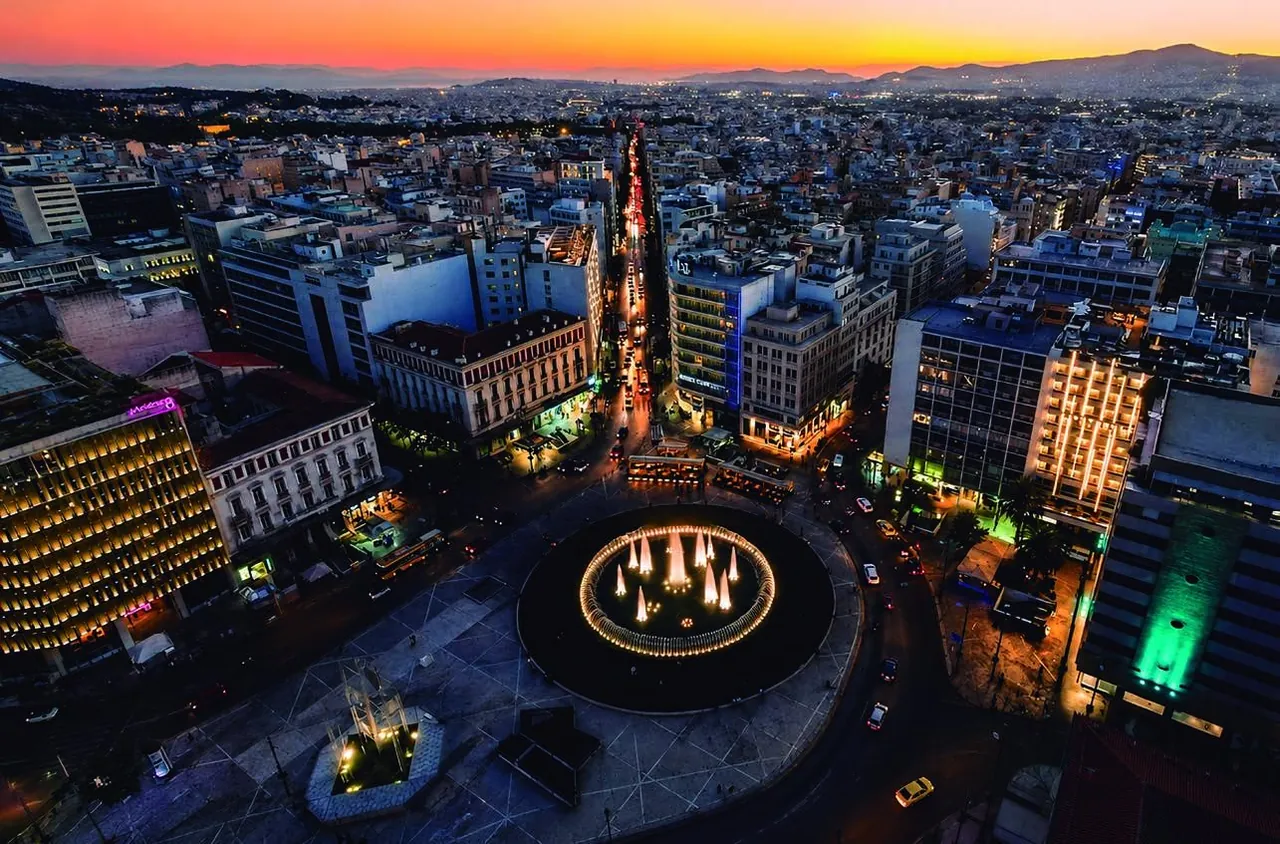
A crowded city with little room to grow
Athens needs more homes, and it has almost no land to build them on.
- Density. The Municipality of Athens holds 643,452 people on 38.96 km², about 16,500 residents per km² (2021 census, ELSTAT). Neighbouring Kallithea ranked as the most densely populated area in Greece by 2011 (Athens Social Atlas).
- Concentration. Attica is home to 3.81 million people, more than a third of Greece's 10.48 million (2021 census).
- Old stock. Much of the city was rebuilt at speed in the 1960s and 1970s under the antiparochi system, which swapped land for flats and left "dense construction and a lack of free spaces" (Athens Social Atlas).
- Rents under pressure. Greek rents rose 10.1% in 2025, the second-fastest increase in the EU against an EU average of 3.2% (KEFiM study on Eurostat and Bank of Greece data, via Greek City Times). A one-bedroom flat in Athens now costs about €1,050 a month, around 70% of the average salary.
New demand keeps arriving
Athens has become a base for remote workers, retirees and relocating families. Greece's Digital Nomad and Financially Independent Person permits (both in the region of €3,500 a month in income) bring residents who rent, rather than buy, and who expect to live in the city for at least six months a year. Add tourism and a growing student population, and demand for good-quality rental space in central districts keeps outrunning supply.
The 2021 census counted 793,885 vacant homes across Greece, 32% of them in Attica (Alpha Bank Insights, April 2025). Many are not on the market at all. Meanwhile, entire ground floors and office buildings closed during the crisis have stayed shut.
Converting those buildings is one of the few ways to add homes to central Athens without new land. That is exactly what the €250,000 route pays for.
How is a €250,000 unit actually built? The cost stack
The price you see is the end of a long chain. Each link adds cost, and none of them exists in the ordinary resale market.
- The building is bought at a premium. Owners of empty commercial buildings in Athens know exactly what their asset has become: one of a limited number of properties that can legally feed the €250,000 route. Limited supply, strong demand, and sellers price accordingly. The developer's land cost is already inflated before a single wall is moved.
- The change of use must be licensed. A conversion needs a building permit or small-scale works approval for the new residential use, and an engineer's technical report in wording fixed by Joint Ministerial Decision 214926/2025 (e-nomothesia). Converting an office floor into homes means new plumbing, ventilation, fire safety, natural light and energy standards. It is often more complex than building from scratch.
- The capital sits idle for longer. For a conversion, the change of use must be completed and licensed before the buyer can file for residence. The developer carries the building, the works and the financing costs until then.
- Construction costs are high. Materials and skilled labour in Athens are in short supply after a decade of low building activity. New building permits rose 31.8% in 2024 alone (EMF Hypostat 2025), and all those sites compete for the same crews.
- Distribution costs money. Developers pay marketing, legal teams, and commissions to the advisory firms that bring them international buyers. That fee pays for work you should want done: screening developers, checking titles and permits, negotiating terms, and staying with you through the application.
- The buyer's own costs sit on top. On a €250,000 purchase, transfer tax (3.09%), notary, lawyer, land registry and certificate fees come to about €16,220 in our recent client files.
The takeaway: you are not buying in the normal Greek property market. You are buying a unit that was produced specifically to qualify for residence, through a process with more rules, more paperwork and more risk than an ordinary sale. Set your expectations on that basis.
Does priced higher mean a bad investment?
A premium price is not the same as a rip-off. You still own a titled piece of a European capital with three thousand years of history, in a rental market that has been moving in the owner's favour since 2018.
Rents: an owner's market
Greek rents fell by about 26% between 2011 and 2018, then turned. By early 2024 they were up about 20% on 2018 (AFP). On the EU's harmonised measure, rents rose 4.8% in 2023 and 5.1% in 2024 (Alpha Bank Insights), and 10.1% in 2025 (KEFiM via Greek City Times). In a 2025 survey, 55% of Athens tenants said their rent had gone up in the previous two years.
Gross yields in Athens averaged 5.52% in May 2026 (Global Property Guide):
| Athens area | 1-bedroom gross yield | 2-bedroom gross yield |
|---|---|---|
| Patision / Acharnon | 6.95% | 5.71% |
| Patisia | 6.78% | 5.87% |
| Kypseli | 6.11% | 4.80% |
| Athens Centre | 5.78% | 5.15% |
| Ampelokipoi / Pentagon | 5.25% | 4.43% |
| Kolonaki / Lykavittos | 5.08% | 3.39% |
| Neos Kosmos | 4.88% | 4.25% |
| Pagkrati | 4.67% | 3.92% |
Source: Global Property Guide, Athens yields, May 2026.
These yields are measured on ordinary market prices, so a unit bought at the residence premium will not automatically match them. That is exactly the gap developers have been working to close. By refurbishing well-located buildings to a high standard and structuring the income side of the offer, many current projects still give investors a return of around 4–6% a year on their purchase price, through fixed income, upfront payments or market rent.
You are also not limited to one type of product. Boutique apartments, hotel co-ownership, student accommodation and listed-building restorations all qualify at €250,000, and each earns in a different way. The right choice depends on whether you value income certainty, personal use of the property, or long-term growth. On top of the rent, you hold the residence permit, a value the yield figure does not capture.
How developers are closing the gap
Developers know buyers compare them with the open market, so the better ones now build the return into the offer:
- Guaranteed returns. A fixed gross return for a set period, such as 4% a year for the first two years on a Kallithea project we currently offer. Suited to conservative investors who want no rental-search risk at the start.
- Estimated returns. The unit is let at market rent through the developer's or a third-party manager. More upside, more variability.
- Upfront returns. Several years of rent paid as a lump sum at purchase, which lowers your net entry cost.
- Buyback options. The developer commits to repurchase after an agreed period, which defines your exit from day one.
A guarantee is only as strong as whoever gives it. Before relying on one, ask who pays it, from which entity, whether it is secured, and whether it is simply priced into the unit. That is part of the diligence we do for every project we present.
Has demand held since the thresholds rose?
If the new thresholds had killed demand, the premium would already be melting. The official figures say the opposite.
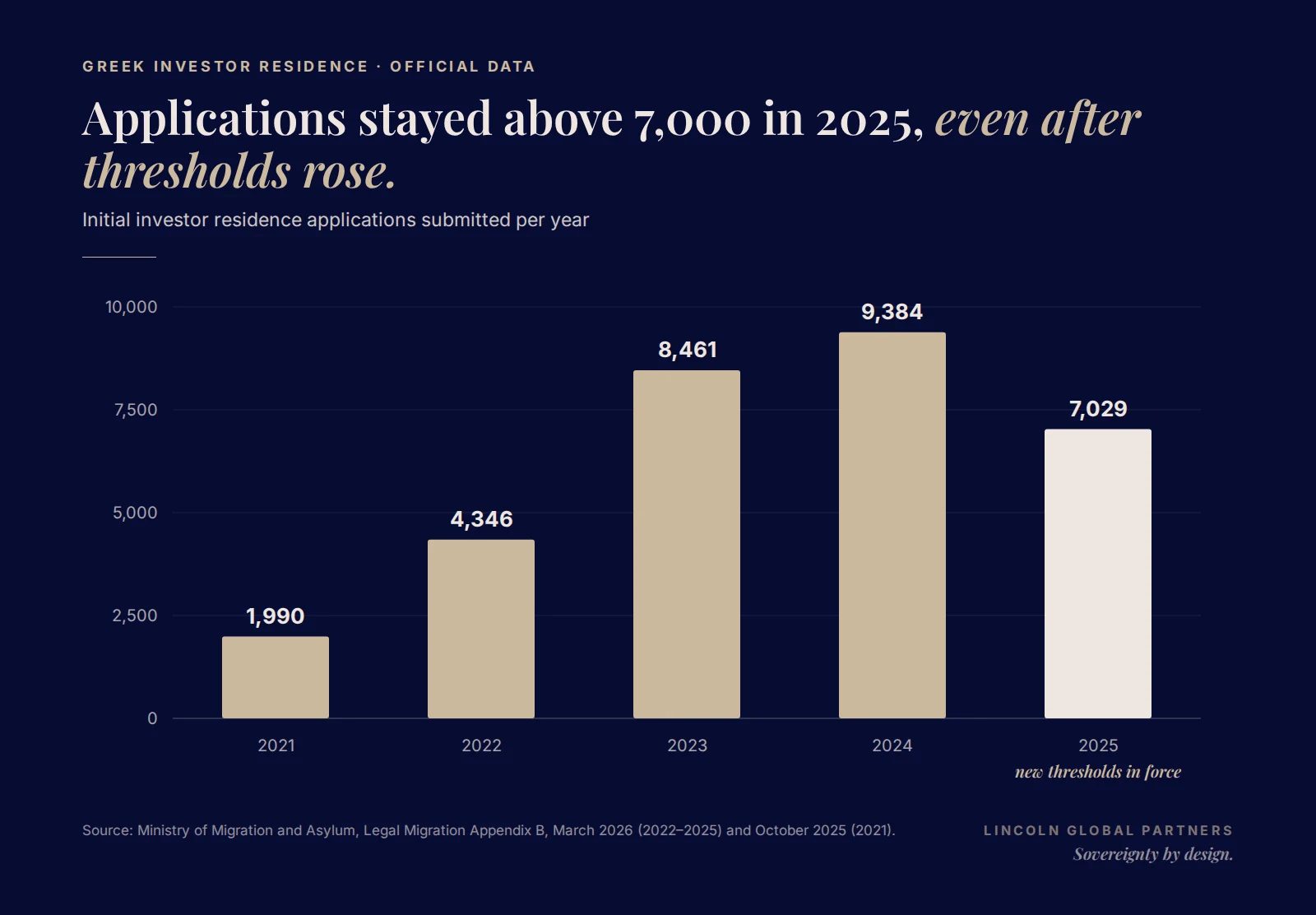
- Permits in force. In March 2026, 30,439 investors held a valid Greek investor residence permit, plus 56,917 family members: 87,356 people in total. In October 2025 the investor figure was 25,700, so it grew by 18% in five months (Ministry of Migration and Asylum, March 2026; October 2025).
- Issuance pace. The ministry issued 13,127 investor-category permits between March 2025 and March 2026, between 631 and 1,262 a month.
- Who is buying. Chinese nationals hold 48.4% of investor permits, Turkish nationals 16.6% and Lebanese nationals 4.6%, with steady growth from the UK, the US and Israel.
Why prices will not reset
Greek apartment prices rose 8.1% in 2025 (revised) and 5.7% year on year in Q1 2026 (Bank of Greece). The national index passed its 2008 peak in Q4 2024, after sixteen years (EMF Hypostat 2025). Growth is slowing to a healthier pace, but it has not reversed.
Three forces keep the €250,000 segment where it is:
- Replacement cost. Buildings, permits, labour and finance all cost more each year. A developer cannot sell below what the next project costs to deliver.
- Finite stock. There is only so much empty commercial space in central Athens. Every conversion completed is one fewer left, and remaining buildings get more expensive.
- Anchored expectations. Sellers of commercial buildings now price in the residence premium. Nobody will sell a building at 2019 prices because a buyer remembers them.
If you are waiting for the premium to disappear, the data does not support that wait. This is where the market is heading, not a temporary spike.

Not sure how this fits your strategy?
A focused consultation to assess your objectives and shortlist the right options.
Capital appreciation: where Athens has been, and where it is going
Capital appreciation is the rise in your property's value over time, separate from the rent it earns. For a residence investor who holds for at least five years, it is the second half of the return.
Greek apartment prices fell for nine years after 2008, bottomed in 2017, and then rebuilt. The national index grew 13.9% in 2023 and 8.9% in 2024, passing its 2008 peak in Q4 2024 (EMF Hypostat 2025). It added 8.1% in 2025, with Athens at 6.5%, and 5.7% year on year in Q1 2026 (Bank of Greece). The early, sharp rebound is over. What remains is steadier, mid-single-digit growth.
That shifts the opportunity from "Athens" in general to specific districts. Central Athens asking prices rose 12.0% in the year to Q3 2025, and rents 7.6%. Peristeri asking prices rose 22.0%, and rents in Gazi-Metaxourgeio 18.8% (Spitogatos Property Index via Capital.gr). Piraeus, which re-rated after metro Line 3 reached it in 2022, was flat on price (−1.3%) but still rising on rent (+2.3%).
The districts we watch most closely for conversion stock are the ones where empty commercial buildings meet improving infrastructure:
- Peristeri: value entry, metro Line 2, prices moving fastest.
- Piraeus: port regeneration and a proven long-term rental base.
- Moschato and Tavros: the former industrial belt between the centre and the coast, close to the Stavros Niarchos Foundation Cultural Center.
- Kallithea: flat, connected and increasingly sought after, between the centre and the Riviera.
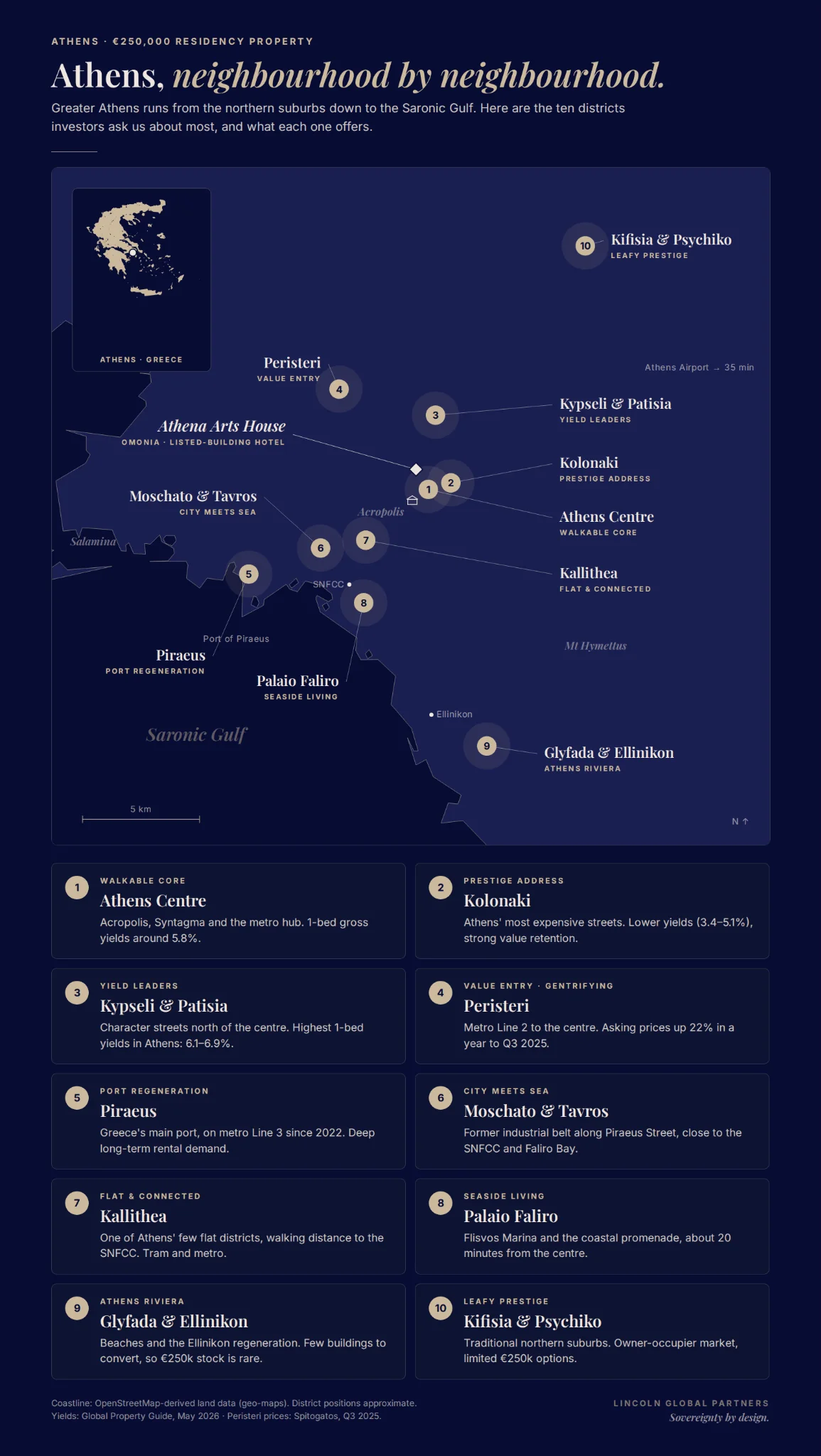
For clients who are new to Athens, the map above shows the ten districts we are asked about most, and what each one offers. The Riviera and the northern suburbs are included for context: they are excellent places to live, but they have very few commercial buildings to convert, so €250,000 options there are rare.
Not every €250,000 investment is an apartment
The €250,000 route now covers several asset types. Which one fits depends on how you want to hold the investment, not only on the headline return.
| Format | What you own | How it earns | Best for |
|---|---|---|---|
| Boutique residential conversion | A titled studio or apartment in a converted building | Long-term rent (short-term letting is not allowed) | Investors who may use the property, or want a simple, tangible asset |
| Hotel co-ownership | A deeded, individually titled share in a professionally operated hotel | Fixed rent from the operator, paid annually or upfront | Hands-off investors who want income certainty |
| Student accommodation | A unit in a purpose-built or converted student residence | Rent from a managed student portfolio | Investors who want demand tied to universities, not tourism |
| Listed-building restoration | A unit in a restored heritage building | Rent, often with stronger long-term value | Investors who value character and scarcity |
There is no single right answer. Some clients care most about a guaranteed income in the first years. Others want the freedom to live in the property part of the year, or a clean exit after five years. Our job is to match the format to those priorities, not the other way round.
Greece and the rest of Europe: the property route is closing elsewhere
Part of the premium comes from scarcity at a European level. One by one, Greece's competitors have removed real estate from their residence programmes.
| Country | Property route to residence today | What remains |
|---|---|---|
| Greece | Open: €250,000 (conversion or listed building), €400,000 or €800,000 | Property purchase, no minimum stay |
| Malta | Open, but with government payments | Buy or lease property, plus a €60,000 administration fee and a €37,000 contribution: €97,000 before any property cost |
| Portugal | Closed in October 2023 | Investment funds from €500,000; cultural donation from €250,000 (€200,000 in low-density areas) |
| Spain | Closed on 3 April 2025 | No investor residence route |
| Hungary | Direct property option cancelled in December 2024, before it launched | €250,000 in an approved real estate fund, or a €1,000,000 donation |
| Latvia | Real estate and banking routes closed on 15 September 2026 | Investor permits only through the shareholder investment route, from €50,000 |
Sources: Latvia PMLP · IBA on Hungary · KPMG on Spain · Andersen on Malta.
Cyprus still offers residence through property, but it is not part of the Schengen area. That leaves Greece as the one Schengen country where buying property, with no government donation on top, still leads to residence. Read our guide to the Cyprus Golden Visa for the comparison.
Why the window may not stay open as it is
We cannot predict policy, and we will not pretend to. But five facts are worth weighing:
- Europe is tightening. The EU Pact on Migration and Asylum, adopted on 14 May 2024, has applied since 12 June 2026 (Council of the EU). Brussels has been critical of investor residence schemes since 2019.
- The cost of buying is set to rise. Greece has announced that from 1 July 2027 the transfer tax on homes bought by non-EU individuals without long-term residence will rise from 3.09% to about 15.45%. On a €250,000 purchase, that is roughly €38,600 instead of €7,725. The start date was pushed back from 1 January to let pending deals close, and the treatment of the €250,000 conversion and listed-building category is still being negotiated, with the market asking for an exemption or a lower rate (Proto Thema; Newmoney). The measure still has to pass through public consultation and Parliament.
- Greece votes in spring 2027. Prime Minister Mitsotakis has confirmed the election will be held at the end of the four-year term (GreekReporter, September 2026). Housing is a political issue, and any future government may revisit the thresholds.
- Greece has already moved twice. Thresholds rose in 2023 and again in 2024. Each change was announced with a transition period, then applied.
- The stock is finite. Two years after the 2024 reform, the pipeline of conversion projects has grown quickly. Every building converted is one fewer available, and the best-located ones go first.
A case in point: Athena Arts House, Omonia
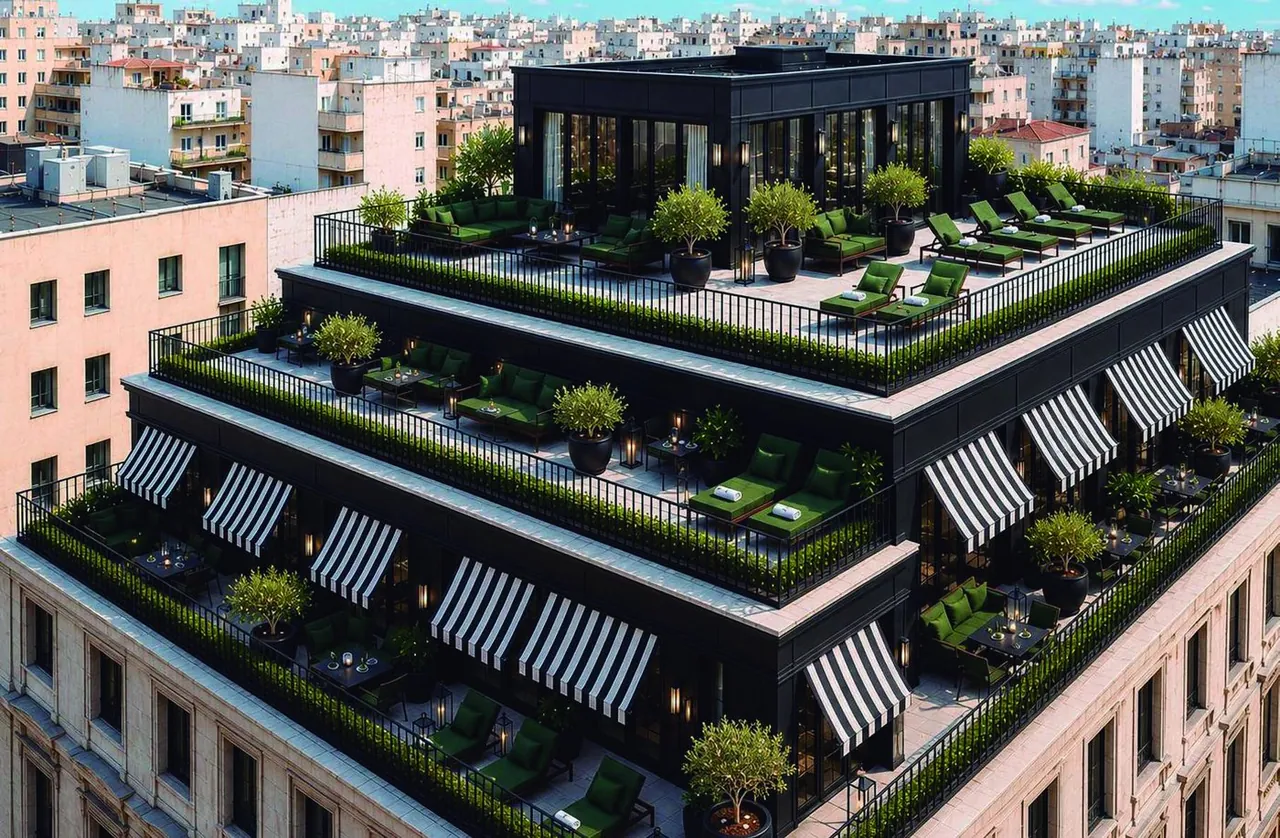
The better developers are responding to exactly the concerns in this article. One recent example is Athena Arts House, a new project from international developer Arish Capital Partners that we have added to our Greece portfolio.
Athena Arts House is a boutique luxury hotel in a restored, listed historic building on Omonia, one of central Athens' fastest-changing districts. It is within walking distance of Syntagma (16 minutes), Plaka (18 minutes) and the Acropolis (20 minutes), 35 minutes by car from the airport and 25 minutes from Glyfada.
| Feature | Terms |
|---|---|
| Investment | €250,000, eligible under the listed-building category |
| What you own | A deeded, individually titled co-ownership share in the hotel, with 7 days of personal use a year |
| Operation | Professionally managed by an international hotel operator |
| Income, option 1 | 6% a year fixed for five years, paid annually in arrears: €15,000 a year, €75,000 in total |
| Income, option 2 (launch promotion) | 4% a year fixed for five years, paid upfront: a €50,000 lump sum at purchase |
| Purchase costs | Launch offer: the developer covers transfer tax, cadastral tax, notary fees and the residence application fees, so the total outlay is the €250,000 price |
| Residence timing | As a listed building, the investment qualifies on purchase, before all licences are in place |
| Completion | Targeted for summer 2029, with licensing built into the schedule |
| Exit | Liquid from year five of operations, with an international broker mandated to assist |
Why we think it is worth a look: it answers the "overpriced" objection directly. Option 2 returns €50,000 on day one, so your net capital at risk is €200,000. The developer absorbs roughly €16,000 of purchase costs that a buyer would normally pay. And the hotel format removes the work of finding tenants. Both the upfront option and the covered purchase costs are launch terms, available for a limited period.
What to weigh, in the same spirit of transparency: the hotel is off-plan, with completion targeted for 2029. Fixed income is a contractual promise from the developer, so its strength depends on the developer's covenant, which we review with you. And you own a share in a hotel, not a flat you can move into. The developer's legal opinion and the Government Gazette listing of the building are available on request.
Where we stand
There is a lot of noise about this market, much of it on social media, and much of it wrong in one direction or the other. Some say every €250,000 unit is a scam. Others promise returns with no contract support. Neither helps you decide.
Our position is simple. These properties cost more than the ordinary Athens market, for reasons you can now see: the cost of creating them, a finite supply, sustained demand and access to Europe. That does not make them a bad investment. It makes them a different one, and you should judge them on those terms.
We work for you, not for developers. We shortlist projects after checking titles, permits and the developer's track record; we compare income structures side by side; and we stay with you through the purchase, the application and biometrics in Athens. We tailor the search to what matters to you, whether that is income certainty, a place to stay, or a clean exit. But we start every conversation from the same clean place: the market as it really is.
This article is for information only and is not legal, tax or investment advice. Figures are as of the dates stated and may change.
Sources
- Greek government and official data: Ministry of Migration and Asylum, Legal Migration Appendix B, March 2026 · Mitos, change-of-use procedure · Law 5038/2023, Art. 100 · JMD 214926/2025 · Bank of Greece, residential property prices Q1 2026 · ELSTAT GDP 2025 via ERT · ELSTAT unemployment via Powergame
- EU and international: European Commission, Greece forecast, May 2026 · Council of the EU, Pact on Migration and Asylum · EMF Hypostat 2025, Greece · Latvia PMLP · IBA on Hungary · KPMG on Spain · Andersen on Malta
- Market data and research: Global Property Guide, Athens yields · Spitogatos Property Index · Alpha Bank Insights, April 2025 · Athens Social Atlas
- News reporting official data: Greek City Times on real estate FDI · GreekReporter on 2019–2025 investment · GreekReporter on the 2027 election · AFP via Malay Mail, March 2024

Last reviewed 29 September 2026.
This guide is general information, not legal, tax or immigration advice. Programme terms are set by the relevant government and can change; confirm any figure with the authority, or with us, before acting on it.
Common questions
Are €250,000 Greek residency properties overpriced? +
Compared with ordinary Athens resale flats, yes, they are priced higher. The premium reflects conversion and licensing costs, limited stock and the residence permit attached to the purchase. Against what they deliver, they are priced for access, not for rent alone.
Which properties qualify for Greek residence at €250,000? +
Commercial or industrial buildings converted to residential use after 5 April 2024, and restored listed buildings. Standard homes need €800,000 in Attica, Thessaloniki, Mykonos, Santorini and larger islands, and €400,000 elsewhere.
How many investor residence permits has Greece issued? +
In March 2026, 30,439 investors held a valid permit, plus 56,917 family members. The ministry issued 13,127 investor-category permits between March 2025 and March 2026.
What rental yield can I expect in Athens? +
Gross yields averaged 5.52% across Athens in May 2026, from about 3.4% in Kolonaki to 6.95% in Patision. Because residence-qualifying units cost more, the yield on purchase price is usually lower, which is why many developers offer guaranteed or upfront returns.
Do I have to live in Greece to keep the permit? +
No. There is no minimum stay. The permit is renewed every five years as long as you keep the property.
Can I rent the property on Airbnb? +
No. Properties used for residence cannot be let on short-term platforms. Long-term letting, or a professionally operated hotel structure, are the permitted routes.