


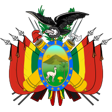
















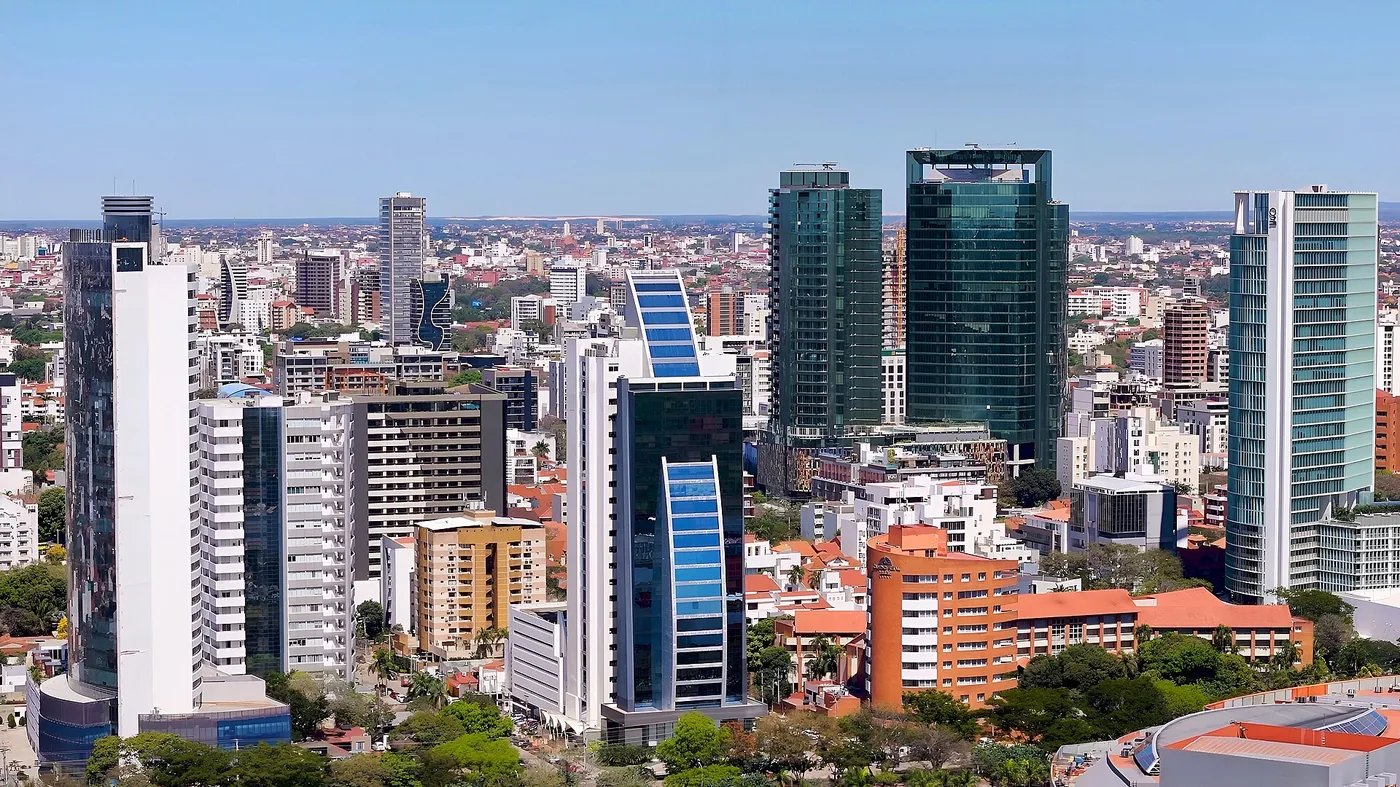
Bolivia grants citizenship by naturalisation after three continuous years of legal residence — reducible to two for spouses of Bolivians, parents of Bolivian children, and a few defined cases. There is no citizenship-by-investment: you earn the passport through presence, a clean record, proof of self-support, and a Spanish-language civics exam covering the Constitution, Bolivian history and geography. Final grant comes from the Plurinational Legislative Assembly, and the whole ladder — temporary residency to passport in hand — typically runs four to six years. Bolivia permits dual citizenship, so most applicants keep their original nationality.
Key facts
| Item | Detail |
|---|---|
| Route | Naturalisation (no citizenship-by-investment exists) |
| Legal basis | 2009 Plurinational Constitution, Arts. 141–143; Migration Law No. 370 (2013) |
| Residence required | 3 continuous years of legal residence (temporary counts) |
| Reduced to 2 years for | Bolivian spouse · Bolivian child(ren) · Bolivian adoptive parents · qualifying military/legislative service |
| Exam | Informal Spanish assessment + civics test (2009 Constitution, history, geography) |
| Deciding authority | Plurinational Legislative Assembly grants nationality on DIGEMIG/SEGIP recommendation |
| Processing (file) | ~1 year after the residence clock completes |
| Full ladder (temp → passport) | ~4–6 years end to end |
| Dual citizenship | Permitted — no renunciation of original nationality required (Art. 143) |
| Citizenship by descent | Child born abroad to a Bolivian parent is Bolivian by birth (register at a consulate) |
| Passport mobility | ~35–80 destinations by index; no Schengen/US visa-free; full Mercosur residence rights |
| Loss of nationality | Not lost by acquiring a foreign citizenship; voluntary renunciation only |
Current status — July 2026
As of July 2026: The naturalisation framework itself is unchanged under President Rodrigo Paz (inaugurated 8 November 2025). However, Paz has floated a partial reform of the 2009 Constitution to attract foreign investment — and because Articles 141–143 sit inside that Constitution, any reform could touch nationality rules mid-cycle. Nothing has changed yet, and applicants already inside the three-year residence clock enter under, and are generally grandfathered against, the framework in force when they started. See “Latest updates” below for the fuller, dated picture.
What is Bolivian citizenship?
Bolivian citizenship is full membership of the Plurinational State — the passport, the vote, and the unconditional right to live and work in Bolivia — acquired either by birth or, for foreigners, by naturalisation.
The Constitution separates two ideas that English blurs into one: nacionalidad (nationality — the legal bond) and ciudadanía (citizenship — the exercise of political rights from age 18). For a foreigner, the practical goal is naturalisation, which delivers both.
Article 141 sets out who is Bolivian by birth: anyone born on Bolivian soil (with narrow diplomatic exceptions), and anyone born abroad to a Bolivian mother or father. Everyone else — the foreign applicant — comes in through Article 142, naturalisation, and it is unusual in the region for being an administrative-plus-legislative path: you build the file with DIGEMIG and SEGIP, and the Plurinational Legislative Assembly issues the final grant.
What Bolivia does not offer is a citizenship-by-investment programme. There is no donation, no bond, no real-estate shortcut to a passport. You qualify on time, conduct, self-support, and a language-and-civics exam — the same way a resident who has genuinely built a life there would.
Routes to citizenship (and which one fits)
Four legal routes lead to Bolivian nationality. For most foreign applicants it is standard naturalisation after three years; marriage and family shorten the clock; descent and legislative honours are narrow doors.
| Route | Who it fits | Core basis | Clock |
|---|---|---|---|
| Standard naturalisation | Any foreigner holding residency 3+ years | 3 continuous years of legal residence + exam | 3 yrs |
| Reduced (family) | Spouse/parent/adoptee of a Bolivian | Same requirements, shorter clock | 2 yrs |
| Reduced (service) | Bolivian military service, or legislative honour for service | Constitutional reduction / legislative award | 2 yrs / disc. |
| By descent (not naturalisation) | Anyone born abroad to a Bolivian parent | Bolivian by birth under Art. 141 | None |
The distinction that matters strategically: descent is not naturalisation. If you have a Bolivian parent, you are already Bolivian by birth — you register and document it rather than “apply.” Everyone else runs the residence clock. The family reduction to two years is the single biggest lever, and it turns on a genuine, documented relationship — a Bolivian spouse or child — not a paper marriage.
The timeline: from residency to passport
Realistically, budget four to six years from your first temporary-residency filing to a Bolivian passport in hand. Citizenship is the top of a ladder, and each rung has its own clock.
The sequence is: temporary residency → three continuous years of legal residence → naturalisation file → Legislative Assembly grant → passport.
- Year 0. Enter, file temporary residency (issued in 1–2 days at DIGEMIG), and collect your CIE identity card. The residence clock starts from lawful status.
- Years 1–3. Maintain continuous, lawful residence. Temporary residents face a baseline 90-days-abroad-per-year ceiling, and the naturalisation standard is uninterrupted residence “under the supervision of the State.” Breaks in status or long unauthorised absences can reset the clock.
- Year 3+. With three continuous years complete, assemble and file the naturalisation application at SEGIP: residence evidence, criminal-record clearances, proof of self-support, the written declaration of intent, and civics-exam scheduling.
- ~12 months of processing. The file is reviewed and, on DIGEMIG/SEGIP recommendation, the Plurinational Legislative Assembly issues the grant. Only then do you obtain the Bolivian ID as a citizen and apply for the passport.
The family-reduced track compresses the residence clock to two years but not the processing tail — so the fastest realistic path for a spouse of a Bolivian is roughly three years total, not two.
Eligibility & requirements for naturalisation
To naturalise you need three continuous years of legal residence, a clean record across every country you have lived in over the past decade, proof you can support yourself, a written declaration of intent, and a pass on the Spanish civics exam.
- Residence. Three uninterrupted years of legal residence under state supervision (two in the reduced cases). Temporary-residency time counts — you do not have to reach permanent residence first.
- Clean criminal record. A clear record in Bolivia and in every country where you have resided during the prior ten years.
- Means of self-support. Documented ability to sustain yourself — employment, business, pension, or assets.
- Express declaration. A formal, written statement of your desire to become Bolivian.
- Good conduct and real anchoring. Continuous address, tax compliance where applicable, and genuine ties weigh in the assessment.
- The exam. An informal Spanish-proficiency check plus a civics test on the Constitution, history and geography (Section 5).
Note what is not required: no minimum investment, no donation, and — critically — no renunciation of your existing nationality. Bolivia's dual-citizenship stance is one of the most permissive in the Americas.
The citizenship exam: Spanish, civics, history, geography
The exam is real but proportionate: a conversational Spanish check plus a civics test on the 2009 Constitution, Bolivian history and geography — not a formal language certificate.
- Spanish. Assessed informally at the SEGIP interview — there is no DELE certificate requirement. You need functional conversational Spanish, enough to answer the civics questions and complete the interview.
- Constitution. The 2009 Plurinational Constitution: its basic principles, the plurinational structure of the state, and indigenous rights.
- History. Pre-Columbian civilisations, Spanish colonisation, independence in 1825, and the plurinational era.
- Geography. The nine departamentos, major cities, and the three great regions — altiplano, valleys, and lowlands.
Beyond the test itself, authorities weigh real anchoring: a continuous address, tax compliance, community participation. Naturalisation is designed for people who have actually made Bolivia home, and the file is read that way. Preparation is straightforward — a few weeks of focused study for a candidate already living in Spanish — but it is not a formality you can skip.
Step-by-step naturalisation process
Once your three-year clock is complete, naturalisation runs in four stages: assemble the file, file and interview at SEGIP, receive the Legislative Assembly grant, then obtain the citizen ID and passport.
- Assemble the file. Gather residence evidence for the full qualifying period, criminal-record clearances (Bolivia plus every country of residence in the past decade), proof of self-support, and your written declaration of intent. Foreign documents are translated and, where required, apostilled.
- File and interview at SEGIP. The application is lodged at SEGIP, which coordinates the interview, schedules the civics test, and verifies documentation. Attend in person.
- Recommendation and legislative grant. On the recommendation of DIGEMIG/SEGIP, the Plurinational Legislative Assembly issues the formal grant of nationality. This legislative step is what distinguishes Bolivia from a purely administrative naturalisation and is the main reason the processing tail runs about a year.
- Citizen ID and passport. With nationality granted, you obtain your Bolivian identity document as a citizen and apply for the passport.
The most common self-inflicted delay is a gap in the residence record — an expired renewal, an unauthorised long absence, or an inactive renewal basis that quietly breaks the “uninterrupted” requirement. Continuity is everything; the exam is the easy part.
Total cost of naturalisation
Naturalisation is inexpensive in government terms — the real cost is the years of maintained residency underneath it, plus professional handling of the file.
| Cost item | Typical range (USD) | Note |
|---|---|---|
| Criminal-record clearances (multiple countries) | 50 – 200 | Varies by home country |
| Document translation & apostille | 100 – 400 | Depends on volume |
| Civics-exam preparation | Self-study to modest | Optional tutoring |
| Naturalisation filing & SEGIP fees | Modest government fee | Confirm current schedule |
| Passport issuance | Government fee | After grant |
| Legal / service fee (handled) | Project-based | End-to-end management |
| Underlying cost | 3–6 years of maintained residency | The real “investment” |
The costing error to avoid is treating citizenship as a standalone purchase. It is the capstone of a residency you have already funded and maintained. Price the ladder, not the last rung.
Dual citizenship & renunciation
Bolivia permits dual citizenship: naturalising foreigners are not required to renounce their original nationality, and Bolivians do not lose theirs by acquiring a foreign one.
The rules, from Articles 141–143:
- Naturalised foreigners keep their original nationality — no renunciation demanded.
- Bolivians who acquire a foreign citizenship do not lose Bolivian nationality. Marrying a foreigner does not strip it either; a foreign spouse who naturalised keeps Bolivian nationality through widowhood or divorce.
- Loss is by voluntary renunciation only — a letter to the nearest Bolivian embassy. The 2009 Constitution contains no general involuntary-loss machinery, though narrow historic grounds (aiding an enemy in wartime, taking unauthorised foreign government office) exist in the wider legal tradition.
For the global citizen, the takeaway is clean: a Bolivian passport is additive, not a trade-off. You are not asked to surrender the passport you hold to gain this one.
Citizenship by descent (born abroad to a Bolivian parent)
If you were born abroad to a Bolivian mother or father, you are already Bolivian by birth — you register the fact, you do not naturalise.
Article 141 makes descent unconditional in principle: nationality passes to a child born outside Bolivia to at least one Bolivian parent. In practice you establish it one of two ways: register the birth at a Bolivian consulate abroad, or establish it on taking up residence in Bolivia.
Because this is birthright nationality rather than naturalisation, there is no three-year clock, no civics exam, and no self-support test — it is a documentation exercise proving the parental link (the parent's Bolivian birth or nationality, and your own birth record). This route is narrow — it needs a Bolivian parent — but where it exists it is by far the fastest path to the passport, and it is frequently overlooked by second-generation emigrants who assume they must “apply.”
The Bolivian passport: strength, mobility & Mercosur
The Bolivian passport is a mid-tier travel document — visa-free or visa-on-arrival to somewhere between 35 and 80 destinations depending on the index — but its quiet strength is full Mercosur residence mobility, not visa-free tourism.
- Visa-free / VOA reach. Estimates vary widely by methodology — stricter indices count ~35–40 pure visa-free destinations; broader ones reach ~77–80 including visa-on-arrival and eTA. Access includes countries such as the Philippines, Singapore, Sri Lanka, Russia and Turkey.
- What it does not give. No visa-free entry to the Schengen Area, the wider EU, or the United States — Bolivians need visas for all three. If visa-free Europe is the goal, Bolivia is not the vehicle.
- The real prize — Mercosur. As a Mercosur member, Bolivia gives its citizens residence and work mobility across the bloc (Argentina, Brazil, Paraguay, Uruguay and associates). For someone building a South American base, that regional right often outweighs the tourist-visa count.
The honest framing: Bolivia's passport is a residence-and-regional asset, not a global-mobility asset. Clients who want passport power for travel typically pair it with a stronger second citizenship; clients who want a lived-in South American base value the Mercosur reach.

Not sure how this fits your strategy?
A focused consultation to assess your objectives and shortlist the right options.
Tax & the obligations of citizenship
General guidance only — not tax advice. Confirm your position with a qualified adviser before acting.
Bolivian citizenship does not change Bolivia's territorial tax system: the country still taxes only Bolivian-source income, and citizenship itself creates no worldwide-income tax.
- Territorial system persists. Bolivia taxes domestic income (personal income under RC-IVA at 13%) and does not tax foreign-source income. Becoming a citizen does not import a worldwide-income regime.
- The IGF wealth tax. Still applies to residents present 183+ days on worldwide assets above roughly US$4.3M. A repeal was proposed but rejected by the Chamber of Deputies' Planning Commission on 11 February 2026, so the tax remains in force — a residence-and-presence issue, not a citizenship one.
- US persons. If you are American, naturalising elsewhere does not end US worldwide taxation or FBAR/FATCA duties (Section 15).
The obligations of citizenship are civic more than fiscal: the vote (and, in Bolivia, compulsory voting for citizens), eligibility for certain public roles, and — for men of the relevant age — the military-service framework that also underpins one of the reduced-naturalisation categories.
Why citizenship applications stall or get refused
Almost every naturalisation problem traces to a broken residence record or a document gap — not to the exam. The compliance nuances below are the moat a desk-written competitor never surfaces:
- A gap in continuity. An expired renewal, a lapse in status, or an unauthorised long absence can break the “uninterrupted” requirement and reset the three-year clock.
- The 90-day ceiling during temporary residence. Exceeding permitted time abroad without a prórroga undermines the continuity the naturalisation standard demands.
- Incomplete criminal-record coverage. Clearances are needed for every country of residence in the past decade — not just Bolivia and not just your home country.
- Weak self-support evidence. “Means of subsistence” must be documented, not asserted.
- Thin anchoring. Naturalisation rewards genuine ties; a resident who was rarely present and filed nothing reads as a weak candidate.
- Underestimating the legislative tail. The Legislative Assembly grant adds roughly a year; applicants who plan around a “two-year” headline are often surprised.
By the numbers
Assembled here in one place: the structural data points that define the Bolivian citizenship path — the numbers competitors rarely present together.
| Metric | Figure | Source / note |
|---|---|---|
| Standard residence for naturalisation | 3 continuous years | Constitution Art. 142 |
| Reduced residence (family/service) | 2 years | Constitution Art. 142 |
| Naturalisation processing tail | ~12 months | DIGEMIG/SEGIP + Legislative Assembly |
| Full ladder (temp → passport) | ~4–6 years | Combined |
| Deciding body | Plurinational Legislative Assembly | Legislative grant |
| Dual citizenship | Permitted | Constitution Art. 143 |
| Citizenship by descent | Bolivian by birth | Constitution Art. 141 |
| Passport visa-free / VOA reach | ~35–80 destinations | Varies by index |
| Schengen / US visa-free | No | Visa required |
| Mercosur residence mobility | Yes | Mercosur membership |
| Domestic income tax (RC-IVA) | 13% flat | Bolivian tax code |
| Foreign-source income tax | 0% | Territorial system |
Decision economics — the cost of delay. Two live variables argue for starting the clock now. First, President Paz's proposed partial constitutional reform could, in principle, touch Articles 141–143 mid-cycle; applicants already inside the residence clock enter under today's framework. Second, the ladder is time-denominated — the only way to shorten a four-to-six-year path is to have started it earlier. Citizenship is the one asset you cannot buy your way to faster.
Latest updates — recent & upcoming changes
Dated log. Reviewed 3 July 2026.
- 8 November 2025 — new government. Rodrigo Paz inaugurated president on a reform platform, ending nearly two decades of the prior economic model.
- 11 February 2026 — tax reform, not nationality. The Chamber of Deputies' Planning Commission rejected the IGF wealth-tax repeal for lack of consensus; a financial-transactions-tax repeal advanced. Neither touches the naturalisation framework.
- H1 2026 — constitutional-reform signalling. Paz continues to advocate a partial reform of the 2009 Constitution to attract foreign investment in mining, hydrocarbons and lithium. Because nationality sits in that Constitution (Arts. 141–143), any reform could reach it — but nothing has been enacted.
Who's affected and what to do now. None of the above has changed how you become Bolivian. But the reform signalling is the strategic case for not waiting: entering the three-year residence clock now locks you into today's naturalisation rules while any upside changes remain optional. Without a Plan B, you are exposed.
Bolivian citizenship for US citizens
An American can naturalise in Bolivia and keep US citizenship — Bolivia demands no renunciation — but US worldwide taxation and reporting continue regardless.
Two US-specific realities: first, the US taxes citizens on worldwide income wherever they live, and Bolivia's territorial system does not relieve US federal filing, FBAR, or FATCA obligations. Second, acquiring Bolivian nationality does not, by itself, affect US citizenship — the US permits dual nationality — so this is a genuine second passport, not a swap. For Americans, Bolivia's value is a lived-in South American base, Mercosur mobility, and a non-CRS banking environment — paired with US cross-border tax guidance, never instead of it.
Is it worth it? Best — and worst — for
Bolivian citizenship is worth it for those building a genuine, long-horizon South American base who value Mercosur mobility and dual-citizenship freedom — and a poor fit for anyone chasing a fast, travel-strong “passport-only” play.
Best for:
- Long-game diversifiers who will actually live the residency years and want the permanence a passport gives.
- Spouses and parents of Bolivians, who get the two-year reduction and a natural anchoring story.
- Second-generation emigrants with a Bolivian parent — citizenship by descent, not a three-year wait.
- Those building a Mercosur footprint who value regional residence rights over tourist-visa counts.
Worst for:
- Anyone wanting a citizenship-by-investment shortcut — it does not exist in Bolivia.
- Travellers who need visa-free Schengen, EU or US access from the passport itself.
- Perpetual travellers who cannot maintain the continuous, low-absence residency the clock requires.
- Those unwilling to reach functional Spanish for the civics exam.
Access is not the advantage — selection is. Bolivia rewards the applicant who genuinely builds the years underneath the passport.
Bolivia vs Paraguay vs Panama: the citizenship endgame
For the passport endgame, Paraguay and Panama offer stronger travel documents on paper, while Bolivia's edge is a permissive dual-citizenship regime and Mercosur mobility on a low-cost, lived-in base.
| Category | Bolivia | Paraguay | Panama |
|---|---|---|---|
| Residence before citizenship | 3 yrs (2 reduced) | 3 yrs + judicial | ~5 yrs |
| Process type | Admin + legislative grant | Judicial (slower) | Admin/judicial |
| Passport strength | Mid-tier; no Schengen | Stronger; broader | Stronger; broader |
| Dual citizenship | Yes, no renunciation | Yes (nuances) | Yes (nuances) |
| Mercosur mobility | Yes | Yes | No |
| CBI shortcut | None | None | None |
| Language/exam | Spanish civics exam | Spanish, integration | Spanish, integration |
The two-flag play. Because Bolivia and Paraguay differ in banking, presence rules and citizenship logic — while both offer territorial tax and Mercosur membership — holding both is a genuine jurisdictional hedge. Paraguay anchors a stronger passport and light presence; Bolivia adds a permissive dual-nationality regime and an administrative citizenship route on a low-cost base. Global strategy. Local execution.
Why Lincoln Global Partners
Lincoln Global Partners is an investment-migration consultancy with a team based across 8 cities on 3 continents. Our edge on Bolivia is ground-level: a local Bolivian team that maintains the residency continuity the naturalisation clock depends on, assembles multi-country criminal-record and self-support evidence, and coordinates the SEGIP interview and civics-exam scheduling — the operational details that decide whether a file clears or stalls at the Legislative Assembly stage. Our lead specialist holds Individual Managing Membership (IMCM), contributes to IMI Daily, and has held Paraguayan permanent residency since 2022 — Mercosur experience lived, not desk-researched.
Frequently asked questions
How long does it take to become a Bolivian citizen?
Three continuous years of legal residence, then roughly a year of processing through SEGIP and the Legislative Assembly — about four years from residency in the fastest standard case, and typically four to six years across the full ladder. The family-reduced track shortens the residence clock to two years.
Does Bolivia allow dual citizenship?
Yes. Under the 2009 Constitution, naturalising foreigners are not required to renounce their original nationality, and Bolivians do not lose theirs by acquiring a foreign citizenship.
Is there citizenship by investment in Bolivia?
No. Bolivia has no citizenship-by-investment programme. Citizenship comes through naturalisation — residence, clean record, self-support, and a civics exam.
What is on the citizenship exam?
An informal Spanish-language assessment plus a civics test covering the 2009 Constitution, Bolivian history (to independence in 1825 and the plurinational era) and geography (the nine departamentos and three regions). There is no formal DELE certificate requirement.
Who actually grants the citizenship?
The Plurinational Legislative Assembly issues the formal grant of nationality, on the recommendation of DIGEMIG/SEGIP after the file and interview.
Can I get Bolivian citizenship through marriage?
Marriage to a Bolivian reduces the residence requirement from three years to two; it does not grant citizenship automatically. A foreign spouse who naturalises keeps Bolivian nationality even through divorce or widowhood.
I was born abroad to a Bolivian parent — am I already Bolivian?
Yes. Under Article 141 you are Bolivian by birth. You register the fact at a Bolivian consulate or on taking up residence in Bolivia — there is no three-year clock or exam.
How strong is the Bolivian passport?
Mid-tier: visa-free or visa-on-arrival to roughly 35–80 destinations depending on the index, with no visa-free access to the Schengen Area, the EU, or the US. Its real strength is Mercosur residence and work mobility.
Do I have to give up my current passport?
No. Bolivia does not require renunciation of your original nationality.
Will becoming a citizen change my taxes?
Not by itself. Bolivia's territorial system taxes only Bolivian-source income; tax exposure follows residence and days present, not the passport. The IGF wealth tax applies to 183+ day residents on worldwide assets above ~US$4.3M and remains in force after its February 2026 repeal was rejected.
Can a US citizen naturalise in Bolivia?
Yes, and keep US citizenship. But US worldwide taxation, FBAR and FATCA obligations continue regardless — pair Bolivia with US cross-border tax guidance.
Can Bolivian citizenship be taken away?
It is lost by voluntary renunciation (a letter to a Bolivian embassy). The 2009 Constitution contains no general involuntary-loss machinery; only narrow historic grounds exist.
What most often delays a naturalisation file?
A break in the continuous-residence record — an expired renewal, an unauthorised long absence, or an inactive renewal basis — not the exam.
Glossary of key terms
Nacionalidad / Ciudadanía — Nationality (the legal bond) and citizenship (the exercise of political rights from 18). Naturalisation delivers both.
DIGEMIG — Dirección General de Migración. Bolivia's national migration directorate.
SEGIP — Servicio General de Identificación Personal. Handles identity documents and the naturalisation filing/interview.
Plurinational Legislative Assembly — Asamblea Legislativa Plurinacional. Issues the formal grant of nationality.
CIE — Cédula de Identidad de Extranjero. The foreign-resident ID card held during the residency years.
RC-IVA — Régimen Complementario al IVA. Bolivia's 13% complementary tax on personal income.
IGF — Impuesto a las Grandes Fortunas. Wealth tax on worldwide assets above ~US$4.3M for 183+ day residents.
Prórroga — Prior authorisation to exceed the permitted period abroad during temporary residence.
Mercosur — The South American common market; Bolivian citizenship carries residence/work mobility across the bloc.
Jus soli / Jus sanguinis — Nationality by birthplace / by descent. Bolivia applies both under Article 141.
Primary sources & further reading
Verify current requirements against the official authorities before acting:
2009 Plurinational Constitution (Arts. 141–143): https://www.oas.org/dil/esp/constitucion_bolivia.pdf
DIGEMIG (Dirección General de Migración): https://www.migracion.gob.bo
SEGIP (identity / naturalisation): https://www.segip.gob.bo
Migration Law No. 370 (2013): https://www.migracion.gob.bo/upload/l370.pdf
Plurinational Legislative Assembly: https://www.diputados.gob.bo
Servicio de Impuestos Nacionales (tax / RC-IVA / IGF): https://www.impuestos.gob.bo

Last reviewed 15 September 2026.
This guide is general information, not legal, tax or immigration advice. Programme terms are set by the relevant government and can change; confirm any figure with the authority, or with us, before acting on it.