


































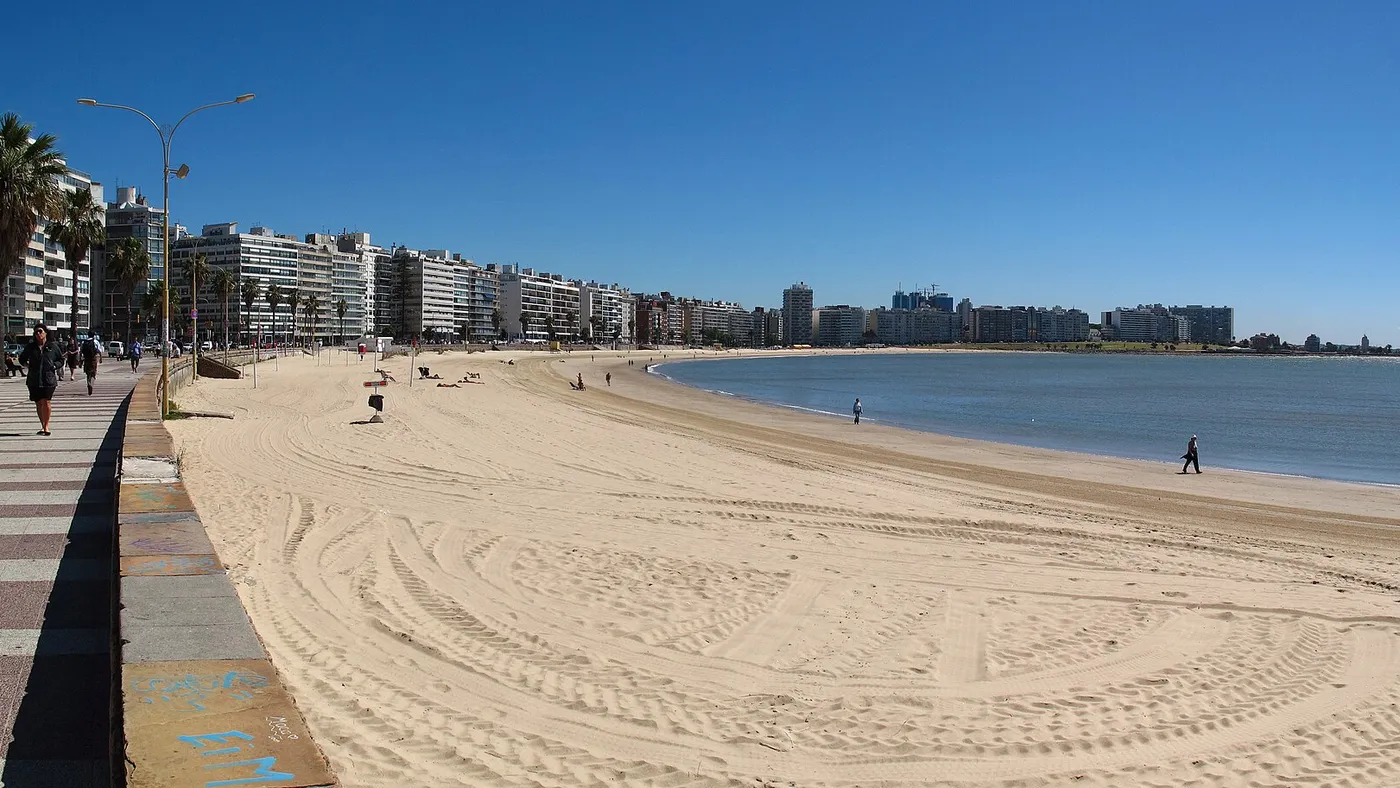
Uruguay is the most expensive country in South America and, for most people who move there, the easiest to settle into: the safest country on the continent, the least corrupt in Latin America, a mild four-season climate and infrastructure that quietly works. A single person lives comfortably in Montevideo on USD 1,500 to 2,200 a month, a retired couple on USD 2,800 to 4,200, and legal residency needs no investment at all. This guide covers daily life, what things actually cost, where to retire and how to handle the move itself.
We work in Uruguay all year round, and our founder holds his own Uruguayan residency file. What follows is the practical side of the country: the questions clients ask us before they ask about visas. For the legal route into the country, see our Uruguay permanent residency guide; for the separate question of tax residency and the 11-year tax holiday, see Uruguay tax residency after the 2026 reform.
Which section do you need?
| If the question is... | Go to |
|---|---|
| "Is it safe, and what is daily life really like?" | Living in Uruguay |
| "How much does it cost per month?" | Cost of living in Uruguay |
| "Where should I retire, and what will it cost?" | Retire in Uruguay |
| "What do I ship, where do I live first, what do I do in week one?" | Moving to Uruguay |
| "How do I get residency?" | Uruguay permanent residency guide |
| "How does the tax holiday work now?" | Uruguay tax residency guide |
Living in Uruguay: safety, culture and daily life
Ask ten expats what surprised them most about life in Uruguay and most will land on some version of the same answer: how little there is to adjust to. Not because nothing is different, but because the differences tend to be pleasant rather than jarring: a slower pace, a strong social contract, and infrastructure that quietly works.
Safety
Uruguay is consistently ranked the safest country in South America and sits around 48th globally on the Global Peace Index. That result is driven less by having the single lowest crime figure and more by functioning institutions, dependable police, and modern hospitals that handle an emergency smoothly when one does occur.
The honest nuance: Uruguay's homicide rate (around 11 per 100,000) is higher than Argentina's or Chile's, although the Ministry of the Interior reported a notable drop in 2025. What matters for daily life is that violent crime is heavily concentrated in specific zones tied to organised crime, far from where expats live, work or send their children to school. The relevant day-to-day risk is opportunistic theft, particularly around bus terminals, Centro and Ciudad Vieja at night.
Practical defaults that travel well: keep valuables out of sight, use a ride app rather than hailing on the street after dark, withdraw cash inside banks or malls rather than at street ATMs, and stay alert in crowded transport hubs. Pocitos, Punta Carretas, Carrasco, Malvín and Parque Rodó are the most comfortable, walkable neighbourhoods for foreign residents.
Clients ask me about crime statistics before they ask about anything else, and the honest answer is that the number that matters isn't the national homicide rate. It's which three or four neighbourhoods you're actually going to live your life in.
— David Lincoln, Founder & CEO
Culture and social life
Uruguayan culture runs on a warmer, slower social clock than most of its neighbours. Long lunches, an active café culture and near-constant mate drinking (carried in a thermos, shared among friends, sipped through a metal straw called a bombilla) shape the daily rhythm more than any single institution does. Asado, the weekend ritual of slow-grilled meat, is closer to a cultural cornerstone than a cuisine.
Uruguay is also notably tolerant by regional standards, with less economic disparity than almost anywhere else in Latin America and a progressive social policy record. Expats who make a visible effort with basic Spanish and show up consistently (the same bakery, the same neighbours) tend to feel accepted faster than they expected.
Where expats live
Most foreign residents settle into one of three patterns. Montevideo, particularly Pocitos, Punta Carretas, Carrasco, Malvín and Parque Rodó, is the default for anyone who wants city amenities, the largest expat community, and the shortest distance to specialist healthcare, embassies and international schools. Punta del Este and the coastal towns east of the capital (Piriápolis, Atlántida, La Barra) suit people who want beach life and a resort pace, busier in summer and quieter the rest of the year. Colonia del Sacramento and the interior attract those after a slower, more local life at lower cost, at the price of thinner English-language infrastructure and a longer trip to specialist care.
Families with school-age children cluster around Carrasco and Malvín, close to the international schools. Remote workers increasingly favour Ciudad Vieja and Cordón for walkability and café culture. Retirees have different priorities again; see where to retire in Uruguay below.
Language
Spanish is the official language, spoken as Rioplatense Spanish: the same dialect family as Buenos Aires, with its distinctive "sh" sound and "vos" instead of "tú". English is spoken in tourist zones and among younger professionals in Montevideo and Punta del Este, but it thins out quickly elsewhere. You can get by on minimal Spanish in the main expat pockets; the pharmacy, the hardware shop and a conversation with a neighbour go considerably better with conversational fluency.
Climate
Uruguay has a genuine four-season temperate climate: warm, humid summers (December to March) without extreme heat, and mild winters (June to August) that rarely require serious heating, particularly along the coast. There is no hurricane season and there are no earthquakes. Anyone coming from the US Northeast, the UK or continental Europe will find it familiar, just gentler.
Infrastructure
Uruguay punches above its regional weight on infrastructure: the best overall road network in the region, a reliable electrical grid, drinkable tap water, and some of the fastest average internet speeds in Latin America. It is part of why daily logistics feel closer to Southern Europe than to the rest of the continent, and why remote workers have made Uruguay a base.
People expect to trade infrastructure for lifestyle when they move to Latin America. Uruguay is the one country in the region where I tell clients they mostly don't have to.
— David Lincoln, Founder & CEO
The honest pros and cons
| Pros | Cons |
|---|---|
| Political stability and rule of law | The highest cost of living in South America |
| The safest country on the continent | Imported goods and electronics are expensive |
| Relaxed pace of life, strong social fabric | Bureaucracy slower than Northern Europe or the US |
| Infrastructure: roads, internet, tap water | A small local job market for anyone without foreign income |
| Residency without investment | Spanish matters outside the expat pockets |
None of these are secrets, and none are dealbreakers for the people who end up staying long term, but they are worth knowing going in rather than discovering three months later.
Cost of living in Uruguay: the full breakdown
Uruguay is the most expensive country in South America. That is the honest starting point, not a marketing line. Headline figures online ("$1,500 a month!" or "$3,800 a month!") rarely agree because they describe different lifestyles and cities under the same label, so here are the numbers by category, by city and by lifestyle. All figures are in US dollars; the peso traded around 40 to the dollar in mid-2026.
The headline numbers
For a single person in Montevideo, a comfortable lifestyle (a one-bedroom apartment, groceries, transport, some dining out and a social life) runs roughly $1,500 to $2,200 a month. A more generous coastal lifestyle, or Punta del Este specifically, climbs to roughly $2,600 to $3,800. On the lean end, a single person in a modest one-bedroom who cooks most meals and uses public transport lives comfortably on $1,200 to $1,500. Families with a car, private schooling and a neighbourhood like Carrasco should budget $4,000 to $6,000 or more.
What the premium buys, compared with cheaper regional alternatives, is safety, institutional stability, drinkable tap water and one of the most accessible residency routes anywhere. Uruguay's pitch has never been cheap; it is predictable.
Every client wants one number. The honest answer is that Uruguay has at least four different cost-of-living realities depending on which neighbourhood and which lifestyle you mean, and most of the disagreement online comes from people comparing different ones.
— David Lincoln, Founder & CEO
Housing
Rent is the largest line item and the one with the most variance by neighbourhood.
| Area | 1-bedroom (monthly) | Notes |
|---|---|---|
| Pocitos, Punta Carretas, Buceo | $600 to $1,000 | Beachfront barrios with the largest expat presence |
| Ciudad Vieja | $500 to $800 | Slightly cheaper studios, walkable historic centre |
| Carrasco | $800 to $1,300+ | Favoured by families near the international schools |
| Punta del Este | $900 to $1,800+ | Highly seasonal: summer rates run well above winter |
| Atlántida, Piriápolis | $500 to $900 | Lower cost, thinner amenities |
Co-living rooms, where available, run $500 to $1,000 a month, a sensible option for a single person's first few months before committing to a full lease (see moving to Uruguay for why that is usually the smarter order).
Groceries and dining
A single person typically spends $300 to $470 a month on groceries; a family of four budgets $650 to $915. Local beef, dairy and produce are good value, often cheaper than North American or European equivalents, while imported and processed goods run noticeably higher. Supermarket chains such as Tienda Inglesa, Disco and Devoto run themed weekday promotions, and shopping around them cuts the bill. A casual meal for two with wine runs $25 to $45; a nicer dinner in Pocitos or Punta del Este considerably more, especially in summer.
Utilities and connectivity
Utilities for a standard 85 m² apartment run roughly $150 to $300 a month, with summer air conditioning pushing toward the top of the range. Internet runs around $45 a month and mobile plans $12 to $40. Confirm whether utilities are included in the rent before signing; practice varies by landlord.
Transport
Montevideo's bus network is the backbone of city transport: clean, reasonably priced and used across all income levels. A one-way fare runs around $2 and a monthly pass around $75. Taxis are inexpensive by North American or European standards (roughly $7 for a five-mile ride in Montevideo), though Punta del Este taxis run noticeably higher. Comfortable coaches connect most of the country.
People budget for rent and forget that a car in Uruguay is optional in Montevideo. The bus network is good enough that skipping car ownership is a real, comfortable choice, not a compromise.
— David Lincoln, Founder & CEO
Total monthly budget by lifestyle
| Profile | Monthly total (Montevideo) |
|---|---|
| Single, budget-conscious (public transport, cooking at home) | $1,200 to $1,500 |
| Single, comfortable (Pocitos or Punta Carretas, some dining out) | $1,500 to $2,200 |
| Couple, comfortable | $2,000 to $3,000 |
| Family of four, comfortable | $3,500 to $4,500 |
| Family in Carrasco with a car and private schooling | $4,000 to $6,000+ |
For Punta del Este as a year-round base, Colonia and the interior, see the area-by-area figures for retirees below.

Not sure how this fits your strategy?
A focused consultation to assess your objectives and shortlist the right options.
Retire in Uruguay: where retirees live and what it costs
Uruguay has quietly become one of South America's most sought-after retirement destinations. Not because it is the cheapest option on the continent (that is Paraguay or parts of Ecuador) but because it offers what is harder to find: political stability, a mild four-season climate, strong healthcare and a slow, walkable pace of life within a reasonable flight of the US and Europe. Many retirees who first considered Panama or Costa Rica end up choosing Uruguay instead.
Clients who've retired across three or four countries before landing here all say some version of the same thing: Uruguay is the first place that stopped feeling like a hedge and started feeling like home.
— David Lincoln, Founder & CEO
The visa side, in one paragraph
Retirees use the same permanent residency route as everyone else: proof of stable foreign income (a pension qualifies) of around USD 1,500 a month, a clean criminal record and a filing trip to Montevideo. There is no investment requirement, permanent residency is granted directly with no temporary stage, and one visit every three years keeps it. Requirements, documents and timeline are in our Uruguay permanent residency guide.
Tax is a separate decision. Most retirees who live in Uruguay full time simply become tax residents by spending more than 183 days a year there. Foreign pensions are generally outside Uruguayan income tax, but since 2026 foreign investment income (dividends, interest, foreign rental income and capital gains) is taxed at 12% for residents who have not elected the tax holiday. Retirees with substantial investment income should read our Uruguay tax residency guide before they arrive, not after.
Nine times out of ten, a retiree asking me about the tax holiday doesn't need it. They need legal residency and a normal life here. The holiday matters for a specific profile: real wealth that would otherwise be taxed elsewhere, deployed deliberately.
— David Lincoln, Founder & CEO
Best areas to retire in Uruguay
Montevideo: Pocitos, Punta Carretas, Carrasco. The capital is where most international retirees end up: the largest expat community, the best access to specialist medical care, and leafy neighbourhoods along the Rambla, the coastal promenade that traces the whole city. Pocitos and Punta Carretas give city convenience with the beach a few blocks away; Carrasco, closer to the airport, is quieter and more residential.
Punta del Este and Punta Ballena. Uruguay's glamour coast, for retirees who want beachfront living with international polish: golf, sailing, high-end dining and gated complexes with pools and beach access. The catch is seasonality: busy from roughly October to April, much quieter the rest of the year, though the permanent foreign population keeps growing.
Colonia del Sacramento. A UNESCO World Heritage colonial town on the Río de la Plata, an hour by ferry from Buenos Aires, with cobblestone streets, wineries nearby and a slower pace than Montevideo or Punta del Este. It is currently the fastest-growing expat destination in the country. Healthcare is fine for routine care; anything specialised means a trip to Montevideo.
Piriápolis and Atlántida. Two coastal towns between Montevideo and Punta del Este: beachfront living at a lower price than Punta, with easy access to the capital.
The interior: Carmelo, Las Toscas and beyond. Vineyards, pine forests and small plots of land, with the lowest costs in the country and limited English-speaking infrastructure. Best for retirees comfortable living in Spanish.
What retirement actually costs
| Base | Couple, monthly |
|---|---|
| Montevideo (Pocitos, Punta Carretas) | $2,800 to $4,200, covering rent, healthcare, food and entertainment |
| Colonia del Sacramento and interior towns | $1,800 to $2,800 |
| Punta del Este, year round | $3,500 to $6,000, toward the top in peak summer |
| Piriápolis | One-bedroom rentals $370 to $780; two-bedrooms $525 to $1,280 |
Housing is the biggest lever. Montevideo and Punta del Este property has appreciated steadily, while Colonia, Piriápolis and the interior remain considerably more affordable. If you are buying rather than renting, see our Uruguay real estate selection.
Healthcare for retirees
Healthcare is one of Uruguay's strongest selling points. Care is delivered through public hospitals and private mutualistas: membership-based cooperatives that combine outpatient clinics, specialists and hospital care under one monthly plan. Quality is high by Latin American standards, and waits for mutualista members are generally shorter than in comparable regional systems. For American retirees: US Medicare does not cover care outside the United States, so a mutualista plan or international insurance is a requirement, not a nice-to-have.
Daily life and community
The retirees who settle fastest are the ones who learn enough Spanish to order a coffee and ask a neighbour about their week. English thins out quickly outside Montevideo and Punta del Este, and the social rhythm (long lunches, cafés, asado and mate) rewards people who join in.
Moving to Uruguay: the relocation checklist
Moving to Uruguay is straightforward on paper and disorienting in practice. No single step is hard, but a dozen small logistics land in the same few weeks. This section covers the physical move: what to ship, where to live before you sign a real lease and what to sort out in your first month.
Before you leave: documents and decisions
The highest-leverage thing you can do before departure is get your paperwork apostilled at home. Birth certificates, marriage certificates and criminal record certificates are faster and cheaper to apostille in your home country than to chase remotely once you have moved, and the residency file needs them (the full list is in our residency document checklist). Scan everything, but travel with the paper originals: Uruguayan offices still expect physical documents at most appointments.
Decide early whether you are shipping a container or arriving light. It shapes your first three months more than anything else on this list.
The families who struggle aren't the ones who under-planned the visa. They're the ones who shipped a container before they'd decided which city they were going to live in.
— David Lincoln, Founder & CEO
Shipping your belongings
Most household moves travel by sea freight, typically four to seven weeks depending on departure port. Air freight arrives in one to two weeks at a much higher cost.
- Full container load (FCL): exclusive use of a 20-foot or 40-foot container, faster transit, minimal handling. Best for larger households.
- Less than container load (LCL): your shipment shares a container, cutting cost for smaller moves.
- Air freight: for what you genuinely cannot wait seven weeks for.
A good shipping agent earns their fee on the customs paperwork, which is hard to navigate without fluent Spanish. Weapons and ammunition are barred without prior Ministry of Defence authorisation and will be held at customs.
What to bring. Brand-name electronics are imported and noticeably more expensive locally, which argues for bringing your laptop, monitor and kitchen appliances. Furniture is a judgement call: if you already own good furniture, shipping it is usually cheaper than replacing it new in Uruguay; if you are starting fresh, buying locally may cost less than shipping bulky items across an ocean.
Temporary housing first: don't rush the lease
Budget for three to six weeks of temporary housing before committing to a long-term lease. Neighbourhoods look different once you have lived through a commute, a grocery run and a weekend in them, and a year-long lease signed from a hotel room is a common source of regret. Use the window to get a local SIM card and a stable address: you will need both for the appointments and deliveries that start immediately.
Finding a long-term rental
Start with a bilingual real estate agent rather than listings on your own; recommendations from English-speaking expats already in Uruguay are the fastest way to find one you can trust. Be clear about move-in costs, which usually include the first month in advance, a security deposit and often an agency commission, all due before you get the keys. Many landlords also ask for a rental guarantee; ask the agent early which forms the landlord accepts.
Banking and money
Opening a local bank account is an early priority once you have an address, so rent and utilities do not depend on international transfers. Document requirements vary by bank and change periodically, so confirm them shortly before you arrive rather than relying on older guides. Get used to the peso early; daily life is easier once you stop converting every price.
Your first weeks
- Entry: most passports (including US, Canadian, Australian, UK and EU) receive 90 days on arrival without a visa.
- Paperwork foundation: start your residency and cédula steps through official channels and build your document trail: proof of address and local bills in your name.
- Real-life setup: enrol with a mutualista for healthcare, fix a consistent phone number and, if you are not fluent, start Spanish lessons immediately rather than eventually.
If you are bringing pets, start the vaccination and paperwork process well before departure; the requirements are specific and unforgiving of last-minute scrambles.
The best relocation strategy here is boring: a stable address, complete documents and patience. Every family that has tried to skip a step has just added months back onto the process.
— David Lincoln, Founder & CEO
Residency and tax: the two decisions to make before you move
Uruguay separates two things that most countries bundle together. Legal residency, the right to live in the country, is granted by the National Migration Directorate on proof of stable income, with no investment, and once granted it is permanent: one visit every three years keeps it. Tax residency is decided separately by the tax authority (DGI), mostly by spending more than 183 days a year in the country, and it is what unlocks the 11-year tax holiday on foreign investment income.
You can hold the first without the second, which is why Uruguay works both as a place to live and as a Plan B residency you visit once every three years. The full requirements are in our Uruguay permanent residency guide, and the post-2026 tax rules in Uruguay tax residency and the 11-year tax holiday. If you are weighing Uruguay against its neighbours, our Latin America Plan B residency guide compares the region, and combining Argentina citizenship with Uruguay residency shows the pairing we build most often.
Frequently asked questions
Is Uruguay safe to live in?
Yes. Uruguay is consistently ranked the safest country in South America and sits around 48th globally on the Global Peace Index. Violent crime is concentrated in specific zones tied to organised crime, far from where most foreign residents live; the day-to-day risk is opportunistic petty theft.
How much does it cost to live in Uruguay per month?
A single person lives comfortably in Montevideo on $1,500 to $2,200 a month, or leanly on $1,200 to $1,500. A family of four should budget $3,500 to $4,500 for a comfortable lifestyle, and $4,000 to $6,000 or more in Carrasco with a car and private school.
Is Uruguay expensive compared with other South American countries?
Yes, it is the most expensive country in South America, ahead of Argentina, Colombia and Peru. The premium buys safety, institutional stability, drinkable tap water and a strong healthcare system.
What is the average rent in Montevideo?
A one-bedroom in Pocitos, Punta Carretas or Buceo typically runs $600 to $1,000 a month. Ciudad Vieja studios run $500 to $800, and Carrasco $800 to $1,300 or more.
How much money do I need to retire in Uruguay?
A comfortable retirement in Montevideo (Pocitos, Punta Carretas) runs $2,800 to $4,200 a month for a couple; Colonia and the interior $1,800 to $2,800; Punta del Este as a year-round base $3,500 to $6,000.
What is the best area to live or retire in Uruguay?
Montevideo (Pocitos, Punta Carretas, Carrasco) has the best healthcare access and the largest expat community. Families favour Carrasco and Malvín near the international schools, remote workers Ciudad Vieja and Cordón, beach lovers Punta del Este, and those after a slower, cheaper life Colonia del Sacramento or the interior.
Do I need to speak Spanish to live in Uruguay?
Not strictly in the main expat pockets, where English is reasonably common. Outside them, at the pharmacy, with neighbours and at most government offices, life goes much better with conversational Spanish, and integration is noticeably faster for those who make the effort.
Is Uruguay a good place for Americans to retire?
Yes, for those who value safety and stability over the lowest cost. The mutualista healthcare system is strong by regional standards and far cheaper than US private insurance, but Medicare does not pay abroad, so budget for a mutualista or international plan.
Do I need an investment to live in Uruguay?
No. Permanent residency is based on stable income of around USD 1,500 a month for a single applicant, with no investment requirement. Investment only matters if you want the tax holiday without spending 183 days a year in the country. See our residency guide and tax residency guide.

Last reviewed 8 October 2026.
This guide is general information, not legal, tax or immigration advice. Programme terms are set by the relevant government and can change; confirm any figure with the authority, or with us, before acting on it.