




























What was repealed, and what that means
Article 12a created citizenship by investment. Article 14a created an accelerated variant where the investor doubled the investment. Both were repealed in 2022 and each article now reads as a single bracketed word. There is no transitional route and no revival provision.
Bulgaria's programme was not a proposal that stalled. It was a functioning route that operated for around nine years and was then removed from the statute book.
The two provisions
Article 12a permitted a person who was not a Bulgarian citizen and who met certain general conditions to acquire Bulgarian citizenship by investment, following a qualifying investment and a period holding permanent residence.
Article 14a was the accelerated variant, allowing an investor who doubled the qualifying investment to obtain citizenship on a substantially shorter timetable.
Both were repealed by the amendment published in State Gazette issue 26 of 2022.
The detail worth quoting
Read the consolidated Law for Bulgarian Citizenship today and Articles 12a and 14a are still there, in sequence, between Article 12 and Article 13 and between Article 14 and Article 15. Each consists of one word in brackets: repealed.
That is the most useful fact on this page, because it settles the question a great many pages leave open. Bulgaria did not suspend its programme pending a review, as Albania did. It did not have it struck down by a court, as Malta did. Its own parliament removed it, unanimously, and left the empty article numbers in place as a record.
What survived the repeal
The investor residence route. Investment can still obtain permanent residence in Bulgaria, and permanent residence still leads to naturalisation. What it does not do any more is shorten the naturalisation timetable or create a separate citizenship entitlement. An investor now sits on the ordinary Article 12 timetable alongside everyone else.
That distinction is the single most common source of error in this market. A permanent residence permit obtained through investment is a permit, not a passport, and the money buys the permit rather than time.
Why applications built on the old assumption fail
Not merely because the law changed, but because a file assembled on the premise that capital shortens the process arrives with the wrong evidence entirely. Ordinary naturalisation is assessed on residence history, lawful status throughout, discharge of obligations and background. An applicant who prepared an investment dossier and neglected the residence record has documented the wrong thing.
Why Bulgaria closed it
European Commission pressure, Bulgaria's Schengen and United States visa waiver ambitions, and a domestic assessment that the programme had produced little real investment or job creation. The vote was unanimous across all parliamentary groups.
Three reasons were given and all three are on the record.
European pressure. The Commission had been pressing all member states operating investor citizenship schemes, and had written criticising such initiatives. Bulgaria was one of three member states running one at the time.
Strategic ambitions. Bulgaria was pursuing full Schengen accession and United States visa waiver participation. A golden passport programme was an obstacle to both, and closing it removed a standing objection.
Domestic assessment. When the government first approved the abolition bill, the Council of Ministers cited the lack of real investment and job creation as a principal reason. That is a notable admission: the programme was closed partly because it was not delivering what it promised economically, not only because Brussels objected.
The vote
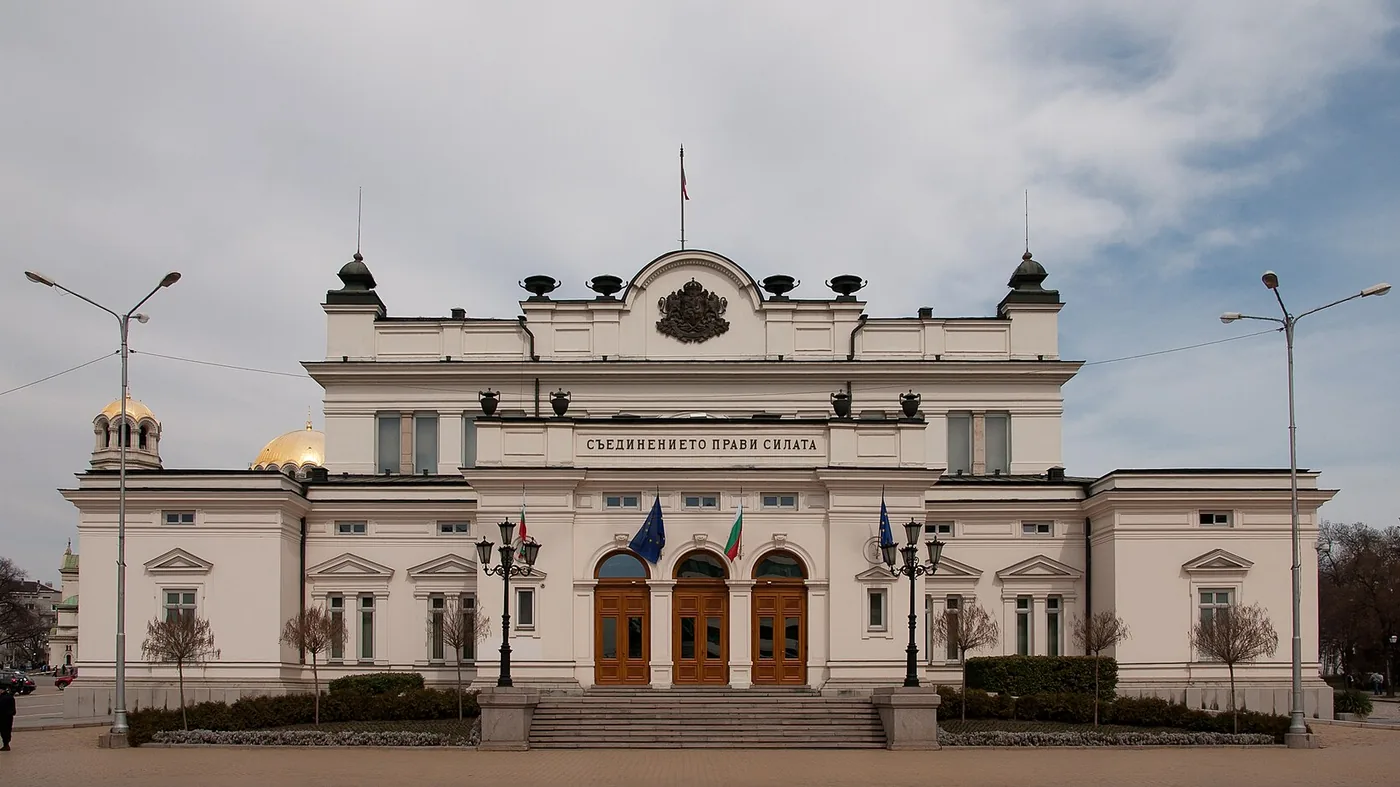
The National Assembly approved abolition with 218 members in favour, none against and none abstaining. Cross-party unanimity of that kind is rare on any subject and it is the strongest available indicator that this is not coming back.
The sequel
Events since have vindicated the decision on Bulgaria's own terms. Bulgaria completed its Schengen accession and adopted the euro on 1 January 2026. And in April 2025 the Court of Justice held that a member state operating a transactional naturalisation scheme breaches EU law, which means a Bulgarian programme retained beyond 2022 would have been unlawful in any event.
For anyone assessing whether Bulgaria might reintroduce the route: a country that abolished it unanimously, achieved the objectives that abolition unlocked, and has since seen the practice ruled unlawful across the Union has no route back and no reason to want one.
The investor residence route, and what the euro changed
Investment in qualifying Bulgarian funds obtains permanent residence, commonly cited at a threshold around EUR 512,000, held for five years before an ordinary naturalisation application. Since Bulgaria adopted the euro on 1 January 2026 the investment is denominated in euro, removing the currency conversion that previously complicated the structure.
This is what remains and it is a residence product, not a citizenship product.
Investment in qualifying vehicles, including alternative investment funds holding Bulgarian assets, obtains permanent residence status. Published guidance commonly cites a threshold in the region of EUR 512,000, held for five years, after which the investor may apply for naturalisation under the ordinary provisions.
What the euro changed
Bulgaria adopted the euro on 1 January 2026. The qualifying threshold had previously been denominated in Bulgarian lev, which meant investors were converting into lev, holding a lev-denominated position and converting back. That conversion layer has gone, and the investment and the deployment now sit in the same currency.
This is a genuine improvement in the mechanics rather than a marketing point, and it is one of the few things about Bulgaria that changed for the better this year.
What permanent residence gives you
The right to reside in Bulgaria indefinitely, to work, and to hold Bulgarian property on the same footing as a citizen. Family reunification is available for spouse, children and in defined cases parents. Reported practice is that a spouse and children are not required to reside in Bulgaria to maintain permanent residency status.
What it does not give you
Not citizenship, not an EU passport, and not free movement rights across the Union in the sense that citizenship confers. A Bulgarian permanent residence permit is a Bulgarian permit. It permits travel within Schengen on short-stay terms, and it does not permit you to work or settle in another member state.
And it does not shorten the naturalisation clock. Five years of permanent residence before applying, then the ordinary assessment. Anyone quoting a faster route is quoting the repealed Article 14a.
Article 16: special merits, Bulgaria's citizenship by exception
Article 16 permits a grant to a person who has special merits in the public and economic sphere, or in science, technology, culture or sport, without the ordinary conditions. There is no threshold and no timetable. It is a merit provision, used sparingly, and it survived the repeal untouched.
This is the discretionary route that remains, and it is the one people are looking for when they search for Bulgarian citizenship by investment.
Article 16 of the Law for Bulgarian Citizenship permits Bulgarian citizenship to be granted to a person who has special merits in the public and economic sphere, or in the field of science, technology, culture or sport, without that person having to satisfy the conditions applying to ordinary naturalisation.this is a working English rendering; confirm the operative wording and which conditions are disapplied with Bulgarian counsel
How it is decided
Applications engage the Citizenship Council at the Ministry of Justice, which considers the file and forms a proposal, with the grant made by presidential decree.
Two consequences. The persuasion has to work on a council and then a head of state, which is a higher and more public forum than an administrative unit. And review is limited: a discretion not exercised is not a refusal against published criteria.
The economic limb, and the line
Article 16 names the economic sphere expressly, which is why it attracts investor attention. The word governing it is merits. What the provision contemplates is a person who has done something for Bulgaria that the state wishes to recognise, not a person who has paid for recognition.
The distinction has been sharpened rather than blurred by the repeal. A state that removed its investor citizenship route by unanimous vote is not going to permit the same outcome through a merit provision, and after Commission v Malta it could not lawfully do so. Any presentation of Article 16 as a replacement for the repealed programme misreads both the provision and the politics.
There is no published threshold, no fee schedule and no timetable. Bulgarian counsel can give indicative guidance at assessment from cases that have succeeded, which is professional judgement rather than a tariff. Professional fees are quoted on application.
Article 15: Bulgarian origin
A person of Bulgarian origin may acquire citizenship without the residence requirement that applies to ordinary naturalisation. The evidentiary rules were tightened in 2021 and the route now turns on documentary proof of ancestry rather than on a certificate.
For anyone with a Bulgarian ancestral line this is the route, and it is faster, cheaper and more certain than anything else on this page.
Article 15 permits a person of Bulgarian origin to acquire Bulgarian citizenship without satisfying the residence and certain other conditions that apply to ordinary naturalisation.
The evidentiary position was tightened by amendment published in State Gazette issue 21 of 2021. The route now turns on documentary proof of the ancestral line rather than on a certificate of origin issued administratively, which had been the source of abuse.
Why this matters commercially
The Bulgarian diaspora and the wider population of Bulgarian descent across the region and further afield is substantial, including significant communities in North Macedonia, Moldova, Ukraine, Serbia, Turkey, Israel, the United States, Canada and Argentina. A meaningful proportion of people researching Bulgarian citizenship have a claim they have never investigated.
Two practical points. The work is documentary, and for families displaced across the twentieth century and across shifting borders the archival exercise can be demanding. And because the 2021 amendment tightened proof, files built on the older approach do not succeed, so the age of any guidance you are relying on matters.
It is also the route that solves the renunciation problem set out below, which for many applicants is the difference between a viable plan and no plan at all.
We establish the origin position before any other Bulgarian conversation, and where it resolves positively the engagement ends there.
Article 12: ordinary naturalisation
Ordinary naturalisation requires a qualifying period holding permanent residence, commonly stated as five years before application, alongside conditions on age, lawful conduct, means of support and Bulgarian language. Shorter periods apply to spouses of Bulgarian citizens and to certain other categories.
This is the route an investor sits on after the repeal, so it deserves proper treatment rather than a footnote.
Article 12 sets the ordinary conditions, which engage age and legal capacity, a qualifying period holding a permanent residence permit commonly stated as at least five years before the application, absence of relevant convictions and proceedings, means of support and accommodation, command of the Bulgarian language, and release from existing citizenship where the renunciation rule applies.
Shorter or modified conditions apply to spouses of Bulgarian citizens and to certain other categories, and the position for children is dealt with separately under Article 18, with parental consent conditions.
The sequence in practice
For an investor: qualifying investment, permanent residence, five years holding that status, then an Article 12 application assessed on the ordinary criteria. Realistically that is a decade-scale plan from first investment to passport in hand once processing is included, and it requires the residence record to be clean throughout.
The commonest failure is not a wrong outcome but a weak file: residence history with gaps, lawful status assumed rather than documented, or obligations left outstanding. Those are the things assessed, and they are assessed on the record rather than on the investment.
The renunciation trap
Bulgaria permits dual citizenship for native-born citizens, for citizens of EU, EEA and Swiss states, for nationals of countries with a reciprocity agreement, for spouses of Bulgarian citizens, and for naturalised citizens who prove Bulgarian origin. Naturalised citizens outside those categories are required to give up their other nationalities.
This is the provision that decides whether a Bulgarian plan is viable, and it is left out of most guides written for an investor audience.
Bulgaria's position on dual nationality is not uniform. It permits dual citizenship for native-born Bulgarian citizens, for citizens of European Union, European Economic Area and Swiss states, for nationals of countries with which Bulgaria has a reciprocity agreement, for spouses of Bulgarian citizens, and for naturalised citizens who prove Bulgarian origin. Naturalised citizens who fall into none of those groups are required to give up all other nationalities.this is the single most important question for any non-EU applicant without Bulgarian origin and must be confirmed in writing with Bulgarian counsel before any plan is built
Work through what that means
A citizen of an EU, EEA or Swiss state naturalising in Bulgaria keeps their existing nationality. A person of proven Bulgarian origin keeps theirs. A spouse of a Bulgarian citizen keeps theirs.
A non-EU national with no Bulgarian origin and no Bulgarian spouse, naturalising after five years of permanent residence obtained through investment, may face a requirement to renounce. For most clients considering this route, that is not a trade they will make, and it is the point at which the Bulgarian plan ends.
Whether and how Article 16 interacts with the renunciation rule is a separate question and should be answered specifically rather than assumed from the general position.
We raise this at the first conversation on every Bulgarian file. A client who has spent five years and half a million euros before discovering it has been failed by whoever advised them, and the discovery is not recoverable.
The practical consequence is that Bulgaria is a strong proposition for three groups: people of Bulgarian origin, EU and EEA nationals, and spouses of Bulgarian citizens. For a non-EU investor with no Bulgarian connection it is a considerably weaker one than the marketing suggests.
Union citizenship, the euro and Schengen
Bulgaria has been an EU member state since 2007 and adopted the euro on 1 January 2026. Bulgarian citizenship is Union citizenship, conferring the right to live, work, study and establish across the Union, the EEA and Switzerland, and it passes to descendants.
Bulgaria has been a member state since 2007 and adopted the euro on 1 January 2026, completing its integration into the core of the Union's institutional architecture.
Bulgarian nationality is therefore Union citizenship under Article 20 of the Treaty on the Functioning of the European Union, conferring the right to move and reside freely across the member states, to work and establish a business on the same terms as nationals, to study across the Union in many cases at domestic fee levels, and to consular protection from any member state. Those rights pass to descendants.
That is the product, and it is why the visa-free count is the wrong measure. Visa-free access and the right of residence are different legal instruments, and only a handful of citizenships bundle both.
It is also why the repeal happened. Everything that makes Bulgarian citizenship valuable is a reason the Union objected to it being sold, and a reason Bulgaria concluded that selling it cost more than it raised.
Commission v Malta, and why the repeal looks prescient
On 29 April 2025 the Court of Justice held that a member state operating a naturalisation scheme based on a transactional procedure breaches EU law because it commercialises Union citizenship. Bulgaria had repealed its scheme three years earlier. Article 16, a merit provision, is unaffected.
The judgment that closed the question across the Union arrived three years after Bulgaria had already answered it for itself.
In Case C-181/23, European Commission v Republic of Malta, the Grand Chamber held that a member state breaks the mutual trust on which Union citizenship rests, in breach of Article 20 TFEU and the principle of sincere cooperation in Article 4(3) TEU, when it establishes and implements a naturalisation scheme based on a transactional procedure, which amounts to the commercialisation of the granting of the status of national of a member state and, by extension, of Union citizenship.summary of the operative reasoning; read the judgment with EU counsel before relying on any characterisation, including ours
Two consequences for Bulgaria.
The repeal is permanent in substance as well as in form. Even if the political will returned, reinstating Articles 12a and 14a would put Bulgaria in the position Malta was found to be in. There is no version of a Bulgarian citizenship by investment programme that is now lawful.
Article 16 is unaffected. The judgment condemns transaction, not discretion. A merit provision assessed by a citizenship council and granted by presidential decree, with no predetermined payment and no schedule, is not what the Court described. The risk, as everywhere, lies in the provision being marketed with an implied price.
For a client comparing European options, Bulgaria's position after the repeal is cleaner than several jurisdictions that held on longer. There is no live regulatory exposure, because there is nothing left to object to.
The Bulgarian passport
Among the stronger travel documents in the world, with visa-free or visa-on-arrival access commonly reported at over 170 destinations. The more valuable right is establishment across the Union rather than short-stay travel.
Published datasets place Bulgarian access among the stronger passports globally, commonly reported at over 170 destinations visa-free or on arrival, including the United Kingdom, Japan, Singapore and most of Latin America.counts and ranks vary by publisher and date; confirm current position
United States entry for Bulgarian citizens has historically required a visa rather than running through the Visa Waiver Program, and Bulgaria's pursuit of visa waiver participation was one of the stated reasons for closing the investor citizenship route. Confirm the current position before travel.
The right that matters more
Union citizenship confers the right to move to any member state and reside, work, study and establish a business there. Bulgaria is in the euro. A Bulgarian citizen can relocate to Ireland, Germany, Portugal or the Netherlands without a visa, permit or quota, work without authorisation, and remain indefinitely.
Any comparison of Bulgaria with a programme passport on destination counts is measuring the wrong attribute of two things in different categories.
Confirm entry requirements with the destination authority before travelling.
Tax in Bulgaria
Bulgaria operates a flat personal income tax, commonly cited at 10 per cent, and taxes on a residence basis. Citizenship does not create Bulgarian tax residence. For someone who relocates, the rate profile is among the most favourable in the Union.
This is the strongest element of the Bulgarian proposition for a client prepared to move, and it is frequently overstated for one who is not.
Bulgaria applies a flat rate of personal income tax, commonly cited at 10 per cent, with a corporate rate at the same level. It taxes on a residence basis: residents are within scope on worldwide income, non-residents on Bulgarian-source income only.
Acquiring Bulgarian citizenship does not by itself make you a Bulgarian tax resident. Residence turns on presence and connecting factors including permanent address and centre of vital interests, not on nationality. A citizen who does not live in Bulgaria remains a non-resident.
The point that matters
The 10 per cent rate is a reason to move to Bulgaria. It is not a reason to hold Bulgarian citizenship while living elsewhere, because it will not apply to you. Marketing that presents the rate as a benefit of the passport rather than of residence has confused two different things.
What citizenship does not solve
United States taxpayers are taxed on worldwide income by virtue of status, and a second nationality changes nothing. A Bulgarian bank account creates FBAR and FATCA obligations from the day it opens; investment fund participations require PFIC and controlled foreign corporation analysis before subscription rather than after, which is directly relevant to the qualifying investment vehicles used for the residence route; and anyone contemplating expatriation should understand the section 877A framework, including the mark-to-market regime and the covered expatriate tests, before taking any step.
United Kingdom clients should note that Bulgarian citizenship does not change UK tax residence, which is determined by the statutory residence test, and that the sequencing of any departure relative to acquisition requires advice.
Bulgaria participates fully in EU administrative cooperation in tax matters and in international information exchange. Any plan whose logic depends on holdings being invisible is not a plan.
LGP Programme Durability Rating: Bulgaria
Zero for citizenship by investment because it was repealed unanimously and could not lawfully return. High on the value of what citizenship confers and on regulatory cleanliness. The renunciation rule is the constraint that governs most files.
Two observations.
The accessibility score is the one that decides files. For a person of Bulgarian origin, an EU national or the spouse of a Bulgarian citizen, Bulgaria is an excellent proposition and that score should be read as 8 rather than 3. For a non-EU investor with no Bulgarian connection, the renunciation rule is close to prohibitive and no amount of capital changes it.
The regulatory cleanliness is real and undervalued. Bulgaria is one of very few European jurisdictions in this market with no live exposure to the Commission's investor citizenship agenda, for the straightforward reason that it removed the thing being objected to four years ago. Clients concerned about whether a second nationality remains uncontroversial in a decade should weigh that.
Our review trigger is any amendment to the Law for Bulgarian Citizenship, particularly to Articles 15, 16 or the dual nationality provisions.
Who Bulgaria suits
People of Bulgarian origin, EU and EEA nationals, spouses of Bulgarian citizens, and genuine relocators attracted by the flat tax profile. It does not suit a non-EU investor seeking a passport without giving up their existing nationality.
Bulgaria works for
Anyone of Bulgarian origin. Article 15 waives the residence requirement and the renunciation rule does not bite. Check this first; it is the strongest position available.
EU, EEA and Swiss nationals. Dual citizenship is permitted, so naturalisation adds a nationality rather than replacing one. For an EU national already holding free movement rights the marginal benefit is narrower, but the tax and residence position can be attractive.
Spouses of Bulgarian citizens. Shorter conditions and no renunciation requirement.
The genuine relocator. A flat 10 per cent personal rate, low cost of living, euro membership and full Union rights, for someone prepared to make Bulgaria their centre of vital interests.
The investor who wants residence, not a passport. The residence route works on its own terms, is euro-denominated since January 2026, and includes family.
Bulgaria does not work for
Anyone seeking citizenship by investment. Repealed in 2022 and unlawful to reinstate.
A non-EU investor unwilling to renounce. The renunciation rule applies to naturalised citizens outside the defined categories, and this ends most files.
Anyone wanting speed. Five years of permanent residence before an application, then ordinary assessment.
Anyone expecting the 10 per cent rate without living there. Tax follows residence, not nationality.
Compared with the alternatives
Against Croatia and Slovakia, Bulgaria has no discretionary route as accessible and a renunciation rule they do not impose. Against Albania, Bulgaria is already in the Union rather than negotiating. Against priced programmes, it is not comparable.
| Attribute | Bulgaria | Croatia | Slovakia | Albania |
|---|---|---|---|---|
| EU member | Yes, 2007 | Yes, 2013 | Yes, 2004 | No, candidate |
| Priced citizenship route | Repealed 2022 | None | None | Shelved 2023 |
| Discretionary route | Article 16, special merits | Article 12, interest | Section 7(2)(b), benefit | Special cases |
| Renunciation on naturalisation | Yes, unless origin, EU or spouse | Yes for ordinary; waived under Article 12 | No | No |
| Ordinary residence period | 5 years permanent residence | 8 years | 8 years | 7 years |
| Investor residence route | Yes, euro-denominated | No dedicated route | No dedicated route | Yes, Unique Permit |
| Headline tax profile | Flat 10 per cent | Standard EU rates | Standard EU rates | Low, frequently revised |
Bulgaria or Croatia
Croatia's Article 12 waives renunciation, which Bulgaria's ordinary route does not for most non-EU applicants. That single row is decisive for a client with no ancestral connection to either. Bulgaria's advantages are the shorter ordinary residence period, the flat tax profile and an operational investor residence route.
Bulgaria or Slovakia
Slovakia imposes no renunciation requirement on a foreign applicant, which makes its discretionary route more accessible in principle. Bulgaria has the shorter residence period and the better tax position. Both grant Union citizenship.
Bulgaria or a priced programme
Different categories. If a passport is needed on a defined timeline, a priced programme is the instrument. If the objective is the right to live and work in Europe, no priced programme substitutes for an EU nationality.
Common questions on Bulgaria citizenship by investment
Bulgaria repealed its citizenship by investment programme in 2022. What remains is an investor residence route on the ordinary naturalisation timetable, Article 16 special merits, and the Bulgarian origin route.
Does Bulgaria still have a citizenship by investment programme?
No. Articles 12a and 14a of the Law for Bulgarian Citizenship were repealed by amendment published in State Gazette issue 26 of 2022, effective 5 April 2022. Each article now consists of a single word in brackets: repealed. Any offer describing a Bulgarian citizenship by investment programme is describing a law taken off the books four years ago.
Why did Bulgaria close its golden passport programme?
European Commission pressure, Bulgaria's Schengen accession and United States visa waiver ambitions, and a domestic assessment by the Council of Ministers that the programme had produced little real investment or job creation. The National Assembly voted for abolition with 218 members in favour, none against and none abstaining.
Could Bulgaria bring it back?
Not lawfully. In April 2025 the Court of Justice held in Commission v Malta that a member state operating a transactional naturalisation scheme breaches EU law. Reinstating Articles 12a and 14a would place Bulgaria in the position Malta was found to be in.
What is the Bulgaria golden visa in 2026?
An investor residence route, not a citizenship route. Qualifying investment obtains permanent residence, commonly cited at a threshold around EUR 512,000, held for five years before an ordinary naturalisation application. Since Bulgaria adopted the euro on 1 January 2026 the investment is euro-denominated, removing the previous currency conversion layer.
Would I have to give up my current citizenship?
Possibly, and this is the decisive question. Bulgaria permits dual citizenship for native-born citizens, EU, EEA and Swiss nationals, nationals of countries with a reciprocity agreement, spouses of Bulgarian citizens, and naturalised citizens who prove Bulgarian origin. Naturalised citizens outside those categories are required to give up their other nationalities. Confirm your position in writing before building any plan.
What is Article 16 special merits?
A discretionary provision permitting a grant to a person with special merits in the public and economic sphere, or in science, technology, culture or sport, without the ordinary conditions. It engages the Citizenship Council at the Ministry of Justice, with the grant made by presidential decree. There is no threshold and no timetable, and it is not a replacement for the repealed programme.
Can I get Bulgarian citizenship through an ancestor?
A person of Bulgarian origin may acquire citizenship without the residence requirement, and the renunciation rule does not apply. The evidentiary rules were tightened in 2021 and the route now turns on documentary proof of the ancestral line. Anyone with Bulgarian ancestry should establish this first.
How long does Bulgarian naturalisation take?
Ordinary naturalisation requires a qualifying period holding permanent residence, commonly stated as five years before application, then assessment on the ordinary criteria. From first investment to passport is realistically a decade-scale plan once processing is included.
Is Bulgarian citizenship EU citizenship?
Yes. Bulgaria has been an EU member state since 2007 and adopted the euro on 1 January 2026. A Bulgarian citizen holds the right to live, work, study and establish a business across the Union, the EEA and Switzerland, and that right passes to descendants.
Do I get the 10 per cent tax rate with the passport?
No. Bulgaria taxes on a residence basis, determined by presence and connecting factors rather than nationality. The flat rate applies to Bulgarian tax residents. A citizen living elsewhere remains a non-resident and is taxed in Bulgaria only on Bulgarian-source income.
Does permanent residence give me free movement in the EU?
No. A Bulgarian permanent residence permit is a Bulgarian permit. It permits short-stay travel within Schengen and does not permit you to work or settle in another member state. Only citizenship confers that.
How Lincoln Global Partners advises on Bulgaria
We settle the renunciation question first, we check origin before anything else, we do not present Article 16 as a replacement for the repealed programme, and we separate the residence product from the citizenship question.
We settle renunciation first. For a non-EU applicant with no Bulgarian origin and no Bulgarian spouse, the requirement to give up existing nationalities may end the matter. We establish that in writing at the first conversation rather than five years and half a million euros later.
We check origin before anything else. Article 15 waives the residence requirement and sidesteps the renunciation problem. A meaningful share of Bulgarian enquiries resolve there at documentary cost, and where they do the engagement ends.
We do not present Article 16 as a workaround. A state that abolished its investor citizenship route unanimously is not going to permit the same outcome through a merit provision, and after April 2025 it could not lawfully do so. Article 16 is a genuine provision for genuine cases.
We separate the residence product from the passport question. The investor residence route works, includes family, and is euro-denominated since January 2026. It is a good product for a client who wants a Bulgarian base. It is not a citizenship shortcut and we do not sell it as one.
We are direct about the tax point. The flat rate follows residence. A client who will not move should not be weighing it.
We publish no figure for Article 16. No threshold exists. Indicative guidance comes from Bulgarian counsel at assessment, described as professional judgement. Professional fees are quoted on application.
If Bulgaria is on your list, the first two questions are whether anyone in your family was Bulgarian, and whether you hold an EU nationality. Those answers decide almost every Bulgarian file we see.
Sources
- Закон за българското гражданство (Law on Bulgarian Citizenship) — consolidated official text — Ministry of Justice of the Republic of Bulgaria
- Държавен вестник (State Gazette) — official portal/archive — Narodno sabranie (Bulgarian National Assembly), official gazette
Sources checked 2026-09-20.

Last reviewed 1 September 2026.
This guide is general information, not legal, tax or immigration advice. Programme terms are set by the relevant government and can change; confirm any figure with the authority, or with us, before acting on it.