



































Guatemala has three residency routes for foreigners in 2026. The rentista and pensionado visa asks for $1,250 a month in passive or pension income (plus $300 per dependent) and grants permanent residency immediately, with no guarantor. The investor route starts at $100,000 in real estate, business equity or bonds and grants temporary residency. The digital nomad visa, launched in October 2025, is temporary and renewable for remote workers with foreign income. Citizenship follows five years of continuous residency, and Guatemala taxes territorially: foreign income is not taxed.
Compare the Three Routes
Guatemala Retirement Visa · Rentista / Pensionado
from $1,250/month
- Immediate permanent residency, no temporary stage first
- No local guarantor required
- Territorial tax: 0% on foreign pension and investment income
Investor Residency · Guatemala
from $100,000
- Real estate, business equity, or government bonds all qualify
- Temporary residency, renewable, family included
- One of the lowest investor thresholds in Central America
Digital Nomad Visa · Guatemala
1–5 years
- Launched October 2025, Guatemala's first dedicated remote-work category
- Requires a foreign employment contract or verifiable freelance income
- Temporary residency, not a direct route to permanent status
Guatemala's Retirement Visa: the Rentista & Pensionado Route
What It Is
The Rentista and Pensionado categories together form what most people searching for a Guatemala retirement visa actually mean. Rentista covers applicants living on investment, rental, or dividend income; Pensionado covers those living on a pension, including foreign Social Security benefits. Both lead to the same outcome, and both are the reason Guatemala ranks among Central America's most accessible countries to retire in.
The defining feature is that approval grants permanent residency directly. Most of Guatemala's other categories, including the investor and digital nomad routes, start as temporary and require years of renewal first. Rentista and Pensionado skip that stage entirely.
The governing framework sits across Decreto 44-2016 (the Migration Code), Acuerdo Gubernativo 83-2019 (which sets out income verification and documentation standards), and the 2025 reforms under Acuerdo IGM-016-2025, which shortened the background-check period and clarified guarantor requirements for this category specifically.
Is This the Right Guatemala Retirement Route for You?
Who This Suits
Rentista and Pensionado suit retirees who already clear the $1,250/month threshold and want the process to end, not continue, after approval. If your priority is minimizing ongoing immigration touchpoints, an immediate grant of permanent residency with only a five-year check-in is hard to beat in Central America.
It's a weaker fit for retirees whose income sits closer to Bolivia's roughly $400/month bar, or who would rather accept a lighter document burden (no apostilles) in exchange for starting on temporary status. Those retirees are typically better served comparing this page against our Bolivia retirement visa guide.
Who Qualifies, and What You'll Need to Show
Requirements
The income threshold is $1,250 per month for the main applicant, plus $300 per month for each dependent. Accepted income sources include pensions, Social Security, rental income, dividends, investment returns, and bank interest.
| Document | Notes |
|---|---|
| Proof of income | Pension statement, SSA benefit verification letter, bank or investment statements |
| Apostille | All foreign documents must be apostilled under the Hague Convention |
| Clean criminal record | From your country of origin, or the country you lived in for the two years before entering Guatemala |
| Passport | Valid for the duration of the application |
US Applicants
Social Security income is one of the most commonly accepted sources. Request a benefit verification letter (Form SSA-1099 or equivalent) from the SSA and have it apostilled through the US Department of State before submission — this step alone can take four to eight weeks and is worth starting early.
The Process, Step by Step
How to Apply
- Confirm your category. Rentista for investment/rental/dividend income, Pensionado for a pension or Social Security.
- Gather and apostille your documents. Income proof, criminal record, and any supporting statements must carry a Hague Apostille.
- Have documents translated. Anything not in Spanish needs a sworn translation.
- Submit to the Instituto Guatemalteco de Migracion (IGM). Typical processing is three to six months with complete documentation.
- Receive your Certificado de Extranjero Domiciliado from RENAP, followed by your DPI, the national identity document.
Where Applications Actually Get Delayed
Common Mistakes
- Unapostilled or partially apostilled documents. IGM routinely returns files when a single supporting document, not just the primary income proof, is missing its apostille.
- Uncertified translations. A fluent bilingual friend's translation isn't accepted; Guatemala requires a sworn translator (traductor jurado).
- Expired police clearances. Criminal record certificates typically need to be recent (commonly within three to six months of filing); an older one filed alongside newer documents is a frequent rejection reason.
- Applying under the wrong category. Mixed-income applicants (a small pension plus rental income) sometimes file as Pensionado when Rentista, or a combined filing, better matches their actual income structure.
What to Budget, and How Long It Takes
Costs & Timeline
IGM fees are a $25 filing fee and a one-time $400 permanent residency fee, plus a $40 annual foreigner’s fee once approved. Most applicants also engage an immigration attorney, typically in the range of Q3,000–Q8,000 (roughly $400–$1,000), which is not legally required but strongly recommended given the volume of apostilled paperwork involved.
With complete documentation, approval can come through in as little as two months. Three to six months is more typical. The US Embassy has noted that delays of one to four years are possible when documents are incomplete, improperly translated, or missing a required legalization step, which is the single biggest variable in how long this takes.

Not sure how this fits your strategy?
A focused consultation to assess your objectives and shortlist the right options.
Zero Tax on Foreign Pension Income
Taxation
Guatemala runs a strict territorial tax system, administered by the Superintendencia de Administracion Tributaria (SAT): only Guatemalan-source income is taxed, regardless of residency. A foreign pension, Social Security payment, or investment return earned outside the country is generally 100% exempt from Guatemalan income tax. This is one of the strongest arguments for choosing to retire in Guatemala over destinations that tax worldwide income, and it applies automatically to both Rentista and Pensionado residents.
Guatemala does not maintain comprehensive double taxation treaties, so US citizens in particular remain liable for US tax on worldwide income regardless of where they retire; the Foreign Earned Income Exclusion and Foreign Tax Credit may reduce that liability, and this is worth confirming with a cross-border tax advisor.
Why This Route Skips Temporary Status
Permanent From Day One
Once approved, you receive a Certificado de Extranjero Domiciliado from RENAP, followed by your DPI. There is no renewal cycle to manage in the early years, which is the trade-off most people choosing this Guatemala retirement visa route are making: fewer touchpoints with the immigration system after approval, in exchange for a higher income bar up front than Bolivia's route, though still well below Panama's Pensionado minimums.
We design sovereignty. We structure your Plan B.
Bringing Dependents
Family Inclusion
Each dependent, spouse or child, adds $300 per month to the required income threshold, and needs supporting documentation (marriage or birth certificate, apostilled). Dependents included on the original application receive the same immediate permanent residency status as the main applicant, rather than a derivative or delayed grant.
What Retiring There Actually Looks Like
Retire in Guatemala
Guatemala's appeal for retirees rests on four things: a low cost of living, zero tax on foreign income, proximity to the United States, and an established expat community that predates most of the region's current residency-marketing boom.
- Antigua Guatemala
- Lake Atitlan
- Guatemala City
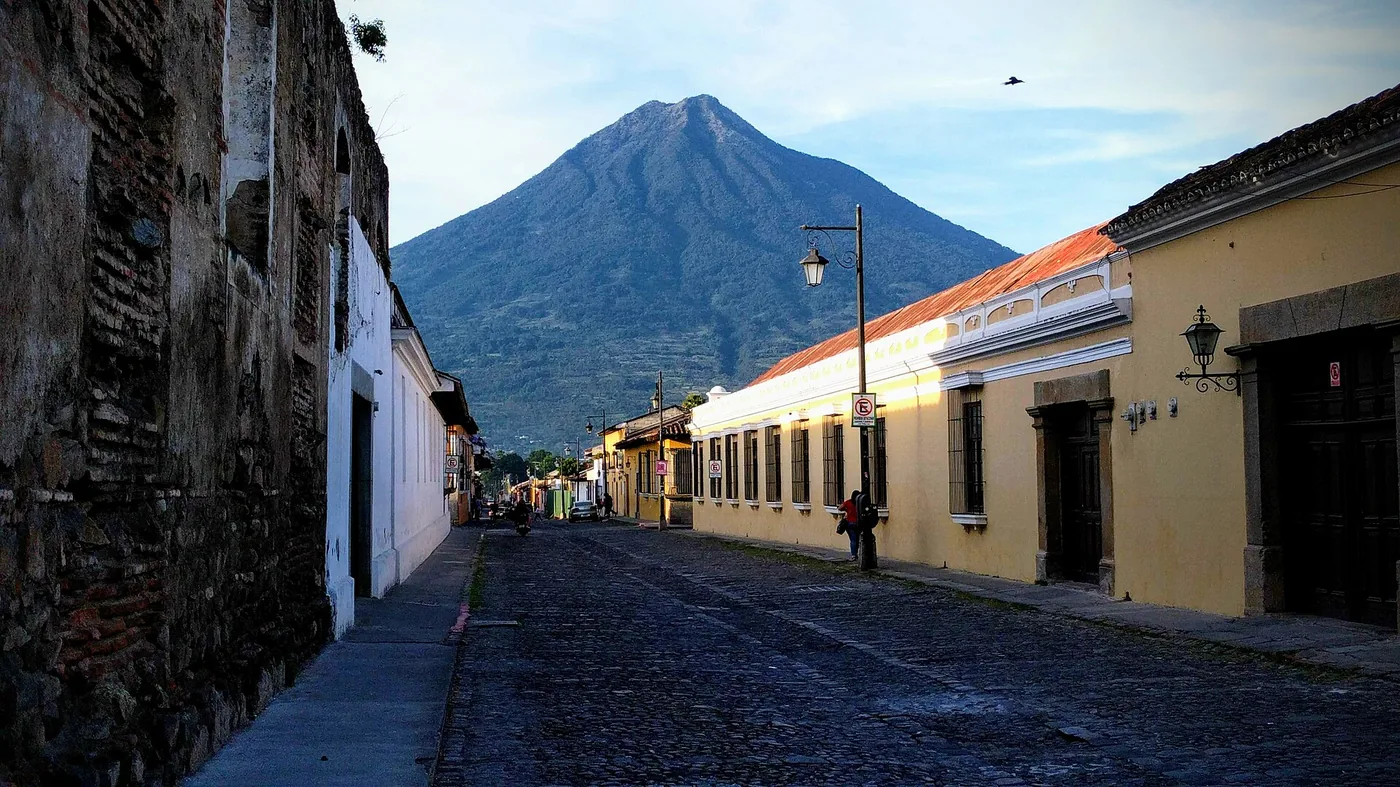
Antigua Guatemala, the colonial former capital, is the country's best-known retiree and expat hub, with a comfortable single-person lifestyle typically running $1,000–$1,800 per month. Lake Atitlan draws a quieter, more nature-oriented crowd across its lakeside towns. Guatemala City offers the most developed healthcare infrastructure and international schools, at a somewhat higher monthly cost, generally $1,200–$2,000 for a single retiree.
| Country | Retirement Income Threshold | Foreign Income Taxed? | Grants PR Immediately? |
|---|---|---|---|
| Guatemala | $1,250 + $300/dependent | No (territorial) | Yes |
| Bolivia | ~$400 | No (territorial) | No, temporary first |
| Panama | $1,000+ (Pensionado) | No (territorial) | Varies by category |
What's Required to Keep Your Status
Ongoing Obligations
Every five years, Rentista and Pensionado residents must show that their income or pension stream continues, alongside a small annual foreigner's fee. That is the only recurring obligation beyond that check-in.
Citizenship becomes available after five years of continuous residency under Article 146 of the Constitution and the 1966 Nationality Law. This applies across residency categories, including Rentista and Pensionado; there is no accelerated track tied to this category specifically.
Guatemala Investor Residency: the $100,000 Route
What It Is
Guatemala's Capital-Based Residency Route
Guatemala's Migration Code recognizes Inversionistas, investors, as a distinct temporary residence category. The current minimum sits at $100,000, well below Costa Rica's $150,000 and a fraction of Panama's $300,000-plus thresholds, and is administered through the Instituto Guatemalteco de Migracion (IGM) under Decreto 44-2016 Article 48.
Unlike Rentista or Pensionado, this route starts as temporary residency. It is built for applicants who want to deploy capital into the country, rather than demonstrate a recurring passive income stream.
Worth Flagging
Some older guides cite a $60,000 threshold tied to a government bond route under earlier regulations. The current rule (Acuerdo IGM-016-2025, Article 17, in force since October 2025) sets a single minimum of $100,000, through participation in one or more Guatemalan companies or the acquisition of movable or immovable property.
Who This Suits
Is the Investor Route Right for You?
This category suits applicants who want to deploy capital productively, into property, a business, or government bonds, rather than simply prove a recurring income stream. It's a natural fit for entrepreneurs relocating a business, or investors already planning to hold Guatemalan real estate who want the residency benefit as a byproduct of a decision they'd make anyway.
It's a weaker fit for retirees with straightforward pension income and no interest in deploying $100,000 of capital; those applicants are almost always better served by the Rentista/Pensionado route, which needs no guarantor and grants permanent residency immediately.
Qualifying Investments
What Counts Toward the $100,000
| Route | What It Looks Like |
|---|---|
| Real estate | Commercial or residential property, individually or combined, via notarized deed (escritura publica) and registration with the Registro General de la Propiedad |
| Business equity | Establishing or acquiring a Guatemalan company, typically expected to generate local employment or economic activity |
| Government bonds | Counted as movable property under Article 17; confirm with IGM that the specific instrument qualifies |
| Capital contributions | Investment in manufacturing, agriculture, tourism, or approved infrastructure projects |
Real estate is generally the fastest to document, since due diligence and registration can often close inside three months when the property title is clean.
Requirements
What the Application Needs
- Proof of the investment, sourced from legitimate, documented funds transferred from abroad
- A business plan demonstrating economic benefit to the country, for equity and enterprise routes
- A clean criminal record from your country of origin, or the country you lived in for the two years before entering Guatemala
Since the 2025 regulation, the investor route requires no Guatemalan guarantor, the same as Rentista and Pensionado. A guarantor is still required for foreigners hired by a Guatemalan employer.
How to Apply
The Process, Step by Step
- Choose your investment route. Real estate, business equity, government bonds, or a capital contribution to an approved sector.
- Complete and document the investment. Notarized deed for real estate, incorporation documents for equity, or the bond purchase agreement.
- Submit your application to IGM, including a business plan where applicable, proof of investment, and a clean criminal record.
- Attend biometrics at the Direccion General de Migracion, typically scheduled within four to six weeks of filing.
Common Mistakes
Where Applications Actually Get Delayed
- Undocumented fund provenance. Investment funds need a clear, legitimate paper trail from abroad; informal transfers or unclear sourcing are a common cause of extended review.
- Thin business plans. For equity and enterprise routes, a business plan that doesn't credibly show local economic benefit, jobs, tax contribution, or economic activity, invites additional scrutiny.
- Relying on the old $60,000 bond figure. Some older guides still quote it; the current minimum is $100,000 for every investment type.
Costs & Timeline
Budget and Processing Time
Initial residency approval typically runs two to four months from a complete submission, with the biometrics appointment at the Direccion General de Migracion usually scheduled within the first four to six weeks. Real estate-based applications tend to move fastest, since the underlying paperwork (deed, registration, transfer receipts) is more standardized than a business plan review. IGM fees are a $25 filing fee plus $200 for a one-year term, $300 for two years or $500 for three to five years.
Taxation
Territorial Tax Applies to Investors Too
Guatemala's territorial tax system taxes only Guatemalan-source income. For investors, this means returns generated abroad remain untaxed locally, though income and gains generated by the Guatemalan investment itself (rental income, business profits) are subject to Guatemala's standard rates: 5–7% personal income tax, 25% (or 5–7% under the simplified regime) corporate tax, and 12% VAT.
Family Inclusion
Bringing Dependents
Spouses and dependent children can typically be included under the same application, provided the relevant relationship documentation (marriage or birth certificates, apostilled) is submitted alongside the investor's file. There is no separate additional investment requirement per dependent, unlike the $300/month-per-dependent structure under Rentista/Pensionado.
Path to Permanent & Citizenship
Where the Timelines Genuinely Diverge
Worth Flagging
Published sources used to disagree here. Some describe permanent residency as available within two years for investors specifically. Others state investor residency follows the same five-year continuous temporary residence requirement as every other category, with no accelerated track. The 2025 regulation settles it: investors can apply for permanent residency after five years as temporary residents (Acuerdo IGM-016-2025, Article 27), for a $700 fee. There is no two-year track.
What is consistent across sources: naturalization requires five years of continuous lawful residency under Article 146 of the Constitution and the 1966 Nationality Law, and there is no investor-specific shortcut around that constitutional requirement, regardless of how quickly permanent residency itself is obtained.
Guatemala Digital Nomad Visa: the 2025 Remote-Work Category
What It Is
Guatemala's First Legal Category for Remote Work
Unlike Bolivia, which has no visa built specifically for remote workers, Guatemala introduced a genuine Digital Nomad Visa in October 2025. It is the first time Guatemalan immigration law has recognized location-independent work as its own legal basis for residency, rather than folding it into a general work or business category.
The visa grants temporary residency for one to five years, aimed squarely at remote employees and freelancers working for companies or clients based outside Guatemala.
Who This Suits
Is This the Right Guatemala Visa for Remote Workers?
This category suits remote employees and freelancers whose income is purely active, salary or invoiced freelance work, without a passive-income component large enough to qualify under Rentista. It's the more legally precise option if an employer's compliance or HR department specifically needs a "digital nomad visa" named as such, rather than a general-purpose residency category.
It's a weaker fit for anyone who could otherwise qualify for Rentista through investment or pension income alongside their active work; see the comparison below for why that route often wins on strategy.
Requirements
What You'll Need to Show
- Employees of a foreign company: at least $2,000 a month in foreign income ($3,000 with dependents), shown on bank statements for the last 12 months
- Self-employed: a notarized sworn declaration of your activity and registration with the tax authority (RTU at SAT); no fixed income figure is published
- A valid passport
- A clean criminal record
- Proof of health insurance coverage for the duration of stay
Worth Flagging
The category sits under Article 11 of Acuerdo IGM-016-2025, in force since October 2025, as a remote worker residency rather than a visa formally named "digital nomad". No Guatemalan guarantor is required for foreign-employer or self-employed applicants. Extensions must be filed 30 days before expiry.
How to Apply
The Process, as Currently Understood
- Confirm your qualifying income. A foreign employment contract or documented freelance/contract income from outside Guatemala.
- Arrange health insurance covering the intended duration of stay.
- Gather your passport and clean criminal record.
- Submit your application to IGM under the new Digital Nomad category.
- Renew before expiry, since the visa remains temporary and does not convert to permanent status automatically.
Common Mistakes
What to Watch For With a Newer Program
- Assuming it works exactly like a mature program. Guatemala's established categories (Rentista, Investor) have years of processed cases behind them; this one has months. Build in buffer time and expect more direct correspondence with IGM.
- Overlooking the passive-income alternative. Remote workers who could qualify for Rentista instead sometimes default to the Digital Nomad Visa simply because it's the more obviously named option, missing a stronger long-term route.
- Assuming foreign digital income is automatically tax-exempt. Territorial tax treatment of digital services is still an evolving area in Guatemala; confirm with a local tax professional rather than assuming.
Costs & Timeline
What to Expect
As a new category, processing timelines are less standardized than Guatemala's established routes. Applicants should budget similar timeframes to the general temporary residency process, two to six months, and expect some friction as IGM offices work through a newer application type. IGM fees are a $25 filing fee plus $200 for one year, $300 for two years or $500 for three to five years.
Taxation
Foreign-Client Income and Guatemala's Territorial System
Guatemala's territorial tax system exempts foreign-source income from local tax in principle. For a salaried remote employee or freelancer billing clients abroad, this is a genuine advantage. That said, the application of territorial rules to digital services is still an evolving area: whether online work counts as Guatemalan-source can depend on where the work is deemed to occur, so this is worth confirming with a local tax professional (contador) rather than assuming blanket exemption.
Nomad vs. Rentista
Why Most Remote Workers Still End Up Choosing Rentista
The Digital Nomad Visa is built for active workers, people drawing a salary or freelance income from ongoing work. It stays temporary and must be renewed; it does not convert directly to permanent residency the way Rentista and Pensionado do.
For remote workers who already meet the $1,250/month Rentista threshold through investment or passive income, alongside their active work income, the Rentista route often makes more strategic sense: it grants permanent residency immediately, requires no guarantor, and puts the citizenship clock (five years of continuous residency) running from day one rather than after a renewal cycle on a temporary permit.
We design sovereignty. We structure your Plan B.
The Digital Nomad Visa remains the right fit for applicants whose income is purely active and employment-based, without a passive-income component to qualify under Rentista.
Frequently Asked Questions
FAQ
What income do I need for a Guatemala retirement visa?
At least $1,250 per month for the main applicant, plus $300 per month for each dependent, from pensions, investments, or bank deposits.
Do I need a Guatemalan guarantor?
No. This is one of the category's advantages over the investor and standard temporary residency routes, which typically do require one.
Does this grant permanent residency immediately?
Yes. Rentista and Pensionado are approved directly to permanent residency, without a temporary stage first.
Is foreign retirement income taxed if I retire in Guatemala?
No. Guatemala's territorial tax system exempts foreign-sourced pension, Social Security, and investment income from local tax.
Can I use US Social Security to qualify?
Yes, it is one of the most commonly accepted income sources, provided you supply an apostilled benefit verification letter.
Can I bring my spouse or children?
Yes. Each dependent adds $300/month to the required income and receives the same immediate permanent residency as the main applicant.
What's the most common reason applications get delayed?
Incomplete or improperly apostilled documents, and uncertified translations. Both are avoidable with careful preparation.
How long until I can apply for citizenship?
Five years of continuous residency, under the Constitution and the 1966 Nationality Law. This applies to all residency categories.
What is the minimum investment for Guatemala's Investor Residency?
Current regulations set the threshold at $100,000, one of the most accessible investor minimums in Central America. The $60,000 government-bond route quoted in older guides is not part of the current rules.
Do I need a Guatemalan guarantor for the investor route?
No. Since the 2025 regulation (Acuerdo IGM-016-2025, Article 17), the investor route does not require a guarantor.
What investments qualify?
Real estate, business equity or company formation, government bonds, and capital contributions to approved sectors such as agriculture, tourism, or manufacturing.
Is my investment income taxed?
Income generated by the Guatemalan investment itself is taxed locally at standard rates. Income and gains generated abroad remain untaxed under Guatemala's territorial system.
How long until permanent residency?
Five years. After five years as a temporary resident you can apply for permanent residency, for a $700 fee.
Can my family join me?
Yes, spouses and dependent children can typically be included under the same application, with no additional investment required per dependent.
When did Guatemala introduce a Digital Nomad Visa?
October 2025. It is Guatemala's first dedicated legal category for remote workers.
How long does it last?
Temporary residency for one to five years, renewable. After five continuous years you can apply for permanent residency.
Can I work for Guatemalan clients on this visa?
No. It is designed for income earned from foreign employers or clients, not local work.
Is my income taxed under Guatemala's territorial system?
Generally not, if it is genuinely foreign-source, though the treatment of digital services is still an evolving area. Confirm with a local tax professional.
Is Rentista a better option for remote workers?
Often, yes, if you have a qualifying passive-income component. Rentista grants permanent residency immediately and starts the citizenship clock from day one, without a guarantor requirement.
Does time on the Digital Nomad Visa count toward citizenship?
Time as a temporary resident counts toward the five years needed to apply for permanent residency. Citizenship requires five years of residency under the Nationality Law; confirm with counsel how your specific years are counted.

Last reviewed 13 November 2026.
This guide is general information, not legal, tax or immigration advice. Programme terms are set by the relevant government and can change; confirm any figure with the authority, or with us, before acting on it.