





































Uruguay has no golden visa, but it does have one of the most valuable tax regimes in the Americas: an 11-year holiday on foreign investment income for new tax residents. Since 1 January 2026, under Law 20.446, there are three ways to qualify: spend more than 183 days a year in Uruguay (no investment), buy at least 12.5 million UI of urban property (around USD 2 million), or put around USD 100,000 a year into the National Innovation Fund for 11 years. The old route of roughly USD 590,000 in property plus 60 days a year no longer exists.
When people search for a "Uruguay golden visa", this is usually what they mean: a way to become a Uruguayan tax resident, and get the holiday, without living there half the year. This guide explains how that works after the 2026 reform, what the holiday covers, what happens when it ends, and who it actually makes sense for.
Uruguay tax residency at a glance (2026 rules)
| Route | What it takes | Presence | Before 2026 |
|---|---|---|---|
| Physical presence | No investment | More than 183 days a year | Unchanged |
| Real estate | At least 12.5 million UI (around USD 2 million) in urban property bought from 1 January 2026 | No minimum days | Around USD 590,000 (3.5 million UI) plus 60 days a year |
| National Innovation Fund | Around USD 100,000 (625,000 UI) a year, every year, for 11 years | No minimum days | Did not exist |
| Business investment | Around 15 million UI (about USD 2.4 million) in a Uruguayan company creating at least 15 direct jobs | Centre of economic interests | Similar route |
Amounts in Unidades Indexadas (UI) are inflation-indexed, so the dollar equivalents move. Existing holiday holders who qualified before 1 January 2026 keep their exemption for the rest of their original term.
Legal residency and tax residency are two different things
In Uruguay, legal residency is the right to live in the country. It is granted by the National Migration Directorate on proof of stable income, with no investment, and once granted it is permanent; it is covered in our Uruguay permanent residency guide. Tax residency decides whether Uruguay taxes you as a resident, and it is assessed by the tax authority (Dirección General Impositiva, DGI) under its own tests.
Holding permanent residency does not make you a tax resident, and you can be a tax resident through an investment without spending much time in the country. Most people only need the first. The second matters when you have meaningful investment income that would otherwise be taxed elsewhere, and you want Uruguay to be the country that taxes it.
A lot of people confuse the investment requirement with residency. In Uruguay they are separate: you can get permanent residency without investing a cent. The investment is only relevant if you want the tax holiday and can't spend 183 days a year there.
— David Lincoln, Founder & CEO
What the 11-year tax holiday covers
Uruguay taxes on a mostly territorial basis: income earned in Uruguay is taxed, while foreign employment income and foreign pensions generally fall outside Uruguayan income tax. The exception is investment income. Residents pay personal income tax (IRPF) at 12% on foreign-source capital income such as dividends and interest, and the 2026 reform widened that net to foreign capital gains and to income held through non-resident entities.
The holiday switches that off for new tax residents who elect it: foreign-source capital income is exempt for the year you become resident plus the following ten years, eleven tax years in all. Under the reform as published, a transition period at a reduced 6% rate follows before the standard 12% applies. Income from Uruguay itself (local rents, a local business, a Uruguayan salary) is taxed normally throughout.
Two practical consequences. First, the holiday has a horizon: any honest plan includes what happens in year twelve. Second, the value depends entirely on how much foreign investment income you have. For a retiree living on a pension it is worth little; for a family with a large portfolio paying dividends it can be worth more than the property it takes to qualify.
The four routes to tax residency, in detail
1. Physical presence: more than 183 days a year
The cleanest route, and the one most people should use. Spend more than 183 days in a calendar year in Uruguay (short absences count as presence under the DGI rules) and you are a tax resident, with no capital commitment. Family ties and the centre of your vital interests can also establish residence. If you are relocating anyway, you get the holiday without investing anything.
2. Real estate: around USD 2 million
Property worth more than 12.5 million UI, about USD 2 million in 2026, qualifies without a minimum stay. The DGI's conditions matter: the property must be urban and acquired from 1 January 2026, and the investment can be built from more than one unit, which is how most buyers reach the threshold in Montevideo or Punta del Este. The tax residence certificate is renewed by keeping the investment.
3. The National Innovation Fund: USD 100,000 a year
New in 2026. An annual contribution of at least 625,000 UI, about USD 100,000, to funds financing productive, research or innovation projects, made every year the option applies, for 11 years: about USD 1.1 million in total, spread out. The fund issues securities rather than donation receipts, so it is a commitment of capital, not a gift. It is the lowest upfront route and suits internationally mobile founders who do not want a large sum locked into property.
4. Business investment: around USD 2.4 million
An investment of around 15 million UI in a Uruguayan company that creates at least 15 direct jobs establishes the centre of economic interests in Uruguay. It confers tax residency, but whether it gives access to the holiday on the same terms as the property and fund routes should be confirmed for each case with a Uruguayan tax adviser before committing.
Nine times out of ten, a client asking me about the tax holiday doesn't need it. They need legal residency and a normal life. The holiday matters for a specific profile: real wealth that would otherwise be taxed elsewhere, deployed deliberately. Know which profile you are before you spend a cent chasing it.
— David Lincoln, Founder & CEO

Not sure how this fits your strategy?
A focused consultation to assess your objectives and shortlist the right options.
What changed on 1 January 2026
Law 20.446, Uruguay's 2025-2029 national budget, rewrote the investment routes to tax residency. The length of the holiday survived; the cheap way in did not.
- The real estate threshold roughly tripled, from about USD 590,000 (3.5 million UI) to about USD 2 million (12.5 million UI).
- The 60-day low-presence route was abolished. It was the reason Uruguay appeared on "low-presence tax residency" lists; it no longer exists.
- The Innovation Fund route was created as a lower-upfront alternative.
- The alternative 7% flat rate on foreign income that older guides mention is gone; residents without the holiday pay 12% on foreign capital income.
- Existing holiday holders are grandfathered for the remainder of their original eleven years.
If you have read about a "USD 500,000 Uruguay golden visa", it describes the pre-2026 rules.
Where the property route is used: Montevideo and Punta del Este
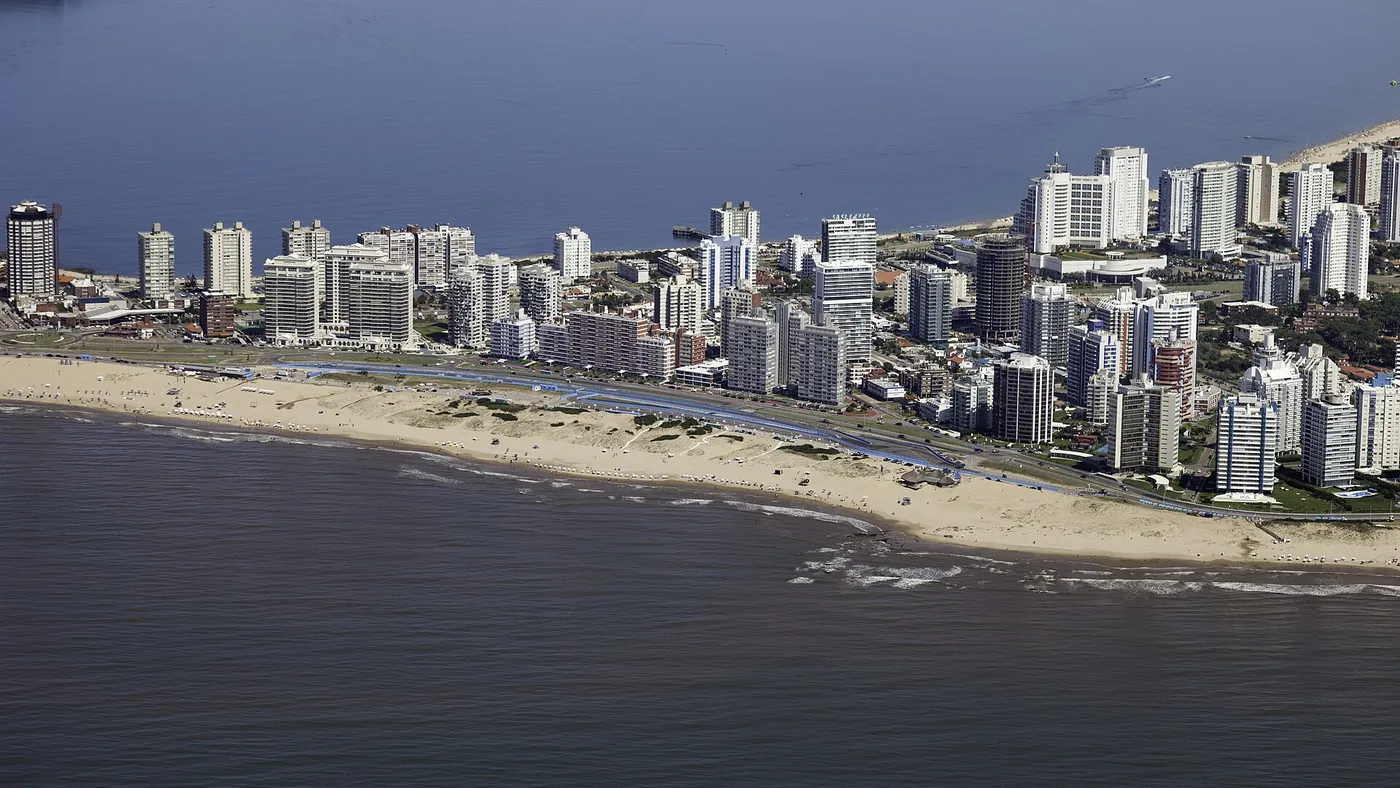
Two markets dominate inbound allocations at the new threshold. Montevideo is the political and financial capital, with year-round demand, a mature rental market and the most institutional pricing in the country; Pocitos, Punta Carretas, Carrasco and the Rambla corridor anchor the premium market. Punta del Este is Latin America's most established Atlantic resort, a dollar-denominated market driven by Argentine and Brazilian capital, with a sharp rise in branded, hotel-managed residences along Playa Brava and Punta Ballena. Short stays there averaged around USD 194 a night at 51% occupancy last year, concentrated in the summer season.
We work with selected branded-residence projects in Punta del Este, including SLS Residences, and can structure several units to reach the 12.5 million UI threshold. See our Uruguay real estate selection for current projects.
How to become a Uruguayan tax resident
- Strategy session. We model your income by type and source, the value of the holiday in your case, your home country's exit rules and the cost of each route.
- Legal residency, if you do not have it. Most clients start the permanent residency file first; it is cheaper, needs no investment and gives you the cédula.
- Qualify. Relocate for more than 183 days, complete the property purchase, or make the first Innovation Fund contribution.
- Register and elect the holiday with the DGI. Applicants who were not Uruguayan tax residents in the two previous tax years must exercise the option formally.
- Obtain the tax residence certificate, which you use with banks and with your previous country of residence.
- Maintain it. Keep the presence, the property or the annual contributions for as long as you want the status.
Your home country still gets a say
Becoming a Uruguayan tax resident does not, on its own, end your tax residency elsewhere. Many countries keep taxing you until you meet their own exit tests, and some (the United States above all, which taxes by citizenship) keep taxing you regardless. Uruguay has a growing network of double taxation treaties, but not with every country. The holiday is only worth what your home country lets you keep, so we coordinate with your domestic tax adviser before any structure is put in place.
Who the tax holiday suits, and who it doesn't
It suits: families relocating to Uruguay who will spend more than 183 days there, for whom it is free; investors with substantial foreign dividend and interest income who are buying in Montevideo or Punta del Este anyway; founders who can commit around USD 100,000 a year and want Uruguayan tax residency without moving full time.
It doesn't suit: people whose income is mainly a pension or foreign salary, which Uruguay generally does not tax anyway; anyone who only wants a Plan B residency, which needs no investment; and US citizens, whose citizenship-based taxation limits what a foreign tax holiday can achieve.
If what you want is a residence card rather than a tax result, start with our Uruguay permanent residency guide. If you are comparing tax bases across the region, our guide to Paraguay tax residency covers the cheaper territorial alternative next door, and tax systems explained sets out how territorial, residence-based and citizenship-based taxation differ.
Frequently asked questions
Does Uruguay have a golden visa?
No. Uruguay grants permanent residency without any investment, based on income. What people call the Uruguay golden visa is the investment route to tax residency and the 11-year tax holiday: around USD 2 million in property or USD 100,000 a year into the National Innovation Fund since 2026.
How much do I need to invest for Uruguay tax residency in 2026?
Nothing, if you spend more than 183 days a year in Uruguay. Without that presence, at least 12.5 million UI (about USD 2 million) in urban property, about USD 100,000 a year for 11 years into the National Innovation Fund, or around 15 million UI in a business creating 15 jobs.
Is the USD 500,000 property route still available?
No. The old route of about USD 590,000 (3.5 million UI) in property plus 60 days a year was abolished from 1 January 2026. People who qualified before then keep their holiday.
How long is the Uruguay tax holiday?
Eleven tax years: the year you become a tax resident plus the following ten. Under the 2026 rules a reduced-rate transition follows before the standard 12% rate on foreign capital income.
What income does the holiday exempt?
Foreign-source capital income, such as dividends and interest from abroad. Uruguayan-source income is taxed normally, and foreign pensions and employment income are generally outside Uruguayan income tax regardless of the holiday.
Do I need permanent residency to be a tax resident?
They are separate statuses, but in practice most clients hold both: permanent residency gives the right to live in Uruguay and the cédula, and costs nothing beyond fees.
Can my family be included?
Tax residency is personal: each person is assessed on their own presence and interests, while a spouse and children follow the main applicant's legal residency. How the holiday applies to a family's income is part of the structuring we do with your tax adviser.
Does becoming a Uruguayan tax resident end my tax residency at home?
Not automatically. Your home country applies its own exit tests, and US citizens remain taxable in the US. Plan the exit before the entry.
Uruguay's 2026 tax rules are new, and secondary regulations and DGI practice are still settling. This guide explains the framework; how it applies to your income should be confirmed with a Uruguayan tax adviser before you invest.

Last reviewed 8 October 2026.
This guide is general information, not legal, tax or immigration advice. Programme terms are set by the relevant government and can change; confirm any figure with the authority, or with us, before acting on it.