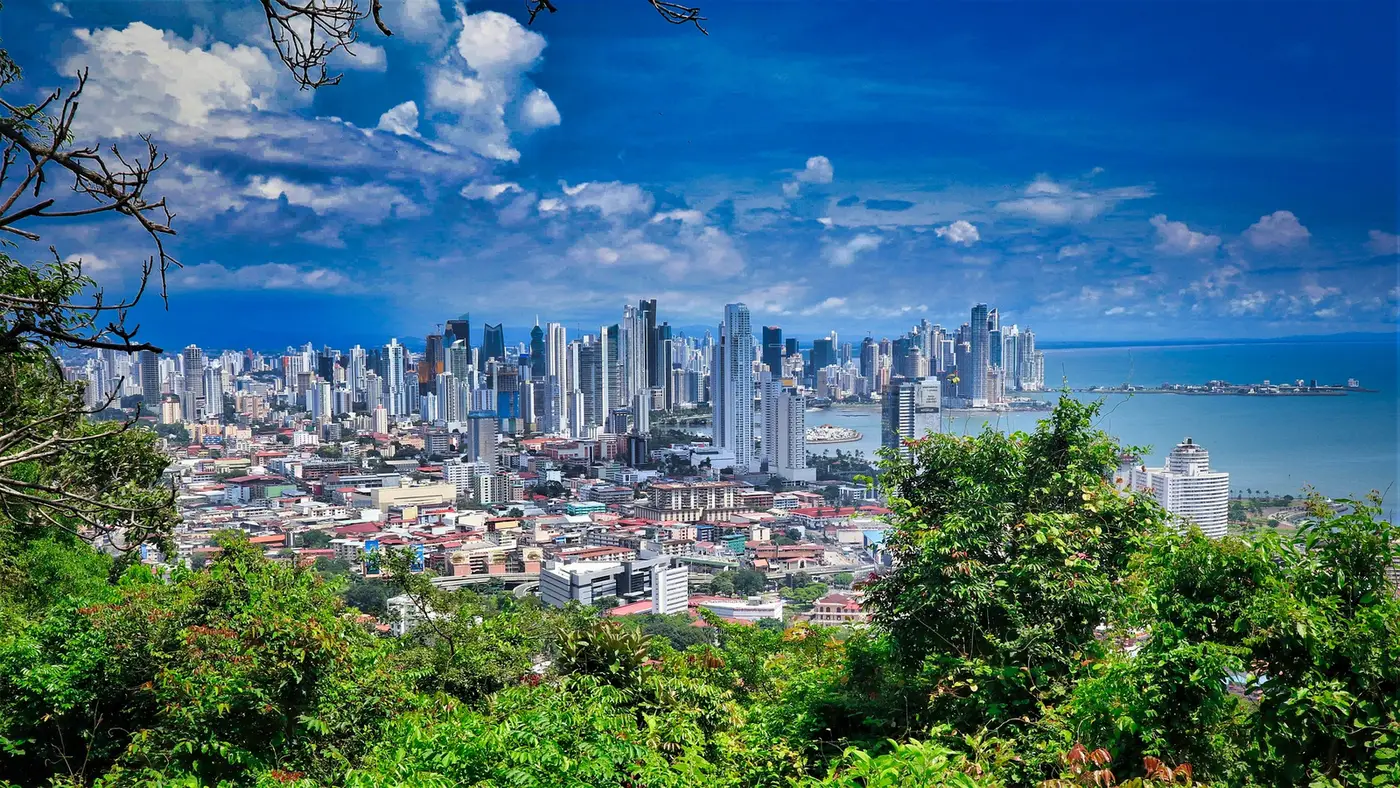











































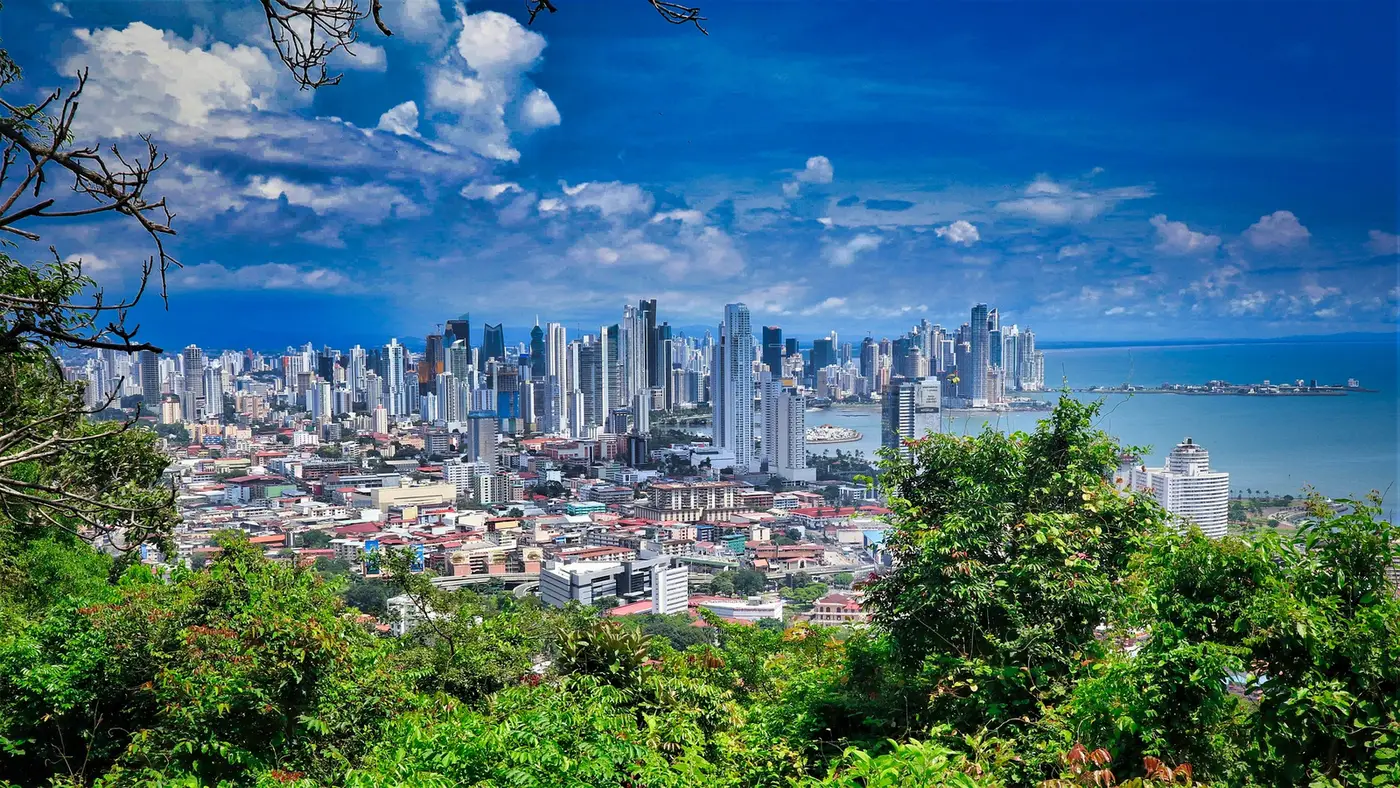
Panama residency by investment at a glance
Invest USD 300,000 in new-build Panamanian real estate bought directly from a developer (USD 500,000 for resale property), USD 500,000 in listed securities, or USD 750,000 in a fixed-term deposit, and Panama grants permanent residence directly, no temporary stage, no minimum stay beyond a visit roughly once every two years. Hold the investment for five years and, separately, complete five years of residence to become eligible for citizenship. Since Executive Decree No. 17 (16 September 2026) the real estate threshold depends on which property you buy, not just what it costs; every other term below is stable.
Most residence-by-investment programmes in the region make you wait: temporary residence first, permanent status later, once a review period has passed. Panama's Qualified Investor Program skips that stage entirely. Approval delivers permanent residence on day one. That single structural difference is why the programme keeps recurring in Plan B conversations for clients who want the outcome secured quickly, rather than staged over several years.
What the Qualified Investor Visa actually is
The programme was created under Executive Decree 722 of 2020, and subsequently amended, most recently through Decree 193. It sits within Panama's broader immigration framework as a distinct category, separate from the Friendly Nations Visa, the Pensionado programme, and the newer Digital Nomad and Reforestation categories, each of which serves a different profile of applicant.
What distinguishes it from its regional peers is procedural, not just financial: a qualifying investment, verified and documented, converts directly into a permanent residence resolution. There is no provisional card that expires, no renewal application, and no probationary review before permanence attaches.
Looking for Panama citizenship by investment?
Panama has no citizenship by investment programme, and never has had one. No investment buys a Panamanian passport at the point of application. What the Qualified Investor Programme grants is permanent residence, issued directly, with no temporary stage; Panamanian nationality is a separate process that opens five years later and is decided on its own merits. If you arrived here expecting a Caribbean-style passport purchase, Panama is not that, and any firm presenting it as one is misdescribing the programme.
The confusion is worth naming, because the phrase is used loosely across the industry. Citizenship by investment properly describes programmes — St Kitts and Nevis, Antigua and Barbuda, Grenada — where an approved contribution leads to naturalisation within months and residence is never required. Panama belongs to the other family: residency by investment, where the investment buys the right to live in the country permanently, and nationality, if it is ever sought, is earned afterwards and separately.
What that distinction means in practice:
- The investment — from USD 300,000 for new-build property, USD 500,000 for resale — grants permanent residence in weeks, not a nationality.
- Five continuous years of permanent residence must pass before a naturalisation petition can be filed. Three years for the spouse of a Panamanian national or the parent of a Panamanian child.
- The petition tests Spanish, Panamanian history and civics, and genuine ties. Residence is granted on meeting the criteria; nationality is decided at the discretion of the state.
Read plainly, Panama is the slower and considerably cheaper version of the same trade. Caribbean citizenship by investment is faster and ends in a passport; Panama asks for five years and gives you, throughout them, permanent residence with no minimum-stay obligation, territorial taxation on foreign income, and a base in the centre of the hemisphere. Which is the better instrument depends on whether what you actually need is a travel document or a place to be.
The five-year route, what the naturalisation petition tests, and the dual-nationality question Panama's constitution raises are covered in full in our guide to Panamanian citizenship and the passport.
Why investors choose Panama
No temporary-residence stage. Approval is permanence, not a probationary period.
A visit roughly once every two years maintains the status, no relocation required.
Foreign-sourced income is generally untaxed locally, regardless of residence status.
The US dollar circulates as legal tender alongside the balboa, removing a layer of currency risk from the investment decision.
Spouse, children, and financially dependent parents can be included on a single filing.
Naturalisation becomes available after five years of continuous permanent residence, the shortest runway of any major Latin American programme.
Who qualifies, and what the programme requires
The official Panama Qualified Investor Visa requirements: applicants must be 18 or older, hold a clean criminal record, pass a basic health certificate, and complete one of three qualifying investments: a minimum investment of USD 300,000 in new-build real estate bought directly from a developer (USD 500,000 for resale property, since Executive Decree No. 17 of September 2026), USD 500,000 in listed Panamanian securities, or USD 750,000 in a five-year fixed-term bank deposit.
- Minimum age 18, with full legal capacity to enter into the investment.
- Clean criminal record, certified by the country of origin or country of residence, covering roughly the last two years.
- Health certificate, confirming general physical and mental fitness, valid three months from issuance.
- One qualifying investment, from the three routes below.
- Documented, traceable source of funds for the investment itself.
| Route | Minimum | Character | Status |
|---|---|---|---|
| Real estate | USD 300,000 new-build · USD 500,000 resale | Property free of liens; off-plan qualifies via a promise-of-sale agreement funded through a licensed trust or backed by a bank guarantee | $500K resale · $300K new-build |
| Listed securities | USD 500,000 | Placed through a licensed Panamanian brokerage | Stable |
| Fixed-term deposit | USD 750,000 | Held at a qualified Panamanian bank for at least five years | Stable |
The pricing gap between routes is deliberate rather than arbitrary: Panama is pricing in liquidity and productive use. A deposit sits idle from the state's perspective, so it costs the most; real estate contributes to construction and ownership activity, so it is priced lowest, and since September 2026 only new-build purchases keep that lowest price. The USD 300,000 first-sale figure and the USD 500,000 resale figure are the current official minimums under Executive Decree 722 as amended by Executive Decree No. 17, not marketing estimates.
Investment is the fastest route into Panama and rarely the cheapest. How it compares with the Friendly Nations Visa, the Pensionado and the rest is set out in our Panama country guide.
The real estate route: two thresholds, not one
Resale property now requires US$500,000. New-build property purchased directly from a developer still qualifies at US$300,000, provided it meets the decree's first-sale test. This is the route most LGP clients choose, and it's now the only one where the entry price depends on which property you buy, not just what it costs.
A qualifying first-sale property is the initial transfer of a new, unoccupied unit from the developer or promoter, verified through public registry records; any unit already sold, leased, transferred or occupied counts as resale. The property must be free of encumbrance at the time of qualification. A completed deed is not required to file: a promise-of-sale agreement is accepted, funded through a licensed trust or paid to the developer in full and backed by a bank guarantee, which is what allows pre-construction and off-plan units to qualify at US$300,000 alongside completed first-sale properties. Spouses may co-own a single property and split the contribution between them, though only one may be named the main applicant.
Closing costs, transfer taxes, and any applicable property registration fees sit on top of the purchase price and are addressed in Section 08. On exit, after the five-year hold, gains are taxed at a flat 10% on the net gain, with a 3% advance withholding credited against the final liability (see Section 16).
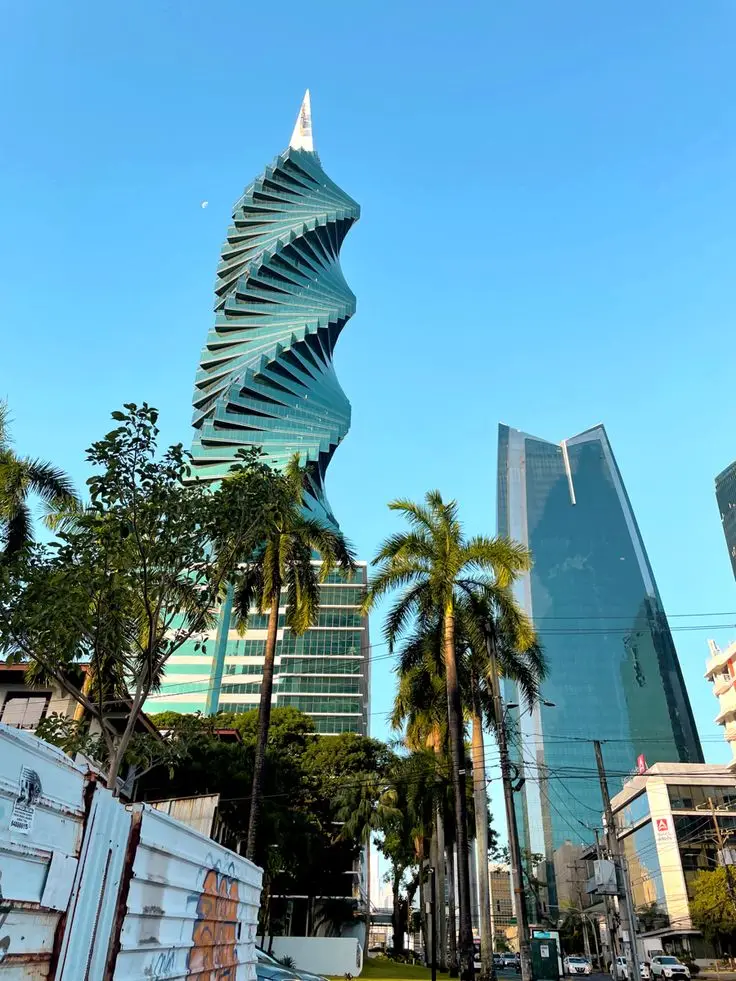
Where the USD 300,000 threshold actually buys
The threshold is a floor, not a price guide, and since Decree No. 17 it applies only to first-sale stock bought from the developer; resale units need USD 500,000. Where it lands in practice depends entirely on the district, and the four below cover the profiles clients ask about most often. Figures are indicative entry points for qualifying stock at the time of writing, not quotes on a specific unit. We confirm live availability and title status against the current threshold before any client commits.
Indicative from USD 310,000. One- and two-bedroom units in completed towers beside the financial and diplomatic district. Title-ready, so the filing does not depend on a promise-of-sale agreement.
Indicative from USD 325,000. Marina-facing residences steps from the city's principal hospital and business corridor. Pre-completion stock qualifies on a promise-of-sale agreement where the full amount is documented as paid.
Indicative from USD 340,000. Boutique beachfront units, for clients weighting lifestyle use above the financial-district profile of the capital. Thinner resale market than Panama City, relevant at the five-year exit.
Indicative from USD 355,000. Low-density townhomes in a former Canal Zone district favoured by relocating families, close to the international schools.
Entry points shown are researched market indications for stock that meets the qualifying criteria, not offers, and not developments we market. Panamanian property pricing moves; the qualifying figure is the one recorded in the deed or the promise-of-sale agreement on the filing date.
Have a property checked against the threshold →
The securities route: USD 500,000 through a Panamanian broker
USD 500,000 placed through a licensed Panamanian brokerage, in listed Panamanian securities. This route suits investors who want to qualify without taking on property management or a physical asset, at the cost of a materially higher threshold than real estate.
Funds must be placed and held through a Panamanian-licensed broker rather than transferred directly to the state or a project. Unlike the real estate route, there is no equivalent to the promise-of-sale mechanism. The position must actually be established and documented before filing. Because the qualifying position is marketable, it is administratively simpler to open and close than a real estate holding, but the client should confirm with counsel how the authorities would treat a position that falls in value below the threshold mid-hold, since this has not been extensively tested in practice.
This route has no equivalent to Section 05's property showcase. There is no "featured" position to browse, since qualification runs through your brokerage account rather than a specific listed asset.
The bank deposit route: USD 750,000 held for five years
USD 750,000 in a five-year fixed-term deposit at a qualified Panamanian bank. The highest threshold of the three routes, and the one requiring the least ongoing decision-making. The capital simply sits, earning whatever term-deposit interest the bank offers, until the five years are up.
This is the route with the fewest moving parts: no property to select, manage, or eventually sell, and no market-value fluctuation to monitor against the threshold. The trade-off is opportunity cost (see Section 09), since USD 750,000 committed for five years at typical term-deposit rates is very unlikely to outperform what the real estate route's underlying asset could plausibly appreciate. Clients who choose this route are usually optimising for simplicity and certainty, not return.
What it costs beyond the investment
The investment threshold is not the total cost of the programme. Government fees, the mandatory Temporary ID Card charge, due-diligence and legal costs, document legalisation, and, where real estate is involved, closing costs all sit on top of it. None of these are large individually, but a filing budgeted against the headline figure alone will run short.
| Item | Real estate route | Recurs? |
|---|---|---|
| Qualifying investment | USD 300,000 new-build (USD 500,000 resale) | No, held 5 years, then realisable |
| Government & Temporary ID Card fees | Low thousands, per applicant | One-time |
| Legal, due-diligence & filing fees | Varies by firm and family size | One-time |
| Document legalisation & translation | Per document, apostille or consular | One-time |
| Closing costs (if applicable) | Standard Panamanian property transfer costs | One-time |
The five-year cost, modelled
Because the underlying capital is retained rather than spent, the real cost of each route is the opportunity cost of having that capital committed for five years rather than deployed elsewhere. Using a simple 5% annual opportunity-cost benchmark as an illustrative reference point, not a return projection, gives a rough sense of scale:
| Route | Capital committed | Illustrative 5-yr opportunity cost (at 5%/yr) |
|---|---|---|
| Real estate (new-build) | USD 300,000 | ≈ USD 75,000–86,000 |
| Securities | USD 500,000 | ≈ USD 125,000–144,000 |
| Fixed-term deposit | USD 750,000 | ≈ USD 187,000–216,000, before any interest the deposit itself earns |
The fixed-term deposit is the clearest case: it is priced highest and, unlike real estate, produces no separate asset or usable property: only the deposit itself, which typically earns some interest but starts from the largest capital base. Real estate is the only route where the committed capital can plausibly appreciate enough to offset a meaningful share of that opportunity cost.
Bringing your spouse, children and parents
| Family member | Eligible? | Conditions |
|---|---|---|
| Spouse | Yes | Legally married; unmarried long-term partners accepted via notarised affidavit in practice |
| Children under 18 | Yes | No additional requirements beyond dependency |
| Children 18–25 | Yes | Unmarried, financially dependent, full-time students |
| Dependent parents | Yes | No strict age limit |
| In-laws | No | Not eligible under this category |
Dependents can be filed alongside the main applicant, the simplest route, since everyone is processed together, or added afterward through a separate reunification filing once the investor already holds permanent residence.
How the application runs, step by step
- Select the route and confirm the source of investment funds.
- Assemble documentation: criminal record, medical certificate, proof of address, evidence of the investment.
- Complete the investment, retaining full documentary evidence of the transfer.
- File with Panama's National Immigration Service.
- Background and source-of-funds review by the authorities.
- Biometric registration, completed in person in Panama.
- Permanent residence card issued.
Published guidance points to roughly 30–60 business days from a complete filing, though source-of-funds or banking-compliance queries can extend this. Most of the process can run remotely through an authorised representative; the single mandatory in-person step is biometrics, typically a short visit near the end of the timeline rather than a relocation.
The documents you will need
Every document issued outside Panama needs translation into Spanish and authentication: apostille where the issuing country is a Hague Convention member, consular legalisation where it is not. Core documents include a certified criminal record (covering roughly the last two years), a medical certificate (valid three months from issuance), and, for dependents, birth or marriage certificates and proof of the family relationship. Build legalisation timelines into the filing schedule early. This is the step most often underestimated.
Keeping the residence: presence and holding rules
"Permanent" describes the status, not an absence of obligations. Two conditions run in parallel throughout the programme:
- The investment must be maintained, in its original form, for at least five years. Selling, transferring, or withdrawing it early can put the residence status of the investor and dependents at risk.
- A visit to Panama roughly once every two years is expected, to keep the status administratively current. There is no published minimum-days-per-year requirement. This is a materially lighter presence obligation than most comparable programmes impose.
From permanent residence to a Panamanian passport
Naturalisation becomes available after five continuous years of permanent residence, counted from the date residence was formally granted, and is covered in full in our guide to Panamanian citizenship. But "continuous residence," for citizenship purposes, is read more strictly by nationality authorities than the light-touch two-year visit rule that governs simply keeping residence, a distinction competitor guides routinely blur.
This is worth sitting with. Immigration authorities apply the minimal-presence standard to maintaining permanent residence: a visit every two years is enough. Nationality authorities, assessing an actual naturalisation application, tend to look for evidence of genuine ongoing ties: real use of the investment, some physical presence beyond the bare minimum, and integration that goes beyond holding a card. A client who visits Panama for one week every two years for five years technically maintains valid residence throughout, but should not assume that pattern alone satisfies a naturalisation reviewer's view of "continuous residence." Clients targeting citizenship, not just residence, should plan a more active presence than the residence rules strictly require.
Naturalisation additionally requires general Spanish proficiency, a passing result on Panama's civics examination, sat in person before the Electoral Tribunal, with no remote or embassy option, and clean criminal record certificates covering the residence period.
What naturalisation demands
Panamanian naturalisation carries a constitutional renunciation requirement: applicants must execute a sworn declaration renouncing their prior nationality before a Panamanian notary. In practice this is a domestic, declarative act. Panama does not notify the applicant's country of origin, and has no authority to actually extinguish a foreign nationality. Whether the renunciation has any effect at all depends entirely on the laws of the other country, and that should be checked before naturalisation, not after.
Dual nationality by birth is unrestricted. Naturalisation does not pass automatically to a spouse, who must build an independent residence-based pathway. A child born abroad after the parent naturalises can acquire nationality subject to registering the birth; a child already born before the parent naturalised does not receive it retroactively. Each family member's route needs mapping individually.
How Panama taxes a new resident

Panama runs a territorial tax system: income and gains sourced outside the country are generally not taxed locally, regardless of residence or citizenship status. This is a genuine structural benefit, but it is frequently overstated in marketing material as a form of automatic tax exemption. It is not. Panamanian tax residency turns primarily on physical presence, 183 or more days in a calendar year, not on holding this residence permit. An investor can hold Panamanian permanent residence for years while remaining a tax resident of an entirely different country, which is precisely the point for most Plan B clients: the residence and the tax position are separate decisions.
On exit, gains from selling Panamanian real estate are taxed at a flat 10% on the net gain, with a 3% advance withholding collected at transfer and credited against the final liability. Sellers can elect the 3% advance as the final tax where that produces a lower result, a genuinely investor-favourable mechanic by regional standards.
Why applications get refused
- Undocumented source of funds. The single most common cause of delay. Funds routed through a spouse, family member, or a controlled entity are acceptable, but the chain of custody must be fully traceable end to end.
- Nationality-linked banking friction. There is no published list of prohibited nationalities, but applicants from certain countries face enhanced due diligence before a Panamanian bank will onboard them, a practical bottleneck, not a legal bar, and one worth planning around rather than discovering mid-filing.
- Incomplete legalisation. A document apostilled correctly but translated late, or vice versa, resets the clock on that piece of the file.
- Treating the investment as flexible. Any indication that the qualifying asset might be sold or restructured before the five-year mark invites additional scrutiny.
Applying as a Russian national
Yes, Russian and Belarusian nationals can apply for the Panama Golden Visa. Panama has not imposed nationality-based restrictions on this programme. What changes is the diligence layer: investment funds must originate from financial institutions outside Russia and Belarus, and some banks apply stricter onboarding to Russian and Belarusian clients specifically.
There is no official list of nationalities barred from the Qualified Investor Program, and Russian and Belarusian applicants remain eligible on the same terms as anyone else. In practice, three things are worth planning for before filing rather than discovering mid-process:
- Enhanced due diligence. Expect closer verification of the source of funds and additional international compliance checks specific to sanctioned-adjacent jurisdictions.
- Banking onboarding friction. Some banks operating in Panama apply internal restrictions or stricter account-opening requirements for Russian or Belarusian nationals. This is bank policy, not a programme rule, and it varies by institution.
- Funds must route through institutions outside Russia and Belarus. The investment itself must originate from financial institutions located outside those two countries, consistent with international banking regulations and the sanctions-related policies Panamanian banks apply.
None of this amounts to a prohibition. It is a heavier documentation path, not a closed door. Clients holding a second passport from a non-restricted jurisdiction may find it more straightforward to file under that nationality where genuinely applicable, but the underlying source-of-funds standard does not disappear simply because the applicant used an alternative passport. This is a case where getting ahead of the banking and compliance questions before selecting an investment route saves real time. See Section 17 for the broader pattern of what stalls applications.
Applying as a US citizen
US citizens are visa-free travellers to Panama and face no eligibility restriction on the Qualified Investor Visa itself. The one thing that does not change: the United States taxes citizens on worldwide income regardless of where they live, so this residence does not reduce US tax exposure the way it can for citizens of most other countries. That distinction is worth being explicit about. It is the single most common point of confusion for American clients.
Panama's territorial tax system (Section 16) benefits residents whose home country taxes based on residency, not citizenship. For a US citizen, it does not: FATCA and citizenship-based taxation mean IRS filing and FBAR/FATCA foreign-account reporting obligations continue regardless of Panamanian residence. Panama residence remains genuinely useful for US clients, as a Plan B jurisdiction, a base for Latin America business, and a step toward eventual Panamanian citizenship, but it should never be sold to an American client as a route to reducing US tax liability. That requires a separate conversation about US citizenship itself, which is outside the scope of this guide.
Applying from Canada, Europe, South Africa and Turkey
Canadian, European, South African, and Turkish citizens can all enter Panama visa-free for up to 90 days and face no nationality-based restriction on the Qualified Investor Visa. Unlike US citizens, all four groups come from residency-based (not citizenship-based) home tax systems, so establishing genuine tax non-residency at home is a real option worth planning alongside the Panama filing.
- Canadian citizens should plan the CRA residency-break rules deliberately. Canada's departure tax and residency-tie tests are specific and worth a cross-border accountant's input before, not after, filing.
- European citizens (EU/Schengen) should note that Panama residence has no bearing on Schengen's 90/180-day rule. The two are entirely separate systems, and clients splitting time between Europe and Panama need to track both independently.
- South African citizens should confirm the investment amount against South African exchange control rules: the annual discretionary and foreign investment allowances (subject to South African Revenue Service tax clearance) may require advance planning for a USD 300,000–750,000 transfer.
- Turkish citizens, often motivated by lira volatility rather than mobility alone, should apply Turkey's standard 183-day tax residency test to determine whether Panama residence meaningfully changes their tax position, since simply holding the card does not.
Across all four groups, the practical process in Sections 08–15 applies without modification. None of these nationalities faces the enhanced banking diligence described for Russian and Belarusian applicants in Section 18.
Panama against Paraguay and Uruguay
| Programme | Entry point | Residence outcome | Citizenship runway |
|---|---|---|---|
| Panama, Qualified Investor | USD 300,000 new-build (USD 500,000 resale) | Permanent, immediate | 5 years |
| Paraguay, Investor Pass | From USD 70,000 | Permanent, via CIE then residency steps | 3 years (with residence in-country) |
| Uruguay, Permanent Residency | No fixed minimum; income/asset-based | Permanent, staged | 3–5 years, presence-dependent |
Panama's advantage is procedural speed to permanence at a moderate entry point. Paraguay's is entry cost, see our full Paraguay Investor Pass guide. Uruguay's is long-term stability and integration depth, covered in our Uruguay Permanent Residency guide. None of the three is categorically "better". The right fit depends on whether the client is optimising for speed, cost, or eventual residence rather than a filed status. For the full regional picture, see our Latin America Plan B hub.
What the Panamanian passport opens
This programme grants a permanent residence card, not a passport. You keep travelling on your own national passport throughout. The residence card cannot be used on its own to cross a border, in Panama or anywhere else. A Panamanian passport only becomes available after naturalisation, five years or more away, and even then its mobility benefit is moderate rather than the headline reason to choose this programme.
Panama issues two separate documents to permanent residents, and it is worth being precise about both. The Permanent Residency Card confirms immigration status but, by Panama's own rules, must be carried together with a valid passport for any legal transaction. It is not accepted as standalone identification. The optional E-Cédula is more convenient for daily life in Panama (banking, contracts, driving), but it functions the same way: it establishes who you are inside Panama, not a right to cross any border.
Neither document is a travel document. We are not aware of any country that accepts Panama's residence card or E-Cédula as a substitute for a passport at its border. Investors continue travelling on their existing national passport for the full five-year hold and beyond. This programme changes where you can live, not what you travel on.
An actual Panamanian passport only exists after naturalisation (Section 14): five continuous years of residence, at minimum, plus the language and civics requirements already covered. Even then, independent passport-index trackers disagree meaningfully on its exact visa-free count: figures published in 2026 range from roughly 90 to 150 destinations depending on methodology (whether visa-on-arrival, eVisa, and ETA arrangements are counted as "visa-free"). Treat any single number quoted elsewhere with some scepticism; the more reliable statement is directional: a naturalised Panamanian passport sits in the middle tier globally, materially short of the strongest Caribbean CBI passports, with genuine, uncontested visa-free access across the Schengen Area and most of Latin America. Mobility should not be the reason a client chooses this programme, and it is not available at all until naturalisation is complete.
Is it worth it?
Investors who want a secured, permanent fallback jurisdiction quickly, without relocating, and who can document funds cleanly through a traceable channel.
Families building a five-year runway toward citizenship who are willing to spend genuine time in Panama, not just the minimum biennial visit.
Applicants chasing passport strength above residence value. The mobility case is average, not exceptional.
Investors who want to treat the qualifying asset as liquid within the five-year window. The programme is not designed around early exit.
What goes wrong: a pre-mortem
Working backward from how this programme goes wrong for a client, three failure modes recur:
- The five-year hold outlasts the plan. Personal or business circumstances change; the client wants the capital back at year three. The programme was not designed for that, and the residence status is the thing put at risk.
- The naturalisation timeline is assumed to run on autopilot. Five years pass with only the minimum biennial visits, and the client is surprised that the citizenship application draws more scrutiny than residence maintenance ever did.
- The renunciation declaration is treated as symbolic. It has real, if domestic, legal weight in Panama, and clients need their own counsel's view on how their country of origin treats it, before signing, not after.
Panama residency by investment: your questions
What are the Panama Qualified Investor Visa requirements in 2026?
The core requirements are unchanged for 2026: applicant age 18+, a clean criminal record, a health certificate, and one qualifying investment. The one 2026-specific change is the real estate minimum, which Executive Decree No. 17 (16 September 2026) split in two: USD 300,000 for new-build property bought directly from a developer, USD 500,000 for resale (see Section 04).
Is USD 300,000 the official minimum for the Panama Qualified Investor Visa real estate route?
Yes for new-build property bought directly from a developer: as of this guide's last review date, USD 300,000 is the official minimum for first-sale property under Executive Decree 722 as amended by Executive Decree No. 17, provided the property is free of liens. Resale property requires USD 500,000 since 16 September 2026. Always confirm the current figure against the Official Gazette before relying on it for a filing decision.
How long does Panama Qualified Investor Visa processing take?
Published guidance points to roughly 30–60 business days from a complete filing. Source-of-funds or banking-compliance queries, more likely for certain nationalities (see Section 18), can extend this.
Is the Panama Golden Visa available to Russian citizens?
Yes. Panama has not restricted the Qualified Investor Program by nationality. Russian and Belarusian applicants face enhanced source-of-funds diligence and, in some cases, stricter bank onboarding (see Section 18), but there is no prohibition on applying.
Does Panama offer citizenship by investment?
No, not directly. Panama offers immediate permanent residence by investment, not citizenship by investment. Citizenship becomes available only through naturalisation after five continuous years of permanent residence, plus Spanish proficiency, a civics exam, and a renunciation declaration. See Section 14.
Is the Panama Qualified Investor Program currently accepting applications?
Yes. It is an active, operating programme under Executive Decree 722, not a proposal awaiting implementing regulations.
What is the minimum investment?
USD 300,000 in new-build real estate bought directly from a developer (USD 500,000 for resale property), USD 500,000 in listed securities, or USD 750,000 in a fixed-term deposit.
Do I need to live in Panama?
No. There is no minimum annual stay to maintain permanent residence: a visit roughly once every two years is sufficient. A more active presence is advisable only if citizenship, not just residence, is the goal.
Can I include my parents?
Yes, if they are financially dependent on you, with no strict age limit. In-laws are not eligible.
Does this residence make me a Panamanian tax resident?
Not automatically. Panamanian tax residency generally requires 183 or more days of physical presence in a calendar year, separate from the immigration status itself.
How long until I can apply for citizenship?
Five continuous years of permanent residence, plus Spanish proficiency, a civics exam sat in Panama, and a formal renunciation declaration.
Can I work in Panama on this residence permit?
Not directly. You may own and draw income from Panamanian companies, but employment requires a separate work permit.
What happens if I sell the investment after five years?
Once the five-year hold is complete, the investment can generally be sold without affecting the residence already granted to the investor or dependents.
Is cryptocurrency accepted as a source of funds?
Some regulated channels accept crypto-derived funds provided they are converted to fiat and fully documented before reaching the investment; direct crypto contribution is not permitted. Treat this route as available but administratively heavier.
Can I travel using my Panama residence card instead of my passport?
No. The Permanent Residency Card and the optional E-Cédula are not travel documents. Panama's own rules require the residence card to be carried together with a valid passport for legal transactions. You continue travelling internationally on your own national passport throughout the programme.
Do I have to buy a completed property, or can I invest pre-construction?
Pre-construction and off-plan units qualify at USD 300,000 via a promise-of-sale agreement, provided the funds are held in a licensed trust or paid to the developer in full and backed by a bank guarantee. A completed deed is not required at filing.
How does Panama compare to Paraguay or Uruguay?
Panama offers the fastest route to a permanent (not staged) status at a moderate entry point; Paraguay is cheaper to enter; Uruguay offers deeper long-term integration. See Section 21.
Sources, and what changed
Primary source: Panama's Ministerio de Comercio e Industrias, Executive Decree 722 (2020) as amended by Decree 193. Figures in this guide are cross-checked against current published advisory material as of the review date below and should be re-verified against the Official Gazette before any filing decision.
- 17 SEP 2026Guide updated. Executive Decree No. 17 replaced the flat $300K→$500K increase with a two-tier test: $500K for resale, $300K retained for new-build/developer-direct purchases. See our full write-up for the mechanics and transition rules.
- 12 AUG 2026Guide published. Confirmed the 15 October 2026 threshold change ($300K → $500K, real estate route) against multiple independent advisory sources; no single figure for passport mobility could be confirmed, so a range is shown in Section 22 rather than one number.
- 21 JUL 2026Reference FAQ (Mercan Group) reviewed for programme-mechanics cross-check; firm-specific deal structures (trust arrangements, named banking partners) excluded as not generally applicable.
Why work with Lincoln Global Partners
Panama is one route among several we structure across Europe and Latin America. What we add here is the same thing we add everywhere: distinguishing what a programme actually requires from what its own marketing implies. Where this guide separates "maintaining residence" from "qualifying for citizenship," or breaks the headline threshold into its full landed cost, that distinction is the product, not a footnote.
Our team is based across eight cities on three continents, working directly with counsel and licensed partners in each jurisdiction we cover. Read more on how LGP structures a Plan B across Europe and Latin America.
Sources
- Decreto Ejecutivo 722 de 15 de octubre de 2020 (Gaceta Oficial Digital No. 29136) — Gaceta Oficial de Panamá
- Decreto Ejecutivo 722/2020 — official ministry mirror — Ministerio de Comercio e Industrias (MICI)
- Decreto Ejecutivo 193 de 15 de octubre de 2024 — Gaceta Oficial de Panamá (via Servicio Nacional de Migración mirror)
- MICI — Programa de Inversionista Calificado (current program page) — MICI
Sources checked 2026-09-20.


Last reviewed 12 August 2026.
This guide is general information, not legal, tax or immigration advice. Programme terms are set by the relevant government and can change; confirm any figure with the authority, or with us, before acting on it.